
What to Expect at Soccer Tryouts for Beginners
Soccer tryouts for beginners can feel like a big, nerve-wracking moment — but they don’t have to be.
Whether your child is stepping onto a competitive field for the first time or you’re a parent trying to figure out what to expect, here’s the quick answer:
What beginners need to know about soccer tryouts:
- What happens: Coaches run 2-3 day sessions with drills, small-sided games, and scrimmages to evaluate players
- What’s evaluated: Basic ball skills, athleticism, attitude, teamwork, and coachability — not perfection
- What to bring: Cleats, shin guards, a soccer ball, and water
- How to prepare: Practice dribbling, passing, and shooting; build endurance; get good rest
- After tryouts: Results are typically posted within 48-72 hours
- Complete beginners welcome: Many clubs have developmental programs and rolling evaluations for players just starting out
Read on for the full breakdown of every step — from first practice kicks to tryout day and beyond.
Picture a sunny afternoon at a Charleston park. Kids are chasing a ball, coaches are watching closely, and parents are doing their best to look calm in the stands. It’s a familiar scene at youth soccer tryouts across the Lowcountry — and for many families, it’s equal parts exciting and stressful.
The good news? Tryouts don’t have to be scary. Most coaches — especially at the beginner level — aren’t just looking for the fastest or most polished player. They want to see effort, a good attitude, and a willingness to learn.
At Olly on the Ball, we work with young players right here in Charleston and Mount Pleasant to build the confidence and skills they need to walk into tryouts feeling ready. This guide covers everything beginners need to know — from what drills to expect, to what to eat the night before, to what happens if things don’t go as planned.
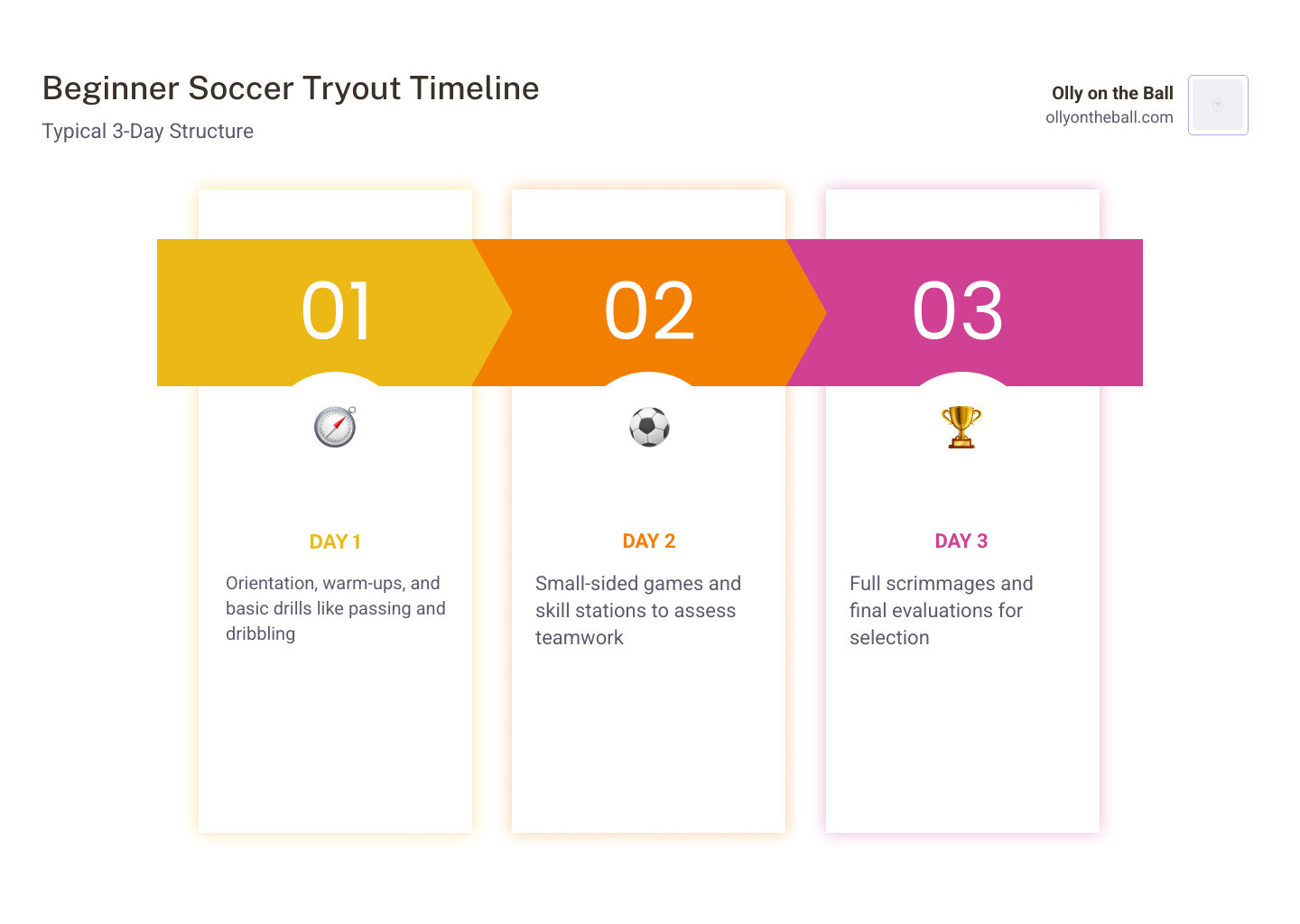

When we head out to fields in Summerville or James Island for tryouts, the first thing to understand is the structure. Most youth clubs organize tryouts as a two or three-day event. This isn’t to make it harder; it’s actually better for the players! Spreading it out allows us to perform at full strength each day rather than getting exhausted in one long session.
During these sessions, you’ll likely see “unbiased evaluators.” These are often coaches from other age groups or neutral staff members who don’t have personal connections to the players. This keeps things fair for everyone. They will be watching how you handle the ball, but also how you move when you don’t have the ball.
The process usually follows a specific flow:
- Check-in and Warm-ups: Getting your number and getting the blood flowing.
- Technical Drills: Individual work to show off your basics.
- Small-Sided Games: 3v3 or 4v4 matches where you get lots of touches.
- Full Scrimmages: Larger games to see how you understand the field.
It’s important to know the “rules of the game” before you go. For example, KSYSA Tryout Rules often outline specific dates when physical tryouts can begin (usually early June for most age groups) and how commitments work. Knowing these details helps take the mystery out of the weekend.
Common Drills in Soccer Tryouts for Beginners
Coaches usually pick 3-4 drills for each core skill. If you want to get a head start, you can look through a Tryout Resource Packet to see the types of evaluation sheets coaches use. Here are some classics you’ll likely see:
- Triangle Passing: Three players stand in a triangle and pass the ball around, focusing on accuracy and using both feet.
- 1v1 Rings: You’ll face off against one other player in a small circle or square. The goal is to keep the ball or win it back—it’s all about “compete level.”
- Shooting Box: Dribbling into a designated area and taking a shot on goal. Coaches are looking for your technique and where you aim.
- Dribbling Cones: Slaloming through a line of cones as fast as possible while keeping the ball close to your feet.
The Importance of Teamwork and Communication
Here is a secret: you can actually stand out at a tryout without even touching the ball. How? By being the loudest, most positive player on the field. Coaches love “coachability.”
- Talk on the Field: Call for the ball, tell your teammate “man on,” or just shout “nice pass!”
- Positive Body Language: If you miss a shot, don’t put your head down. Sprint back and try to win the ball.
- Support Your Teammates: If a teammate makes a mistake, encourage them. Coaches want players who make the whole team better, not just themselves.
Getting Physically and Mentally Ready for the Big Day
You wouldn’t try to drive a car with no gas, right? Your body is the same way. Preparing for soccer tryouts for beginners starts weeks before you step on the turf.
In the month leading up to tryouts, try to get in “soccer shape.” This doesn’t mean just running long distances. Soccer is a game of sprints. A great routine is doing 8-10 100-yard sprints about three times a week. If you can also run 3 miles in under 30 minutes, you’ll have the endurance to stay sharp even in the final minutes of a scrimmage.
Don’t forget the “fuel.” On the day of tryouts, eat a balanced meal with carbs for energy and protein for muscle power. Hydrate well the day before—drinking a gallon of water ten minutes before the start will just make you feel heavy!
Mental Preparation for Soccer Tryouts for Beginners
Nerves are normal. Even pro players get butterflies! The trick is to turn that nervous energy into “go” energy.
- Visualization: Before you go to sleep, imagine yourself making a great pass or a solid tackle.
- Focus on the Process: Don’t worry about “making the team.” Just focus on the next drill.
- Peer-to-Peer Encouragement: Everyone else is nervous too. Being friendly can help you relax.
For more tips on what to expect, the Parent/Player FAQ is a great resource for understanding the “vibe” of the season.
Overcoming Common Beginner Mistakes
We see these mistakes all the time, and they are so easy to fix:
- Hiding from the ball: Beginners sometimes stay far away from the action because they are afraid of making a mistake. Get in there! Coaches would rather see you try and fail than not try at all.
- Quitting on plays: If you lose the ball, don’t stop. The “six-second rule” is a great goal—try to win the ball back within six seconds of losing it.
- Positional Rigidity: Don’t get upset if a coach puts you in defense when you want to be a striker. They are testing your versatility and your attitude.
Essential Gear and Skills to Master Beforehand
Before you show up at the fields on Daniel Island or Isle of Palms, you need the right tools. Showing up prepared shows the coaches you are serious.
Choosing the Right Equipment
- Soccer Cleats: Make sure they are broken in! Don’t wear brand-new cleats to a tryout, or you’ll end up with blisters. Note: Ensure they are soccer cleats (no toe cleat like baseball shoes).
- Shin Guards: These are mandatory. You won’t be allowed to play without them.
- The Right Ball: Use a Size 3 for U8 and below, Size 4 for U9-U12, and Size 5 for U13 and up.
- Water: Bring more than you think you need. Lowcountry heat is no joke!
Core Skills to Practice at Home
You don’t need a full team to practice. You can master the fundamentals in your backyard or at a local park in Mount Pleasant.
- Dribbling through cones: Use water bottles if you don’t have cones. Keep the ball close.
- Wall Passing: Find a brick wall and pass the ball against it. Work on your “first touch” as it comes back to you.
- Weak Foot Practice: If you are right-footed, spend 10 minutes a day only using your left. Coaches love two-footed players.
Navigating the Selection Process and Results
The wait is often the hardest part. Generally, coaches aim to post results within 48-72 hours. They need this time to sit down with all the evaluators and compare notes to make sure they are placing everyone in the right spot.
When the results come out, you’ll usually get an email or a notification on the club website. If you are offered a spot, there is often a “72-hour rescind rule.” This means players can typically withdraw their commitment within 72 hours of signing without a penalty. This gives families a little time to make sure the team is a good fit. For the “behind the scenes” on how clubs manage this, check out the Club/Administrator FAQ.
What to Do if You Don’t Make the Team
First: Don’t give up. Not making a specific team isn’t a “no,” it’s a “not yet.”
- Ask for Feedback: Most coaches are happy to tell you what skills you need to work on for next time.
- Look for Developmental Pathways: Many clubs in North Charleston and Sullivan’s Island have “training squads” or recreational leagues where you can keep playing and improving.
- Supplemental Training: This is the perfect time to focus on one-on-one coaching to bridge the gap before the next evaluation.
How Parents Can Support Their Child
Parents, your job is to be the “Chief Encouragement Officer.”
- Manage Expectations: Remind them that the goal is to play and have fun, regardless of the roster.
- Avoid Sideline Coaching: During the tryout, stay in the stands and let the coaches do the talking. It helps your child focus.
- The Car Ride Home: Keep it positive. Ask “What was your favorite part?” rather than “Why didn’t you score?” For more advice on navigating the club scene, the Ohio Soccer Moms and Dads Guide offers a great perspective on what to look for in a healthy club environment.
Frequently Asked Questions about Beginner Tryouts
Is it okay for complete beginners with no experience to attend?
Absolutely! Many clubs have different levels of teams. Even if you’ve never played a game, tryouts are a way for coaches to see your potential and place you in a “Beginners Only” or developmental program where you can learn the ropes with other new players.
How do coaches evaluate players who are just starting out?
Coaches look for “the three As”: Athleticism (speed and coordination), Attitude (listening and trying hard), and Aptitude (how quickly you pick up a new drill). They don’t expect you to have perfect footwork yet!
What happens if we miss a tryout date due to vacation?
Don’t panic. Most clubs in the Charleston area offer “rolling evaluations” or supplemental tryouts. If you can’t make the main dates, reach out to the club director or registrar—they can often arrange for you to join a regular practice session so the coaches can see you play.
Conclusion
At the end of the day, soccer tryouts for beginners are just the first step in a much longer journey. Whether you make the “A” team or start in a developmental league, the most important thing is that you keep a ball at your feet and a smile on your face.
At Olly on the Ball, we’re passionate about helping Lowcountry players find their confidence. We know exactly what it’s like to stand on that sideline feeling nervous, and we’re here to help you master the fundamentals so you can play with freedom and joy.
Ready to get a leg up before the big day? Whether you’re in Mount Pleasant, James Island, or Summerville, let’s get to work.