

Summer soccer camps in Charleston SC are not all built the same — and the difference between a great week of soccer and a forgettable one usually comes down to how well the camp matches your player. Some camps focus on big-group fun. Others push real technical reps and confidence on the ball. The right pick depends on where your player is right now and where they want to be by August tryouts. This guide breaks down what actually matters when you’re choosing a camp, what to ask before you book, and how to spot the camps that will translate to real game-day improvement.
Camps fill up fast in Mount Pleasant, James Island, Daniel Island, and the broader Charleston metro from late May through early August. If your player is serious about getting sharper this summer — better first touch, faster decisions, more confidence in 1v1 situations — picking the right camp early matters more than picking a flashy one late.
What “the right camp” actually means for a youth player
There are roughly four kinds of soccer camp running in Charleston each summer, and each one solves a different problem:
- High-volume recreation camps. Big groups, lots of small-sided games, low-to-medium coaching depth. Great for younger kids (ages 5-8) who need touches, fun, and exposure to the game.
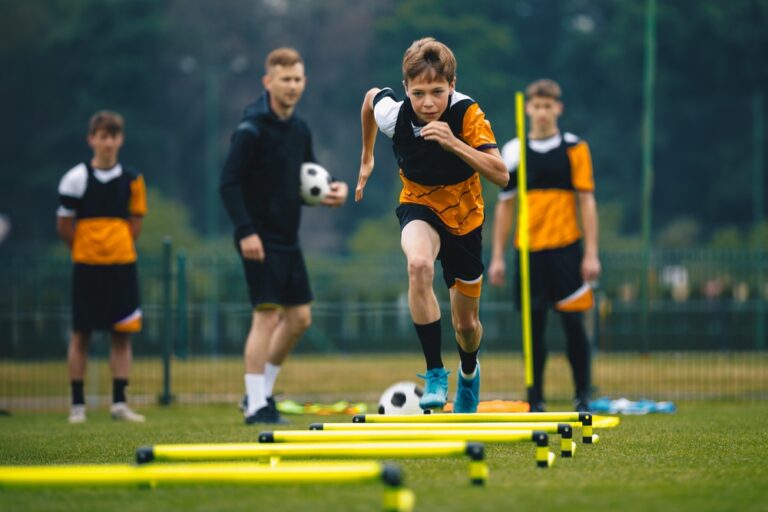
- Skill-development camps. Smaller groups, more reps per kid, structured technical work on dribbling, passing, first touch. Best for ages 8-13 who already play club or rec and want to actually get better, not just play games.
- Position-specific or topical camps. Goalkeeper camps, finishing camps, defending camps. Good if your player has a clear gap they want to close before tryouts.
- Pre-tryout / academy-style camps. Run close to club tryout season (mid-July to early August). High intensity. Good prep but only if your player is already at the level the camp is targeting.
If you’re not sure which bucket your player belongs in, the easiest way to figure it out: ask their current coach. Or ask them. Kids usually know whether they want more fun or more reps — listen to which one comes out first.
5 questions to ask before you book any Charleston soccer camp
These are the questions that separate the camps that will move the needle from the ones that just fill the week. Send the camp director an email or call. If they can’t answer most of these clearly, that tells you everything.
1. What’s the player-to-coach ratio?
Anything over 12:1 is recreation, not development. For real skill work, look for 8:1 or tighter. Smaller groups = more touches per player = more confidence on the ball by Friday.
2. How are the groups split?
By age only, or by age AND skill level? Age-only grouping mixes a U10 club starter with a U10 first-year rec player — and one of them is going to be bored, frustrated, or both. Skill-grouped camps work better for everyone.
3. What does a typical day look like?
A solid skill-development day has a clear shape: warm-up, technical block (first touch, passing, finishing), tactical block (small-sided games with constraints), and a closing scrimmage. If the answer is “we just play games all day,” that’s a rec camp — fine for some players, not great if you’re trying to improve.
4. Who’s actually coaching?
Look for coaches who play or coach at a real level — current college players, USL volunteers, club coaches, or trainers with USSF licenses. The “former pro” claim is sometimes true and sometimes a stretch — ask which team and what year. Coaches who recently competed at a real level run better sessions because they remember what game speed actually feels like.
5. What’s the make-up policy if my player misses a day?
Practical question but it tells you a lot about how a camp is run. Camps with no make-up policy are usually overcommitted. Camps that say “show up to any of our other weeks” are confident in their consistency.
What separates good Charleston camps from forgettable ones
After running training sessions across Mount Pleasant for the past year and watching what other camps in the area actually produce, a few patterns stand out about the camps players come back from sharper:
- They train under pressure. Drills that look easy in a vacuum collapse the moment a defender shows up. Good camps add defenders, time pressure, or space constraints to every technical drill so the rep transfers to a real game.
- They cap group size honestly. A camp that says “8:1 ratio” but actually runs 14:1 because two coaches called out is a different camp on Wednesday than it was on the website.
- They give specific feedback. “Good job” doesn’t change anything. “Take your first touch into space, not into the defender” does. Coaches who give technical feedback in plain language are the ones whose players show up to fall season looking different.
- They build confidence on purpose. Confidence on the ball is the brand pillar at Olly On The Ball for a reason — it’s what changes how a player actually plays in real games. Camps that pile on reps without building the kid’s belief in themselves leave half the value on the table. Watch how coaches talk to players who just messed up. That tells you everything.
Camp options around Mount Pleasant + the Charleston metro
The Charleston soccer scene in summer 2026 has solid options at every level — from large-group rec camps run by national franchises to small-group skill-development weeks run by local trainers. Rather than play favorites here, the pattern that works: pick a high-rep skill camp for one week early in summer (build the foundation), then bookend with a pre-tryout camp in late July (sharpen the edges). Most players don’t need more than two camps in a summer — they need the right two.
If your player wants the small-group, high-rep model — fewer kids, more touches, real technical coaching — that’s the lane Olly On The Ball runs in too. Sessions and small-group weeks are available across Mount Pleasant, Daniel Island, Isle of Palms, and the rest of the Charleston metro through the summer. Get in touch via the contact page if you want to talk through where your player should be focused this summer.
FAQ — Charleston summer soccer camps
How much should I expect to pay for a summer soccer camp in Charleston SC?
Most week-long Charleston-area camps run $200-$450 per week in 2026, depending on coaching depth and ratio. Half-day rec camps anchor the low end; small-group, skill-focused weeks land at the higher end. If a camp is priced way below the range, ask why before you book — usually it’s ratio, hours, or coaching tier.
What age should my kid be to start summer soccer camp?
Most camps take players from age 5 up. Under 5, you’re paying for childcare with a ball nearby — fine, but know what you’re buying. The biggest jump in real development happens between ages 7 and 12 when kids can actually hold technical feedback and apply it the next rep.
Half-day or full-day camp — what’s better?
Half-day works better for ages 5-8 (attention spans and heat). Ages 9 and up handle full-day well if the camp varies the work — technical morning, tactical or game-based afternoon. Full-day camps that grind technical drills for 6 hours are a recipe for a kid who hates soccer by Wednesday.
Should my player do a camp the same week as their club practice?
Generally no. Stacking 25+ hours of soccer on a young body in one week is how injuries happen — especially in Charleston heat. Pick weeks where club practice is light or paused.
How do I know if a camp actually made my player better?
Watch their next game. Real improvement shows up as: faster first touch under pressure, more willingness to take 1v1s, better body shape when receiving the ball. If you don’t see anything different two weeks after camp, it was a fun week — not a development week. That’s not bad, but know which one you bought.
Train hard. Play free.
The best summer for a Charleston youth soccer player isn’t the one with the most camps stacked back-to-back. It’s the one with the right camps at the right intensity, with enough room around them to actually rest, reflect, and show up sharper for fall. Pick on purpose. Train with intent. The kids who come back to club tryouts in August looking like different players are the ones whose summer had a plan — not the ones whose summer had a calendar full of unrelated weeks.
If you want to talk through what the right summer plan looks like for your player, that conversation is free — head to the contact page or check the blog for more on summer training. For more on camp options around the Lowcountry, read our breakdown of Charleston youth soccer camp options, and if you’re trying to decide between camp and private training, see how to pick a camp that actually levels up your game.
Heading into August tryouts? Our companion piece “Charleston Soccer Tryouts: What Coaches Actually Look For” goes deeper on what summer training should prepare for.