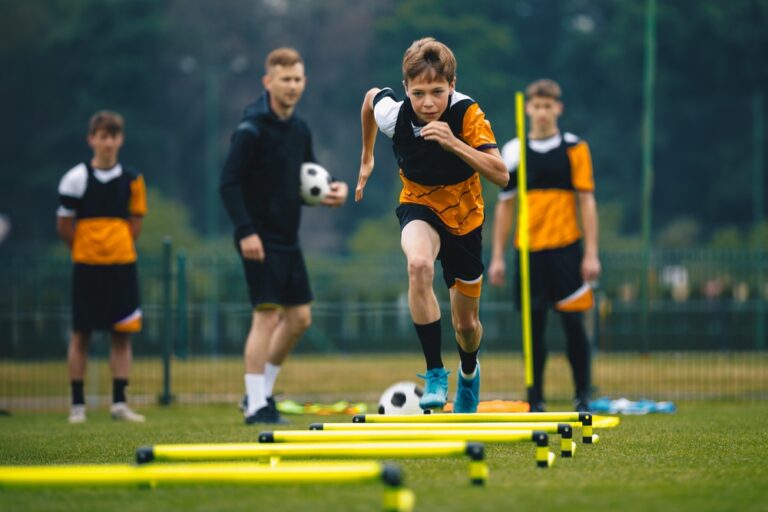


Choosing a private soccer coach in Charleston SC is one of the highest-leverage decisions a youth soccer parent makes — and one of the easiest to get wrong. The right private coach builds confidence, sharpens technique, and accelerates a young player’s development by months. The wrong one runs the same generic session every week, doesn’t tailor anything, and quietly drains your wallet while your player gets marginally better than they would have just by going to club practice. This guide walks through what actually separates great private soccer coaches from forgettable ones, what to ask before you book, and what realistic pricing looks like in the Charleston metro in 2026.
The Charleston SC private coaching market has gotten busier the past two years — more trainers, more academies offering 1-on-1, more independent coaches running backyard sessions. More options is good. It also means parents have to know what to look for. This is the framework that works.
What private soccer coaching actually delivers (and what it doesn’t)
Private sessions are not magic. They’re a specific tool, and that tool solves a specific set of problems better than club practice or camps can:
- Hyper-personalized reps. A 90-minute club practice gives every player maybe 20-30 touches with focused feedback. A 1-on-1 private session gives one player 300+ touches with continuous feedback. The volume + focus is the value.
- Position-specific or skill-specific work. Club training has to serve everyone. Private training can spend 6 weeks just on a player’s weak foot, or finishing inside the box, or 1v1 defending in a wide channel. Targeted reps win.
- Confidence repair. Players who lost confidence in club or game environments often rebuild it faster in 1-on-1 — no comparison, no embarrassment, no being-watched dynamic. This is one of the most underrated uses of private sessions.
- Pre-tryout sharpening. The 4-6 weeks before club tryouts is when private sessions earn their highest ROI — concentrated work on the things tryouts evaluators are actually looking for.
What private coaching doesn’t do well: replace team practice, replace small-sided games, replace the experience of playing inside a real team’s tactical system. Private work is a complement to club soccer, not a substitute for it. Anyone selling it as a substitute is selling something wrong.
The 6 questions to ask before you hire a private soccer coach in Charleston
1. What does a typical session look like?
A real answer: warm-up, technical block (specific to the player’s current focus), small-sided or 1v1 game, cool-down conversation about what we worked on. A vague answer (“we do whatever the kid needs that day”) usually means the coach doesn’t have a system, which means progress is going to be slow and accidental.
2. How do you measure if my child is actually improving?
Great coaches keep notes. They can tell you what the player’s weak foot percentage was 6 weeks ago and what it is now. They can name the specific drill the kid couldn’t do in session 2 that they’re now doing in session 8. If the only measurement is “they’re getting better” with no specifics, that’s a vibe, not a development plan.
3. Where do you train and how do you handle Charleston weather?
Outdoor sessions in Charleston have to deal with summer heat, spring thunderstorms, and the occasional king tide flooding the field. Coaches who train at consistent locations with shaded backup plans for heat days, and who have a clear cancellation/reschedule policy for weather, are running a professional operation. Coaches who scramble for fields week-to-week are usually winging it.
4. What’s your background — playing and coaching?
You’re not hiring credentials, you’re hiring skill transfer. Active or recent high-level players (current college, recent USL, current academy) tend to coach game-speed reps better because they remember what game speed feels like. USSF licenses or NSCAA coaching certifications matter — but a coach actively volunteering with a pro team (Charleston Battery, e.g.) is also a strong signal of current-game exposure. Ask for specifics.
5. How many players do you work with regularly?
Coaches with 5-12 regular players have time to actually plan sessions for each one. Coaches with 30+ players running back-to-back are usually running the same generic session over and over because they have to. Less is usually more here.
6. Can I watch a session before committing?
Any coach worth hiring should be happy to let you observe a session (or run a trial session, sometimes free, sometimes discounted). Coaches who say “parents can’t watch” are usually hiding session quality. Watch the energy, watch the kid’s engagement, watch how the coach reacts to mistakes.
What you should expect to pay in 2026 Charleston SC
Realistic 2026 private soccer coaching rates around the Charleston metro:
- $50-$70 per session for 1-on-1 (60 min) with a younger or developing coach — good fit for fundamentals and confidence work with younger players.
- $70-$110 per session for 1-on-1 (60 min) with a credentialed or actively-playing coach — fair price for game-speed-fluent coaches with current playing experience.
- $120-$180 per session for 1-on-1 (60 min) with a high-credential former pro or licensed academy coach — usually justified by very specific expertise (goalkeeping specialist, finishing specialist, etc.). Don’t overpay if your kid is still working on first touch.
- Semi-private (2-3 players) typically lands at $35-$55 per player per session — strong value if the players are close in level and the coach actually individualizes within the group.
- Small group (4-6 players) lands at $20-$35 per player per session — closer to high-quality camp economics; useful for game-shape work and competitive reps.
Packages of 8 or 10 sessions typically get a 10-15% discount over single-session pricing. Anything below the bottom of these ranges, ask why — usually it’s a coach building their book or a session structure that’s lighter than it sounds.
Red flags worth walking away from
- “We guarantee your child will make their team.” Nobody can guarantee this. Tryout outcomes depend on too many variables outside any private coach’s control. Confidence in their process is healthy. Guarantees of outcomes are a sales line.
- No written cancellation or weather policy. Verbal-only arrangements get messy fast in summer Charleston.
- Pressure to commit to a 6-month package in the first conversation. A trial session or short package first is standard. Long contracts up-front are usually about cash flow, not coaching philosophy.
- Coach can’t tell you what they’d specifically work on with your player after a 10-minute conversation. Generic answers mean generic sessions.
- No referenceable parents. Good coaches have a list of current parents who will happily talk to you. If they don’t, that’s a signal.
What a good first month looks like
If you’ve hired the right private coach, here’s roughly what month one should produce:
- Sessions 1-2: Assessment. Coach figures out the player’s current ceiling, current weakest area, current motivation. Player figures out whether they vibe with the coach.
- Sessions 3-5: Targeted work on the #1 or #2 weakness identified. Skill block + game-shape rep block. Player should be visibly more comfortable on the ball by session 4-5.
- Sessions 6-8: Layering. Add a second skill focus while maintaining the first. Pressure starts to creep into the technical reps. The player should be noticeably different at club practice — coach feedback often confirms this without you asking.
If month one doesn’t produce visible change at club practice — not “they enjoy it” change, real “their coach mentioned something looks different” change — something’s not right. Talk to the trainer. Adjust focus. If sessions 9-12 still aren’t producing transfer, switch trainers.
FAQ — Private soccer coach Charleston SC
How often should my kid do private soccer sessions?
For ages 8-12, one session per week is the floor that produces real transfer; two sessions per week is the sweet spot for accelerated development. More than that usually crowds out unstructured play and rest, which young athletes need just as much as reps.
At what age does private soccer training start to make sense?
Age 7-8 is a reasonable starting floor for kids who are already passionate and motivated. Younger than that, the dollars usually produce more value in a structured small-group setting (more fun, more peer learning). Older than 14, private work shifts from foundation-building to specific game-prep and college-recruitment-focused work.
How do I tell my child’s club coach that we’re also doing private training?
Most club coaches appreciate when parents are upfront about supplemental work — it tells the club coach you’re invested, and it helps them coordinate what to focus on at club practice. A short email letting them know which trainer you’re working with and what the focus areas are usually generates a positive response. Hiding private work tends to backfire.
What’s the difference between private soccer coaching and a small group session?
Private (1-on-1) gives maximum personalization and confidence repair. Small group (2-6 players) adds competitive reps, peer learning, and game-shape work that 1-on-1 can’t replicate. For most young players, a mix produces the best development — start 1-on-1 to build foundation, then layer in small group as confidence and technique stabilize.
Should I find a coach who plays my kid’s exact position?
For ages 8-12, no — at that age the goal is well-rounded development. Position specialization too early often narrows a player. For ages 13+, finding a coach with relevant position experience (especially for goalkeeping) starts to matter more.
Train with purpose. Don’t waste reps — or money.
A great private soccer coach in Charleston is one of the best investments a serious youth soccer family can make. A poorly-chosen one is one of the most quietly expensive ones. Use the questions above. Ask for the trial session. Watch how the coach handles a mistake. Compare what you’re paying to the ranges that match the coach’s actual experience level. The Charleston market has real options at every tier — your job as a parent is to match the option to your player.
If you’re in Mount Pleasant or the Charleston metro and want to talk through whether private 1-on-1 training is the right next step for your player — that conversation is free. Head to the contact page. For more on private training specifically, see why a private soccer coach can change your child’s trajectory, a breakdown of private soccer lesson costs, and why your child might need one-on-one lessons. Already focused on getting ready for August club tryouts? Read our companion guide to Charleston soccer tryouts and what coaches look for.