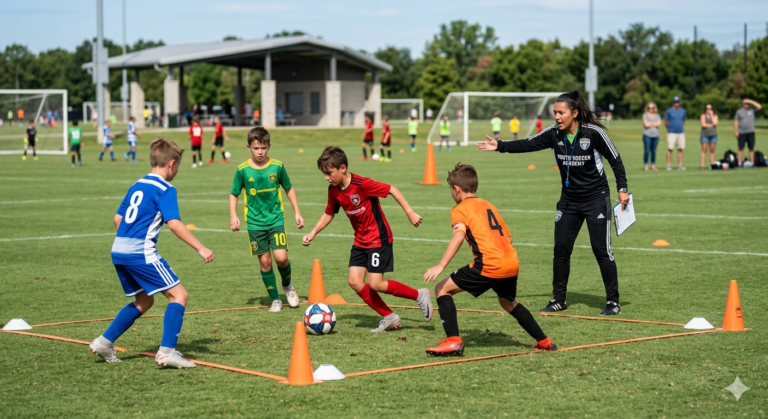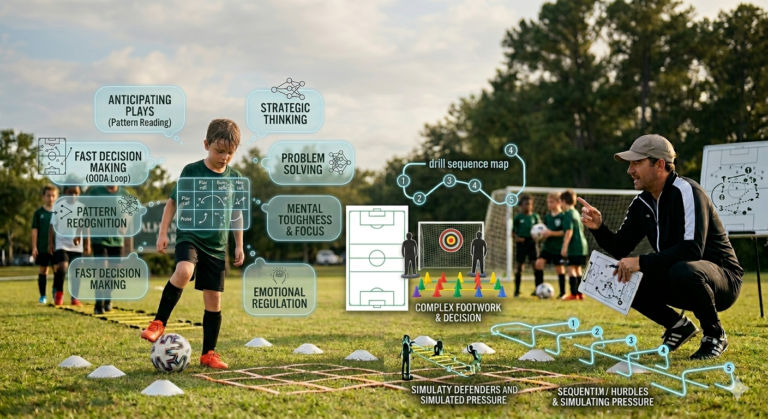


As a youth coach for over a decade, I’ve always been intrigued by how countries play soccer. The difference between American and Brazilian football traditions is fascinating. It shows two different ways to excel on the field.
Brazilian players learn jogo bonito – the beautiful game. It’s all about creativity, flair, and being brilliant with the ball. Kids play barefoot on beaches and streets, which helps them develop amazing touch and creativity early on.
American football culture is all about structure, athleticism, and teamwork. Our training focuses on organized sessions, physical conditioning, and playing as a team. This approach has helped us improve our standing globally.
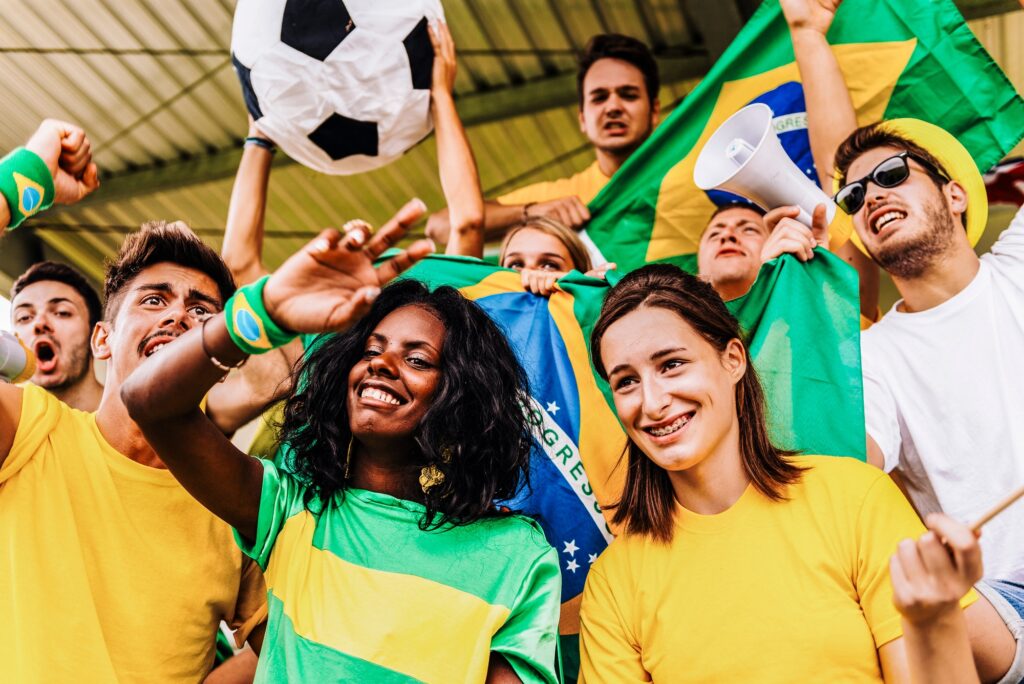
When these nations face off, it’s more than just a game. The fan cultures are just as interesting. From Brazil’s carnival-like supporters to America’s growing fan base, each side has its own story to tell.
Key Takeaways
- Brazilian football emphasizes creativity and individual skill development
- American soccer focuses on structured systems and athletic development
- Cultural differences shape each country’s approach to player development
- Brazil’s street football tradition contrasts with America’s organized youth programs
- Understanding both styles can help young players develop a more complete game
- The contrast creates fascinating dynamics during international matches
Historical Development of Soccer in Both Nations
I find it fascinating how soccer evolved differently in Brazil and the U.S. This has shaped each country’s love for the game. Culture, economics, and identity play big roles in how a sport grows.
Brazil’s Rich Soccer Heritage
Brazil’s love for soccer started in the late 19th century. They quickly made the game their own. British sailors and workers introduced soccer in 1894, but Brazilians made it uniquely theirs.
Soccer in Brazil is more than a sport; it’s part of who they are. Kids play futebol everywhere. This made soccer accessible to all.
The 1958 FIFA World Cup was a turning point for Brazil. Led by Pelé, they won their first world title. This victory showed Brazil’s unique style.
Brazil’s soccer reflects their spirit. They focus on creativity and joy. Players like Garrincha and Ronaldo have shown soccer can be beautiful.
The Evolution of US Soccer
American soccer history is one of hard work, not instant success. Soccer faced tough competition from other sports. But, we’ve made progress.
The 1994 FIFA World Cup was a big moment for U.S. soccer. It brought excitement and new fans. This led to the start of Major League Soccer in 1996.
The U.S. women’s team is a global powerhouse. They’ve won four World Cups and Olympic gold. Their success has inspired many young players.
The men’s team has had ups and downs. But, more Americans are playing in top European leagues. This has raised the standard of our national team.
The U.S. has built its own way to develop players. From youth clubs to professional academies, we’re always improving.
Key Historical Matches Between US vs Brazil Soccer
The history of matches between the U.S. and Brazil is full of competition and respect. These games show the difference between established powerhouses and rising teams.
On the men’s side, Brazil has often won. But, some matches have been turning points. The 1998 CONCACAF Gold Cup semifinal was a big upset for the U.S.
The 2009 Confederations Cup final was dramatic. The U.S. led 2-0, but Brazil came back to win 3-2. This match showed the growing competition.
In women’s soccer, the rivalry is closer. The U.S. women have a strong record against Brazil. They’ve won Olympic finals in 2004 and 2008.
| Notable Match | Year | Result | Significance |
|---|---|---|---|
| CONCACAF Gold Cup Semifinal | 1998 | USA 1-0 Brazil | First major USMNT victory over Brazil |
| Confederations Cup Final | 2009 | Brazil 3-2 USA | USA led 2-0 before Brazil’s comeback |
| Olympic Gold Medal Match | 2004 | USA 2-1 Brazil | USWNT Olympic triumph |
| Olympic Gold Medal Match | 2008 | USA 1-0 Brazil | Dramatic extra-time victory |
These matches have given us unforgettable moments. Brazil is known for technical skill and flair. The U.S. focuses on physicality and never-give-up spirit.
I love sharing these historic games with young players. They show how soccer connects nations with different approaches. Each match adds to the story of two soccer cultures.
Contrasting Playing Philosophies
As a youth coach, I love explaining the big differences between Brazilian and American soccer philosophies. It shows how culture shapes the game. When my players get this, they appreciate soccer’s global diversity more.
These two nations have their own styles. They reflect their sporting identities and cultural values.
Brazilian “Jogo Bonito” Style
Teaching Brazilian techniques to my players is always exciting! Brazil’s “jogo bonito” (beautiful game) is all about art and expression. It comes from street and beach games, where creativity and skill are key.
Brazilian players are great at:
- Controlling the ball in tight spots
- Making quick, sneaky moves
- Thinking on their feet and solving problems
- Moving with the ball like it’s a dance
This style is special because it values individual talent within a team. Players show off their skills with dribbling and unexpected moves. The focus is on creative passing.

In my coaching, I use Brazilian exercises to help players feel comfortable with the ball. It teaches them to think creatively. Brazilian soccer shows us that the game should be fun and expressive.
American Pragmatic Approach
The American soccer style is shaped by our culture in interesting ways. It’s different from Brazil’s focus on individual creativity. US soccer values athleticism, teamwork, and tactical discipline.
American players are known for their physical skills:
- Speed and endurance
- Strength and aerial ability
- Disciplined positioning and tactical smarts
- Mental toughness and competitive spirit
Our style is about direct play and quick transitions. The college system has shaped this approach, focusing on physical conditioning and teamwork. When we analyze USMNT or MLS games, we see how American teams use their strengths to win.
American soccer isn’t lacking in skill. Instead, technical abilities are used for effective team play and tactics. It’s exciting to see how this style is evolving with international experience.
Cultural Influences on Playing Styles
Culture deeply influences soccer styles, and I love teaching my players about this! Brazil’s soccer reflects its vibrant culture, celebrating carnival and dance. This led to a style that values creativity and flair.
Brazilian players often come from humble backgrounds. They play soccer in streets and on beaches, developing close ball control and improvisation. American soccer, on the other hand, comes from a sports culture that values organized team sports.
Our focus on athletic attributes, tactical systems, and stats mirrors other American sports. Geography also plays a role: Brazil’s climate allows for year-round outdoor play, while many American players train indoors during winter.
Introducing kids to soccer is different too:
- Brazilian kids learn through play and small-sided games
- American youth soccer emphasizes organized leagues
- Brazilian coaching focuses on technical skills and creativity
- American coaching stresses team shape and tactics
Understanding these cultural influences helps players see different ways to play soccer. I tell my teams that there’s no one “right way” to play. American soccer is creating its own style, blending influences while honoring our traditions.
Player Development and National Team Structure
When I look at how Brazil and the USA develop soccer talent, I see two different ways. Both methods produce amazing players, showing the unique soccer cultures of each country. From how they train young players to their national team strategies, the differences are clear.
Brazil’s Youth Academies and Street Soccer Tradition
Brazil’s system combines street soccer and youth academies. Kids play informal games on beaches and courts, improving their skills and creativity. This unstructured play is key to their technical abilities.
“In Brazil, kids don’t learn soccer, they absorb it,” a famous Brazilian coach once told me. “The ball becomes an extension of their body before any coach gives them tactical instructions.”
After developing their skills on the streets, Brazil’s academies polish them. Clubs like Flamengo and Santos focus on adding tactical awareness and physical conditioning. They keep the creative flair from the streets.
Brazil’s system values technical mastery first. Young players get countless touches in unstructured environments. This builds the foundation for their unique style, blending individual brilliance with teamwork.
USA’s College System and MLS Development
The American development pathway is different, focusing on school and college soccer. This approach provides education and athletic development together.
Young American players go through structured youth clubs. They learn tactics and physical skills early, often focusing on team success. This is different from Brazil’s emphasis on individual creativity.
The college system is a unique part of American soccer. It offers valuable life skills and education but has developmental challenges. As oneUSMNTplayer said, “College soccer taught me leadership and mental toughness, but I had to catch up technically when I turned pro.”
MLS academies have changed the landscape, offering professional paths. They use international best practices while keeping educational opportunities. TheMLSNext program provides top-level competition for young players.
National Team Compositions and Strategies
The development systems shape the national teams differently. Brazil focuses on technical brilliance and creativity. They select players who excel in one-on-one situations and can create magic.
Brazil’s teams often prioritize attacking talent, with defense secondary. They use possession, flair, and individual skill to break down defenses.
The US approach is more tactical, focusing on specific roles for players. The USMNT values athleticism, work rate, and tactical discipline. Coaches plan games to use the team’s strengths.
The USWNT has built a winning culture based on physical strength, tactical flexibility, and mental toughness. Their success comes from a deep player pool and commitment to excellence. As one national team veteran said, “Our advantage isn’t just skill—it’s our mentality and preparation.”
International Achievements and Head-to-Head Records
Brazil’s men’s team is the most successful in FIFA World Cup history, with five championships. They’ve also won nine Copa América titles, showing their dominance.
The USMNT has made steady progress, reaching the World Cup quarterfinals in 2002. They’ve won seven Gold Cup championships, showing promise with young talent.
The women’s side is a different story. TheUSWNThas won fourWorld Cuptitles and multipleOlympic gold medals. Brazil’s women have been finalists but never champions, with players like Marta achieving legendary status.
In head-to-head competition, Brazil’s men have historically dominated the US. But the gap has narrowed, with several American victories. The women’s rivalry is more competitive, with the USWNT leading.
These contrasting achievement records show different development priorities and cultural emphasis. I love sharing these stories with my players to show how nations can succeed through different paths!
Conclusion: The Future of US vs Brazil Soccer Rivalry
The US-Brazil soccer rivalry is truly magical. The next friendly at SoFi Stadium in California will be thrilling. My players love watching these games, as they learn so much.
Want an exclusive update? The women’s teams are gearing up for Olympic Gold Medal rematches. Soccer insiders say these games are must-see events. They show Brazil’s creativity and America’s determination.
These games teach young players a lot. Watch how Brazilian players move and express themselves. See how American players defend and transition quickly. Both styles are great!
Get your ticket early if you’re in California – these games sell out quickly. I’m taking my youth team to feel the excitement. The rivalry is shaping the future of soccer for both countries.
Whether you like Brazil’s jogo bonito or America’s practical style, this rivalry benefits both. As the gap narrows in men’s soccer and women’s competition gets fiercer, I’m eager to see how these styles evolve. They will stay true to their roots.