
Ball Mastery Starts Here: The Best Soccer Ball Control Drills to Level Up Your Game
Soccer ball control drills are the fastest way to improve your touch, build confidence, and stand out on the field. Here are the core drills to get started:
- Toe Taps – Alternate feet on top of the ball, start slow, build speed
- Sole Rolls – Roll the ball side to side using the bottom of each foot
- Inside-Outside Weave – Dribble through cones using inside and outside of foot
- Wall Pass and Control – Pass against a wall, cushion the return with a clean first touch
- Happy Feet – Move the ball back and forth between feet using inside touches
- Cruyff Turn – Fake a pass, drag the ball behind your standing leg, explode away
- Juggling – Keep the ball in the air to build touch and muscle memory
Whether your child is just starting out in rec soccer or grinding to make the A-team, one thing separates the players who get more playing time from the ones who struggle: what they do with the ball the moment they receive it.
That first touch. That split second of control. It changes everything.
The good news? Ball control is a learned skill. It is not something you either have or you don’t. The right drills, practiced consistently, will build the touch, rhythm, and confidence that makes players dangerous on the ball — whether they’re playing at Blackbaud Stadium or a Saturday morning match in Mount Pleasant.
This guide covers everything — from simple backyard drills for beginners to advanced pressure training for competitive players. No fluff, just drills that work.
Why Mastering Ball Control is a Game-Changer
In soccer, ball control is the foundation upon which every other skill is built. When we talk about ball control, we aren’t just talking about juggling; we are talking about a player’s ability to manage the ball’s direction, speed, and positioning under any circumstance.
A quality first touch creates a small time advantage that separates a successful attack from a lost possession. Think about how Lionel Messi operates. He doesn’t just run fast; he keeps the ball so close to his feet that it looks like it’s attached by a string. This is called close control, and it allows him to change direction in a heartbeat, leaving defenders in the dust.
For young players in the Lowcountry, competition is getting tougher every year. Whether you are playing for a local club in Mount Pleasant or aiming for the Charleston Battery academy, you need technical freedom. That means being so comfortable on the ball that you don’t have to look down at it. When you aren’t worried about your feet, you can keep your head up to see the open pass or the winning shot.
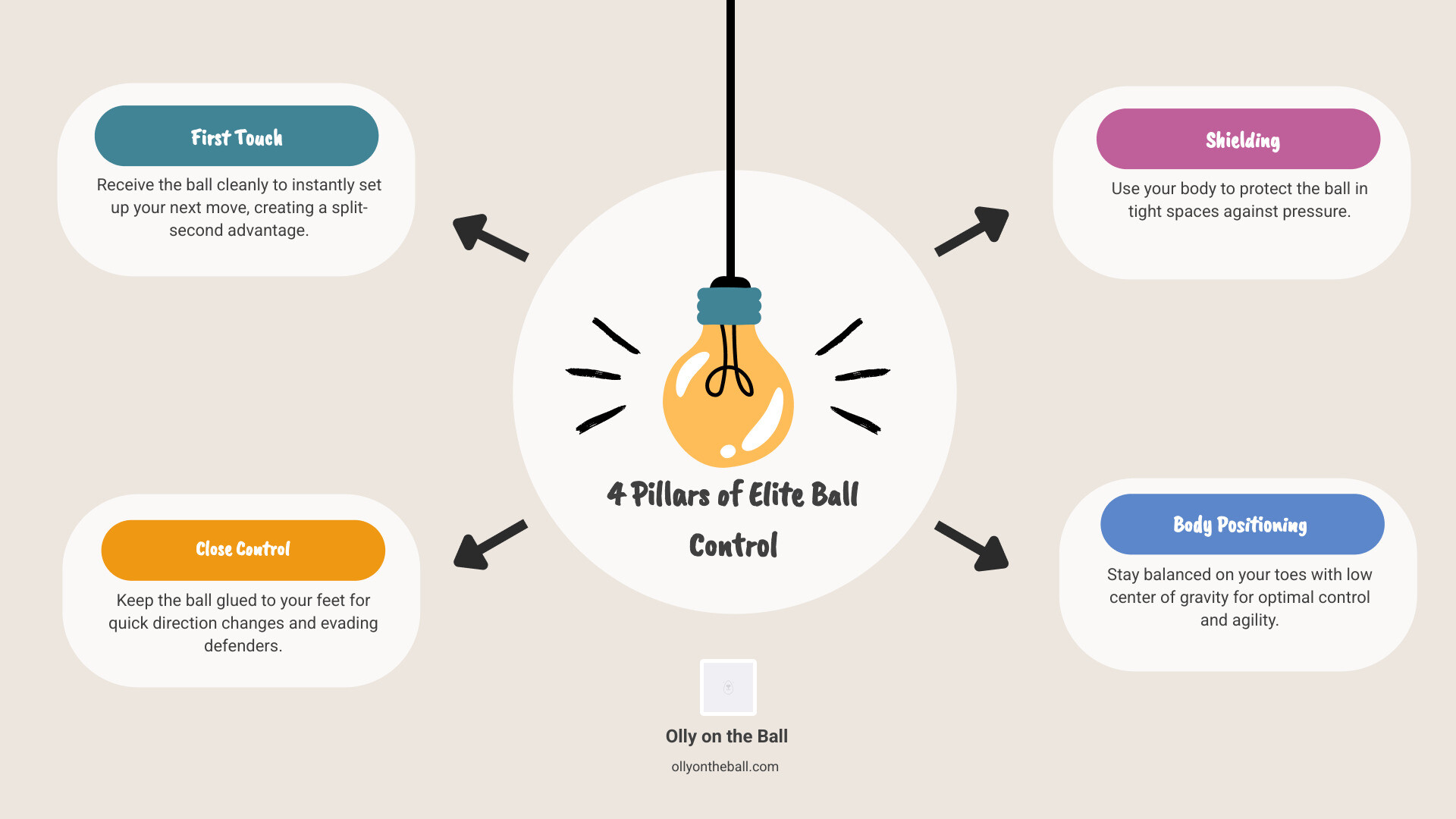
At Olly on the Ball, we focus on private training services that emphasize shielding and body positioning. Shielding is the art of using your body as a barrier between the ball and the defender. By mastering these ball control elements, you gain the confidence to play out of tight spaces and dictate the tempo of the game.
Essential Beginner soccer ball control drills for Home Practice
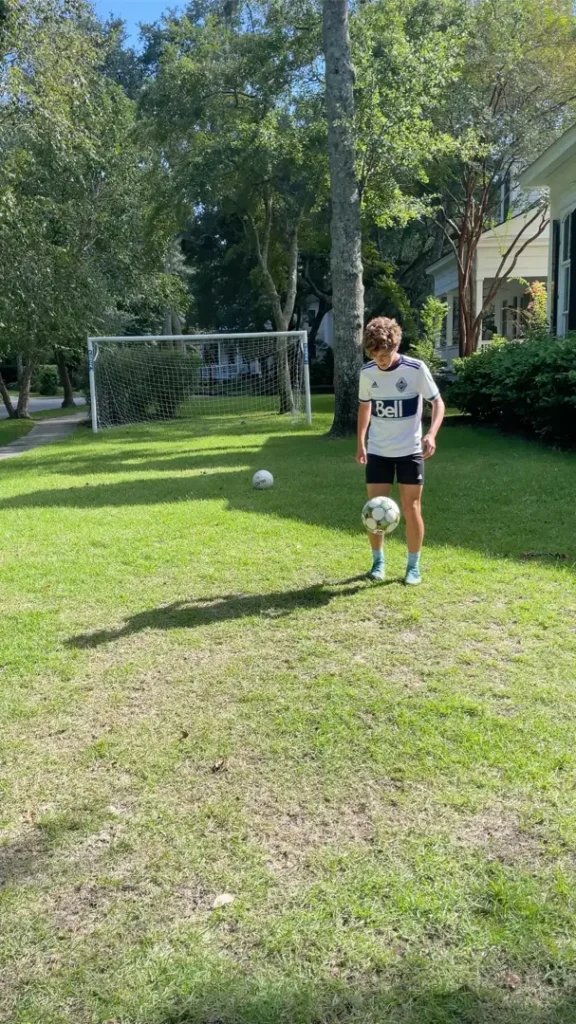
You don’t need a professional stadium to get better. Some of the best soccer ball control drills can be done right in your backyard in Charleston or even in a small hallway at home. The goal for beginners is to build a “feel” for the ball using every part of the foot—the inside, outside, laces, and sole.
Building a Foundation with soccer ball control drills
The secret to elite ball mastery is repetition. You want these movements to become muscle memory so that in a game, you don’t have to think—you just react. Here are the foundational exercises to start with:
- Toe Taps: Place the ball in front of you. Lightly touch the top of the ball with the sole of your right foot, then your left. Stay on your toes and find a rhythm. As you get comfortable, try to do this while looking forward instead of at the ball.
- Happy Feet (Foundations): Knock the ball back and forth between the insides of your feet. Keep your knees bent and stay bouncy. This is the “bread and butter” of ball control.
- Sole Rolls: Use the bottom of your foot to roll the ball across your body. Catch it with the other foot and roll it back. This teaches you how to manipulate the ball’s position quickly.
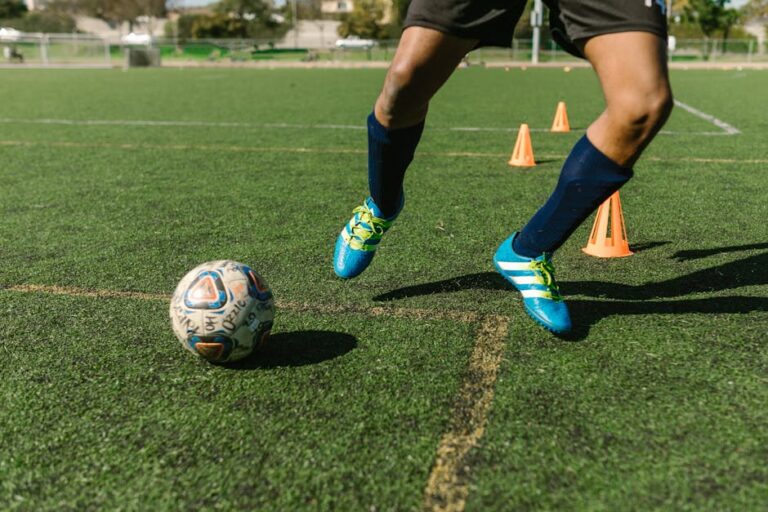
- Inside-Outside Weave: Set up 5-6 cones (or even shoes/water bottles) about 2 yards apart. Dribble through them using only the inside and outside of one foot, then switch to the other.
For those just starting, check out these 11 Easy Drills for Beginners to keep your training fresh. Remember to keep a low center of gravity; bending your knees gives you the balance needed to change direction instantly.
Mastering the First Touch
The “first touch” is arguably the most important skill in soccer. It’s how you receive the ball and set yourself up for the next move. If your first touch is heavy, the defender takes the ball. If it’s soft and intentional, you own the pitch.
One of the best ways to practice this solo is through Wall Passes. Find a sturdy wall (with your parents’ permission!) and pass the ball against it. As it rebounds:
- Cushion it: Use the inside of your foot to “catch” the ball, bringing it to a dead stop.
- Directional Touch: Instead of stopping the ball, use your first touch to push it 45 degrees to the side. This simulates “receiving on the half-turn,” allowing you to escape a defender immediately.
- Scanning: Right before the ball hits your foot, take a quick peek over your shoulder. This builds the habit of knowing where the space is before you even have the ball.
Intermediate and Advanced Drills to Beat Defenders
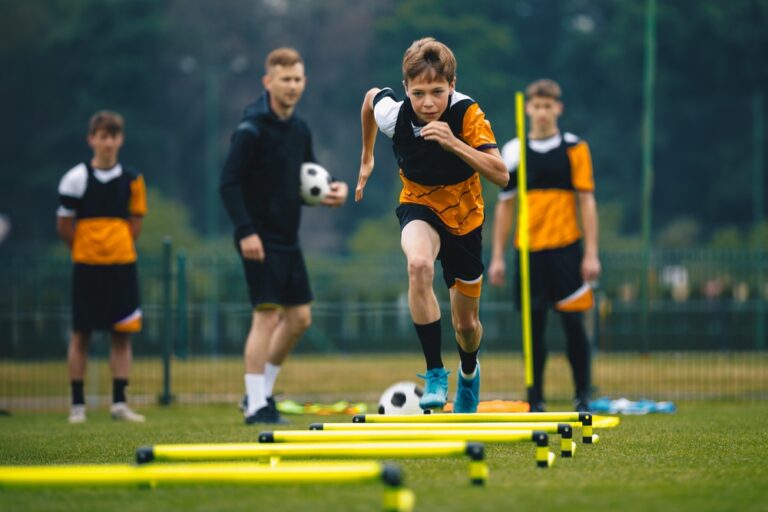
Once you’ve mastered the basics, it’s time to add speed and deception. Intermediate and advanced players need to move from stationary mastery to dynamic movement.
| Drill Type | Focus | Difficulty |
|---|---|---|
| Stationary Mastery | Muscle memory & feel | Beginner |
| Dynamic Movement | Speed & Agility | Intermediate |
| Pressure Drills | Decision making | Advanced |
To truly beat defenders, you need to incorporate moves popularized by legends like Ronaldinho. His legendary flair wasn’t just for show; it was about using “fake” movements to off-balance opponents.
- The Cruyff Turn: Fake a shot or a long pass. Instead of kicking through, use the inside of your foot to hook the ball back behind your standing leg. Explode away in the opposite direction.
- The L-Cut: Pull the ball back with your sole, then quickly “V” it out with the inside of the same foot. This creates an ‘L’ shape that is perfect for evading a lunging tackle.
- Step-Overs: Circle your foot around the front of the ball without touching it, then push the ball away with the outside of your other foot. This sells a fake direction to the defender.
Advanced soccer ball control drills Under Pressure
In a real match, you won’t have all day to decide what to do. You’ll be in tight spaces with defenders breathing down your neck. This is where we take inspiration from the pros at the Charleston Battery and focus on high-intensity scenarios.
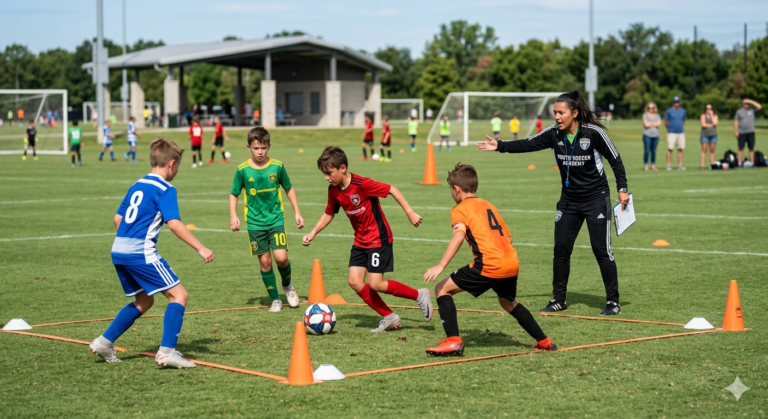
4v4 Penetration Drills are a favorite for developing these skills. In a small 25×35 yard grid, players must use their ball control to penetrate the defense via a pass or a dribble. Because the space is small, your first touch must be perfect. If you take a heavy touch, the ball is gone.
Another great advanced technique is the Shielding Turn. Practice dribbling toward a cone, then “sit” into your stance, putting your body between the cone (the defender) and the ball. Use your sole to roll the ball around the defender while keeping your arm out for balance. This is how you “win your battles” in the midfield.
How to Structure Your Solo Training Routine
Consistency is the difference between a good player and a great one. You don’t need three hours a day; you need 15-20 minutes of high-quality, focused reps.
Here is a simple structure we recommend for our local Charleston players:
- The Warm-Up (5 Minutes): Start with 500 touches. This sounds like a lot, but between toe taps, foundations, and sole rolls, you’ll hit it in no time.
- Skill Progression (10 Minutes): Pick two moves (like the Cruyff or the Step-over) and practice them at 50% speed until the form is perfect. Then, ramp up to 100% “game speed.”
- High-Intensity Reps (5 Minutes): Use a wall or a rebounder. Pass the ball hard and focus on a perfect directional first touch.
- Juggling Finisher: End with 2-3 minutes of juggling. Try to use your feet, thighs, and chest. It’s a great way to cool down while still building touch.
Training on your own builds self-reliance. You aren’t waiting for a coach to tell you what to do; you are taking ownership of your development. For more inspiration on how to build your own sessions, check out our blog and tips.
Common Mistakes and Pro Tips for Success
Even the best players make mistakes. The key is identifying them early so they don’t become bad habits.
- Looking Down: This is the #1 mistake. If you’re looking at the ball, you can’t see the defender coming. Practice your soccer ball control drills with your chin up.
- Heavy Touches: If the ball is bouncing 5 feet away from you, you aren’t controlling it—you’re chasing it. Focus on “soft feet.” Imagine the ball is an egg you don’t want to break.
- One-Footedness: In the modern game, being one-footed makes you predictable. A two-footed player is twice as dangerous. Whatever you do with your right foot, do twice as much with your left.
- Stiff Posture: If you stand tall like a surfboard, you’ll be easily knocked off the ball. Stay low, keep your knees bent, and stay on the balls of your feet.
My best peer-to-peer advice? Quality over quantity. It is better to do 10 perfect Cruyff turns than 100 sloppy ones. Stay relaxed. When you are tense, your touches become jerky. Take a deep breath, find your rhythm, and enjoy the process.
Frequently Asked Questions about Ball Control
How often should I practice ball control?
Ideally, every day! Even 10 minutes a day makes a massive difference over a month. Think of it like brushing your teeth—it’s just part of the daily routine.
What equipment do I need for solo drills?
Very little! All you really need is a ball. Cones are great, but you can use water bottles, shoes, or even rocks. A flat wall is your best friend for practicing your first touch.
How do I improve my weak foot?
The “Weak Foot Only” rule. For one entire training session, or even just during your backyard drills, vow to only use your non-dominant foot. It will feel awkward at first, but your brain will eventually “click” and build that muscle memory.
Conclusion
Mastering the ball is the first step toward mastering the game. Whether you’re dodging defenders on Daniel Island or practicing your footwork in Summerville, these soccer ball control drills are your ticket to becoming a more confident, effective player.
At Olly on the Ball, we believe that the best way to learn is from someone who is still in the game. As a peer-led coaching service, we bring authentic, high-level experience to every session, helping young players in Charleston and Mount Pleasant find their love for the game while building elite fundamental skills.
Ready to take your game to the next level? Don’t just read about it—put it into action.