
Why Every Young Player Needs Soccer Drills for Small Spaces
Soccer drills for small spaces are one of the fastest ways to level up a young player’s game — here are the most effective ones to try right now:
- Positional Rondo — Keep possession in a team shape against pressing defenders
- 2v2 Possession Squares — First team to 5 consecutive passes wins; rotate losers out
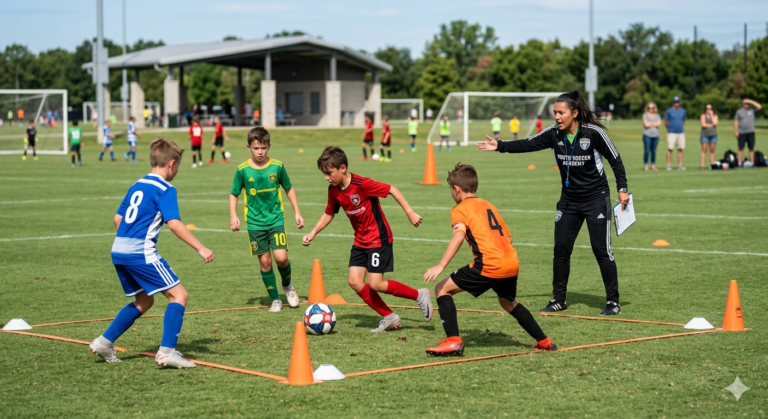
- 4v4 to Small Gates — Attack, defend, pass, and support in a 25×35 yard area
- 3v3 Quick Rotations — Switch roles on every turnover to build transition speed
- Freeze Tag Dribbling — Dribblers dodge taggers; unfreeze teammates with a pass through their legs
- Diamond Passing — Changing angles force precise body shape and quick decisions
- 4 Cone Wall Passes — Use any wall or fence to work first touch in a tiny area
Here’s the thing most people get wrong about soccer training: you don’t need a full field to get better.
Some of the sharpest technical players in the world built their touch in cramped courtyards, tiny backyards, and narrow alleyways. Tight spaces force you to think faster, control the ball cleaner, and move with purpose.
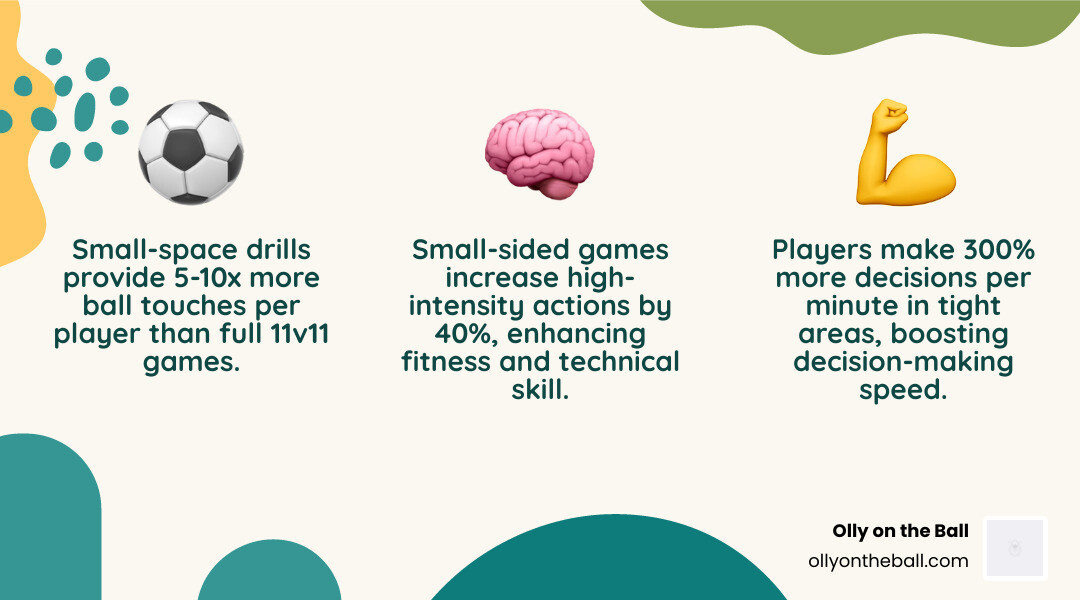
For U12 players especially, small-space training is a secret weapon. When the area shrinks, the demands go up — more decisions per minute, more touches per player, more pressure to perform. Research on small-sided games backs this up: reducing pitch size increases technical demands and creates a higher, more focused training load compared to larger formats.
A coach once watched his U12 team pass the ball back to their goalkeeper intentionally and keep possession — something rare even at higher levels. The opposing coach said:
“The first time you passed the ball back to your keeper intentionally and continued play, I knew we were in trouble.”
That kind of composure doesn’t come from running laps on a big field. It comes from hundreds of reps in tight spaces where every touch counts.
Whether you’re training in a half-gym in Mount Pleasant, a small patch of grass at a local Charleston park, or even a garage — this guide has you covered.
Why Small Space Training is a Game-Changer for U12 Players
When we talk about training in tight quarters, we aren’t just making do with what we have; we are actually using a superior training method. For U12 players in the Charleston area, this is the age where “concrete thinking” starts to transition into tactical awareness.
In a standard 11v11 game, a player might go minutes without touching the ball. In soccer drills for small spaces, that same player might touch the ball every five seconds. This high volume of repetitions is what builds muscle memory. According to scientific research on small-sided game physiological loads, smaller pitch sizes increase the number of 1v1 turns and technical actions, leading to a much higher “load” on the player’s brain and body.
The USSF recommends a 50×36 yard field for U12 6v6 games, but in the real world—especially during rainy Lowcountry days when we head indoors—we often have much less. That’s actually a blessing. Small spaces force quick decision-making. You don’t have time to look down at the ball; you have to scan, find your teammate, and execute.
| Feature | 3v3 Small-Sided Game | 11v11 Full-Sided Game |
|---|---|---|
| Touches per Player | Extremely High (Constant) | Low to Moderate |
| Decision Frequency | Every 2-4 seconds | Every 10-20 seconds |
| 1v1 Opportunities | Constant | Occasional |
| Hiding Spots | None | Many |
The Ultimate Guide to Soccer Drills for Small Spaces
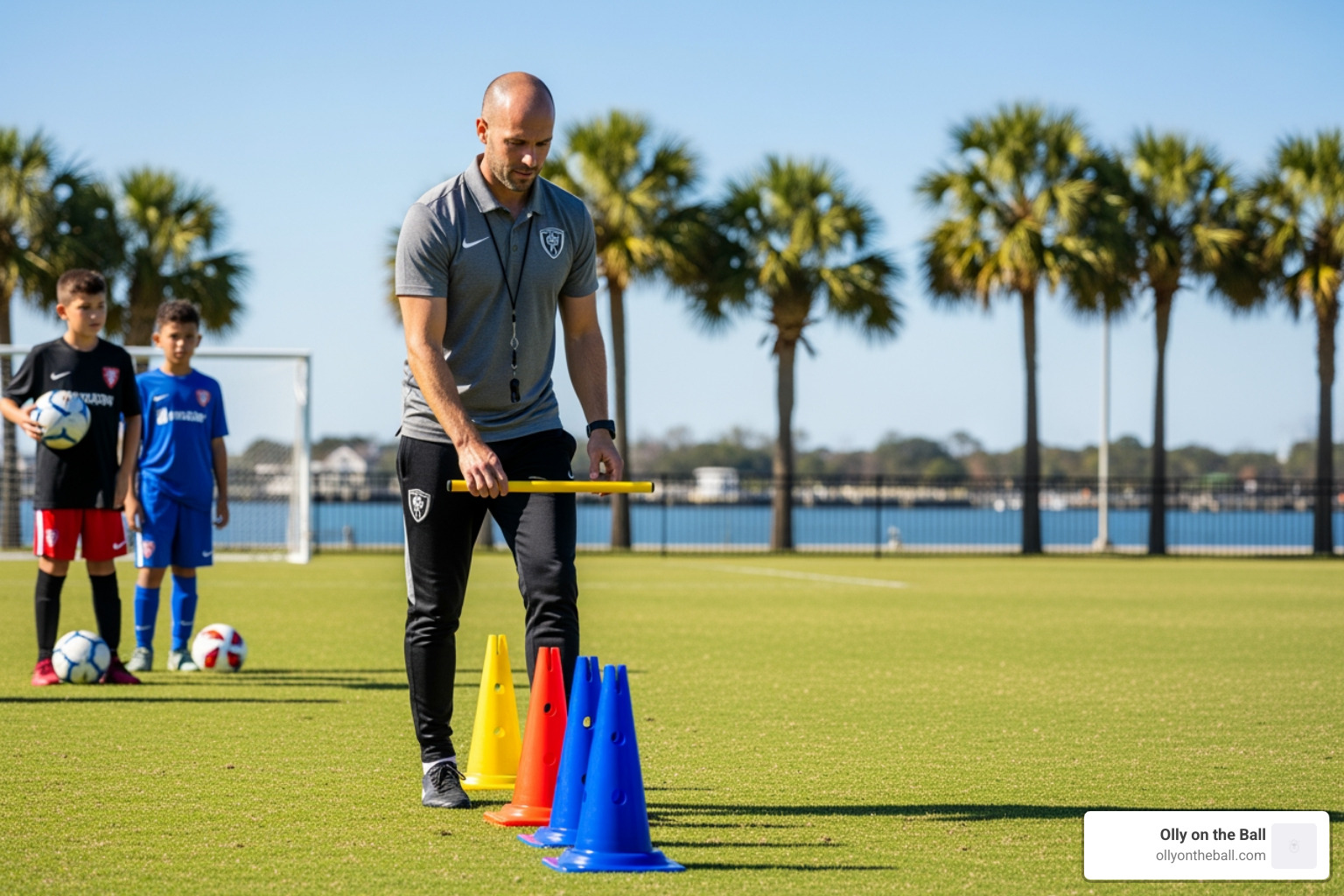
To truly “Train like Messi,” you have to embrace the crowd. Messi is the master of the “phone booth” because his body shape and supporting angles are always perfect. We use specific drills to mimic these high-pressure game scenarios.
One of our favorites is the Positional Rondo. Unlike a basic circle rondo, a positional rondo sets players in their actual game shapes (like a diamond or a 2-3-1). We might have 6 attackers versus 3 defenders in a tight grid. The goal isn’t just to keep the ball; it’s to keep it while maintaining the distances you’d see on a Saturday morning at the Mount Pleasant Waterfront Park fields.
Indoor soccer drills for tight space practice emphasize that “backward passing” isn’t a retreat—it’s a tool to reset the angle of attack. In a small space, passing back to a “keeper” or a deep pivot player opens up the entire pitch.
Mastering Ball Control with Soccer Drills for Small Spaces
Before you can play the “killer pass,” you need “velcro” feet. We focus on fundamental skill development through repetitive, high-energy movements:
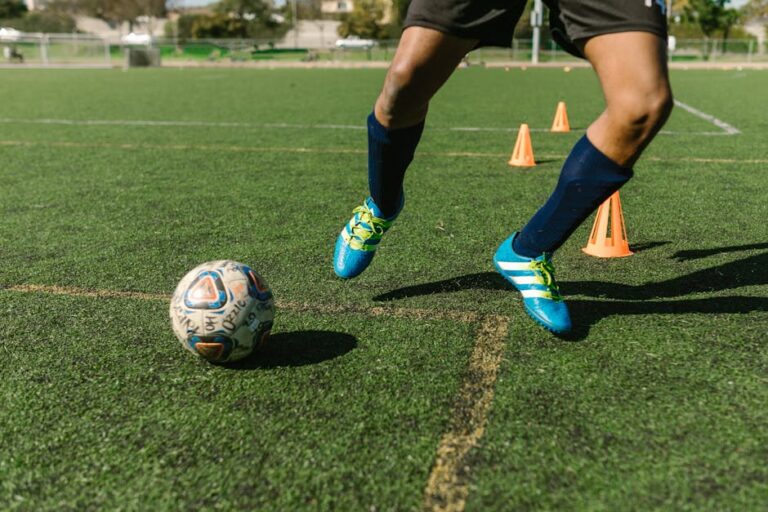
- Figure-Eight Dribbling: Set two cones just 3 feet apart. Weave the ball through them using only the inside and outside of one foot, then switch. This builds the ankle flexibility needed for quick cuts.
- Toe Taps & Roll-Overs: These aren’t just warm-ups. Doing 100 of these in a 2×2 square improves your “feel” for the ball’s surface.
- The Deception Factor: In small spaces, you must use your body to sell a lie. We teach players to “drop the shoulder” one way before exploding the other. If you can beat a defender in a 5-yard square, you can beat them anywhere.
Competitive Soccer Drills for Small Spaces to Boost Motivation
U12 boys are naturally competitive. If you just tell them to pass, they might get bored. If you tell them it’s the World Cup Final, the intensity triples.
- The Chaos Drill: We put 12 players in a small 20×20 grid, each with a ball. They have to dribble and perform moves without hitting anyone else. On a whistle, they have to leave their ball and find a new one. It’s loud, it’s fast, and it’s exactly like the middle of a crowded midfield.
- Freeze Tag: This is a classic for a reason. Taggers try to touch the dribblers. If you’re frozen, you stand still with your legs apart. A teammate can unfreeze you by passing their ball through your “bridge.” This teaches players to keep their heads up even when under pressure.
- Scoring Bonuses: In any 3v3 or 4v4 game, we add a “3-pass bonus.” If you complete three passes before scoring, the goal counts for three points. This stops the “hero ball” mentality and encourages team play.
Small-Sided Games (SSGs) for Tight Areas
Small-sided games are the heartbeat of our training. Whether we are at a gym in Daniel Island or a backyard in James Island, the format stays the same: keep it small, keep it fast.
4v4 to Small Gates is the gold standard. 4v4 is the smallest version of the full game that still includes all the tactical elements: width, depth, and support. We set up a field roughly 25×35 yards. With no goalkeepers, the focus is on “penetrating” the defense with a smart pass or a quick dribble.
In the Numbers Game, we assign every player a number. Two teams sit on the sidelines. When we shout “1 and 3!”, those players from each team sprint into the middle for a 2v2. It builds “transition speed”—the ability to go from resting to 100% effort instantly. This is how we prepare players for the intensity of Charleston Battery-style soccer.
How to Structure a Pro Session in a Half-Field Gym
Training indoors in a North Charleston or Summerville facility requires organization. You can’t have 14 kids standing in line; they’ll start practicing their wrestling moves instead of their footwork.
We structure our sessions in “blocks” of 15 minutes:
- Technical Block: Individual ball mastery (toe taps, boxes, patterns).
- Passing Block: Diamond passing or wall-pass combinations.
- Tactical Block: Positional rondos or 3-grid possession.
- Game Block: High-intensity SSGs (3v3 or 4v4).
If you don’t have goals, we improvise! Two cones, a pair of sneakers, or even a specific spot on the wall works perfectly. For private soccer coaching in Charleston, we often use “Pugg” goals—those pop-up nets that are easy to carry to any local park.
The Best Soccer Drills for Small Spaces for Indoor Training
When the floor is fast (like a gym), your first touch has to be even softer.
- Diamond Passing: Four players form a diamond. The ball follows a pattern, but the players must move to a new cone after every pass. It teaches “supporting angles”—always being an option for your teammate.
- 4-Cone Wall Passes: Stand 5 yards from a wall with 4 cones in a line. Pass against the wall, weave through the cones, and receive the rebound. It’s a great solo drill for the garage.
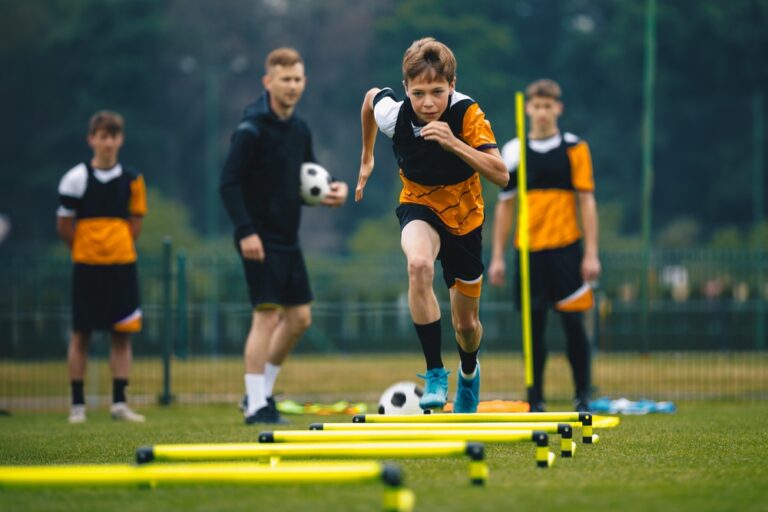
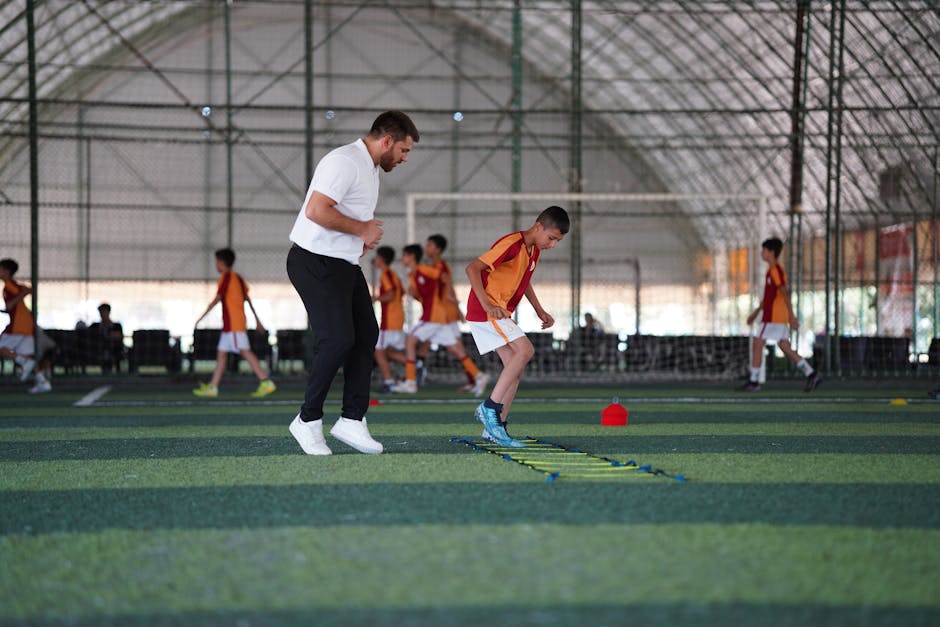
- Agility Ladder Work: We use the ladder to improve “lateral quickness.” Soccer isn’t just running forward; it’s the side-to-side shuffling that lets a defender stay in front of an attacker.
Frequently Asked Questions about Small Space Training
What is the ideal space for 12-14 U12 players?
While USSF suggests larger areas, you can run a high-quality session for 14 players in a space as small as 30×40 yards. The key is to split them into two separate grids (e.g., two 3v3 games and one 4v4 game) so no one is standing around.
How do small-space drills translate to a full-size field?
Think of a full-size field as a series of small boxes. The 1v1 you win on the sideline or the 3-man combination you play in the center circle is exactly what we practice in our small-space drills. If you can keep the ball in a 10-yard square, the open field will feel like an ocean of space.
What equipment do I need if I don’t have goals?
Goals are great, but “targets” are better for development. Use cones to create “gates” that players must dribble through to score. This encourages ball control over just “booting” it. You can also use “end zones”—scoring by passing to a teammate who is standing in a 5-yard zone at the end of the court.
Conclusion
At Olly on the Ball, we believe that the best players aren’t made on the biggest fields—they are made in the smallest ones. By mastering soccer drills for small spaces, young players in the Charleston and Mount Pleasant community build the confidence to handle any situation on game day.
Whether we’re training at Sullivan’s Island or a gym in West Ashley, our goal is to foster a love for the game through high-energy, relatable coaching. We’ve seen how a U12 player who was once afraid of the ball becomes a “midfield maestro” simply by getting more touches in tight spaces.
Ready to take your game to the next level? Whether you want to sharpen your first touch or master the art of the 1v1, we’re here to help.
Book a Private Session with Olly and let’s start training like a pro—even if we’re in a phone booth!