
Why Soccer Skill Development Is the Foundation of Every Great Player
Soccer skill development is the process of building the technical, physical, and mental tools a player needs to perform their best on the pitch — and it starts with the right drills.
Here are the core skills young players should focus on:
- Ball control — keeping the ball close and comfortable under pressure
- Dribbling — moving with the ball using both feet confidently
- Passing — accurate, well-timed distribution with the inside and outside of the foot
- Receiving — trapping and controlling the ball cleanly in any situation
- Shooting — striking for both power and accuracy
- Agility, Balance & Coordination (ABCs) — the physical foundation everything else is built on
Hey! I’m Olly — a player and coach right here in Mount Pleasant, SC. I’ve spent a lot of time on the pitches of the Lowcountry, and I know exactly what it feels like to want to get better but not know where to start.
The truth is, most young players don’t plateau because they lack talent. They plateau because their practice doesn’t have a plan.
The good news? A few focused drills, done consistently, can change everything.
Whether you’re a parent trying to help your child get more playing time, or a young player who just wants to fall in love with the game — this guide is for you. Below, you’ll find proven, coach-backed drills that actually work. No fluff. Just ball, boots, and better touches.
The Canada Soccer Pathway puts it simply: the goal isn’t just to develop better soccer players — it’s to develop well-rounded people who are confident, disciplined, and excited to play.
That’s the spirit behind everything here at Olly on the Ball.
The Core Pillars of soccer skill development
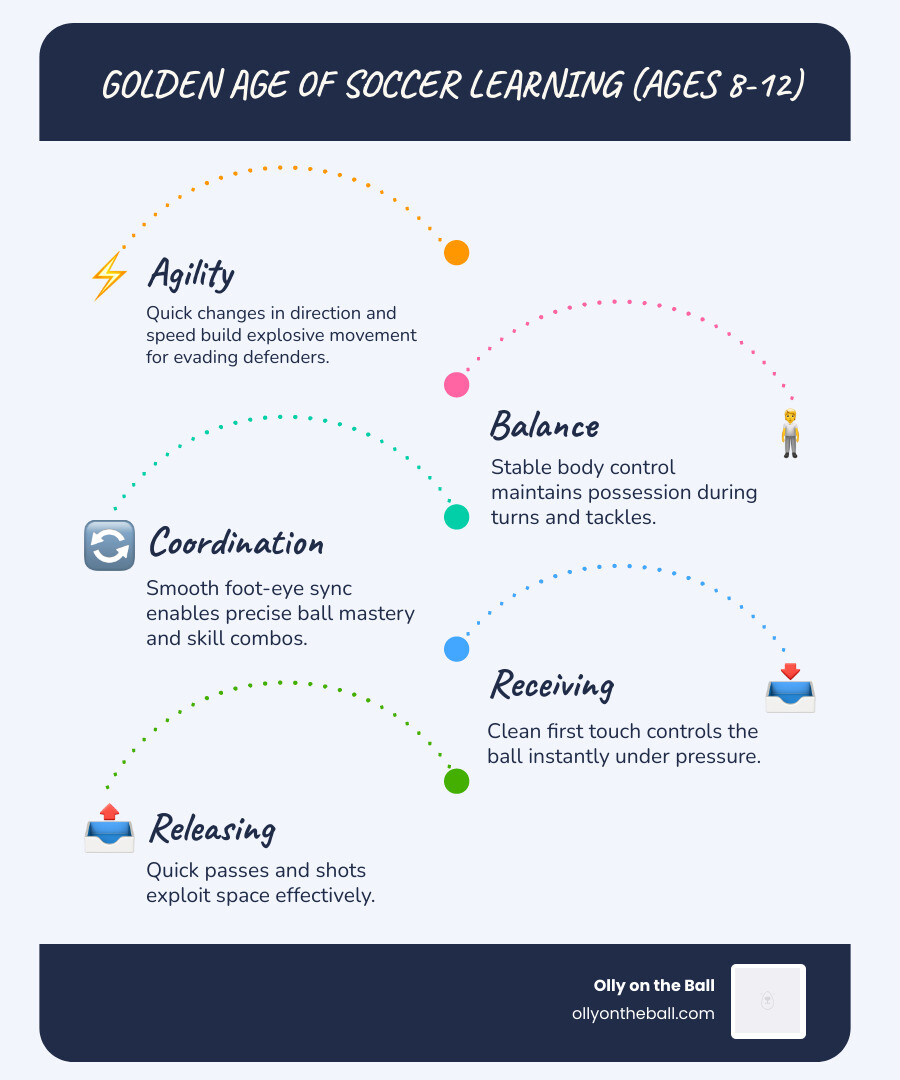
Before we jump into the drills, we need to understand what we’re actually building. In elite youth soccer, we talk about two main layers: the ABCs and the 4 Rs.
The ABCs: Agility, Balance, and Coordination
U.S. Soccer and England Football both emphasize that fundamental movement skills are the basis for all athletic success. If a player can’t control their own body, they’ll struggle to control the ball.
- Agility: The ability to change direction quickly while maintaining speed.
- Balance: Staying upright and stable, especially when being bumped by a defender.
- Coordination: Getting the brain and the feet to work together in sync.
Research on how to develop your players’ movement skills shows that for players aged 5-11, tag games and “dodge and chase” activities are actually better for building these foundations than complex tactical drills.
The 4 Rs: The Technical Core
Elite academies, like those at Fulham FC, often use the “4 Rs” to simplify soccer skill development:
- Receiving: Your first touch. Can you kill the ball dead or move it into space?
- Releasing: Passing and shooting. Can you give the ball to a teammate accurately?
- Retaining: Shielding and keeping the ball under pressure.
- Running with the ball: Dribbling at speed into open green grass.
Fundamental Movements vs. Football-Specific Skills
It is important to distinguish between “just moving” and “soccer moving.” Here is how they differ:
| Skill Category | Fundamental (ABCs) | Football-Specific |
|---|---|---|
| Locomotion | Running, Jumping, Hopping | Jockeying, Back-pedaling to defend |
| Balance | Standing on one leg | Maintaining posture while shielding a ball |
| Coordination | Catching a ball with hands | Timing a volley or a header |
| Agility | Weaving through cones | Spinning to receive a pass on the half-turn |
Top Dribbling and Ball Mastery Drills
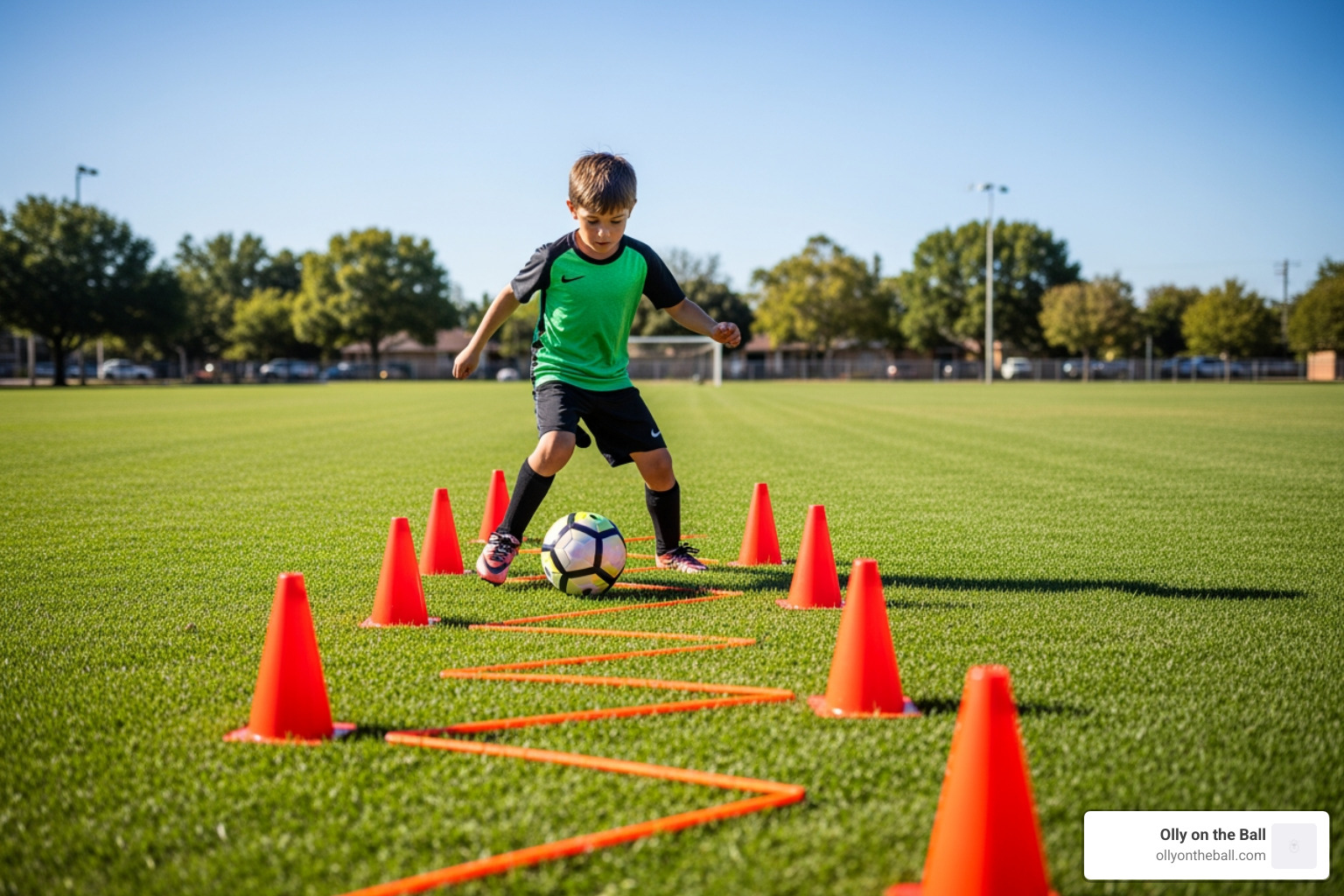
Dribbling is about more than just running fast; it’s about having a “relationship” with the ball. We want the ball to feel like an extension of your foot. Here are some of our favorite drills for soccer skill development that you can do at any park in Charleston or even in your backyard.
1. Lateral Rolls (The “Yo-Yo” Drill)
This drill helps you get comfortable using the soles of your feet to move the ball sideways.
- The Setup: Stand with the ball in front of you.
- The Action: Use the sole of your right foot to roll the ball across your body to the left. Stop it with the inside of your left foot, then roll it back with your left sole.
- Pro-Tip: Keep your knees slightly bent and stay on the balls of your feet. Try to look up, not just at the ball!
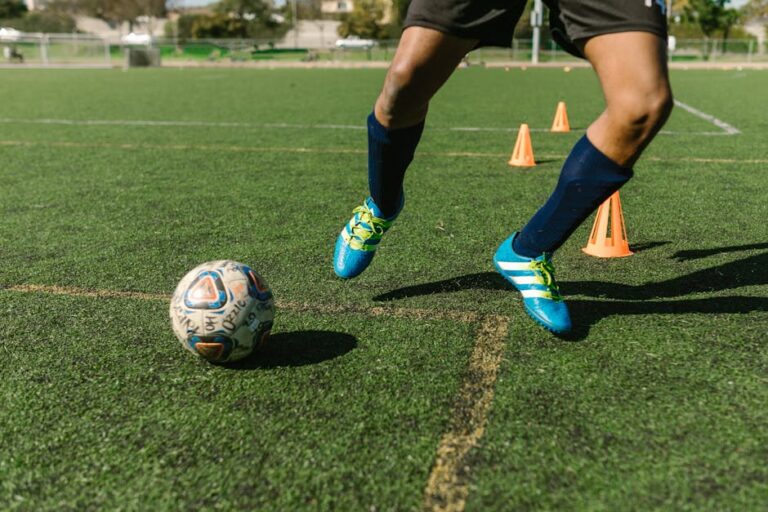
2. Inside-Outside Touches
This is the bread and butter of close-quarters ball control.
- The Setup: Set two cones about 5 yards apart.
- The Action: Dribble toward the first cone using only the outside of your right foot. Once you reach it, use the inside of the same foot to cut the ball across. Repeat with the left foot.
- Why it works: It mimics the quick “touches” needed to weave through defenders on a crowded pitch.
3. The Cruyff Turn
Named after the Dutch legend Johan Cruyff, this is the ultimate move to lose a defender who is chasing you.
- The Setup: Dribble forward at a medium pace.
- The Action: Fake like you are going to kick the ball. Instead, plant your non-kicking foot beside the ball, turn your kicking foot inward, and “hook” the ball behind your standing leg.
- The Result: You’ve suddenly changed direction 180 degrees, leaving the defender running the wrong way!
4. Freestyle Dribbling & Juggling
Don’t underestimate the power of just playing. Spend 10 minutes “freestyling” in a small 5×5 yard box. Use step-overs, scissors, and pull-backs.
- Juggling Tip: Try to use your laces with an extended foot. Aim for minimal spin on the ball. This builds a “sweet-spot” connection that helps with your first touch.
Sharpening Passing and Shooting Accuracy
Once you can move with the ball, you need to know what to do with it. Soccer skill development research suggests that for players in the “Learning to Train” stage (U8-U12), about 40% of practice time should be dedicated to these technical skills.
Wall Passes (Your Best Teammate)
If you don’t have a partner, a brick wall is the best coach you’ll ever have. It never misses a pass and it always gives the ball back exactly how you hit it.
- One-Touch Receiving: Pass the ball against the wall and try to control the rebound with one touch so it’s ready to be kicked again.
- Accuracy Challenge: Put two pieces of tape on the wall 3 feet apart. Try to hit the space between them 10 times in a row.
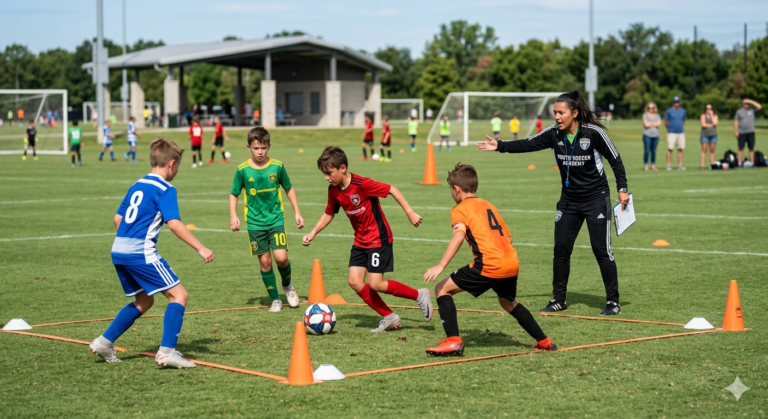
1v1 Duels and Small-Sided Games
Statistics show that players in small-sided games (like 3v3 or 4v4) get significantly more touches and make more decisions than in traditional 11v11 formats.
- The 1v1 Drill: Set up two small goals. One player attacks, one defends. This forces the attacker to use fakes and feints (like the scissors or step-over) under real pressure.
- Scanning: Before you receive the ball, take a quick “peek” over your shoulder. This is called scanning. It helps with spatial awareness so you know where the defenders are before the ball even hits your foot.
Maximizing soccer skill development at home
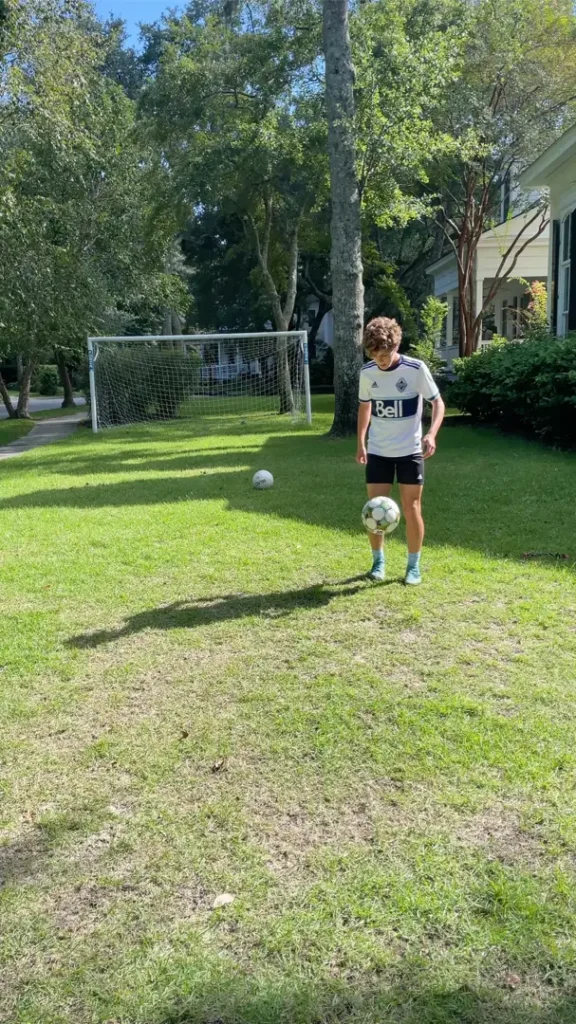
You don’t need a professional academy to get better. In fact, most of the world’s best players spent hours practicing alone. Home practice creates a “low-pressure environment” where you can fail, try again, and get creative without feeling judged.
Setting Up Your Home Training Zone
Whether you have a big backyard in Summerville or a small patio on Daniel Island, you can make it work.
- The Essentials: A size-appropriate ball (Size 3 for U8, Size 4 for U10-12, Size 5 for U13+), a few cones (or water bottles), and a flat surface.
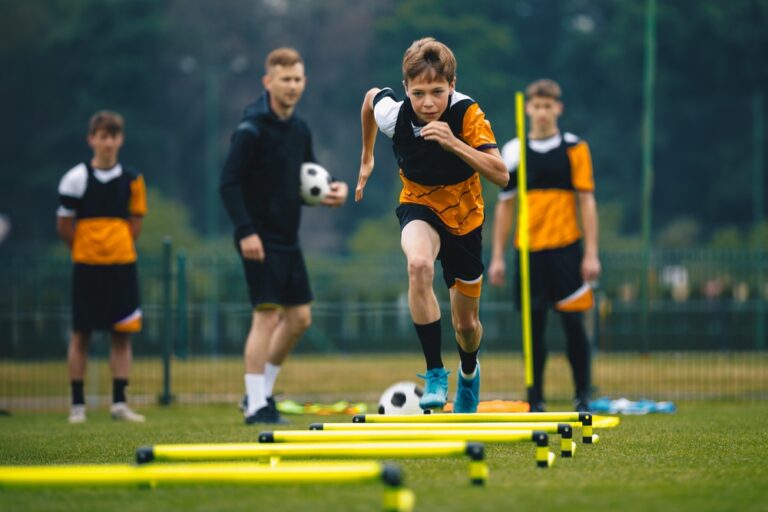
- The “Pro” Setup: Adding a rebounder or an agility ladder can take your home sessions to the next level.
Why Home Practice is Key for soccer skill development
- Extra Touches: A 20-minute home session can give you 500+ extra touches on the ball.
- Independence: You learn to motivate yourself.
- Muscle Memory: Repeating a Cruyff turn 50 times in your backyard makes it automatic during a game at James Island Youth Soccer Club.
- Experimentation: Home is the place to try that crazy new flick or trick you saw on YouTube.
Using Technology for soccer skill development
We live in a world where you can learn from the best coaches on your phone.
- Instructional Videos: Watch pro players demonstrate fundamentals. Notice their body posture and where their standing foot is planted.
- Video Analysis: Ask a parent to film you doing a drill for 30 seconds. When you watch it back, you might notice your head is down or your touches are too heavy.
- SMART Goals: Don’t just say “I want to be better.” Say “I want to be able to juggle 20 times without dropping the ball by next Saturday.” Specific, Measurable, Achievable, Relevant, and Time-bound.
Frequently Asked Questions about Soccer Skill Development
What equipment do I need for effective home practice?
You don’t need a lot! Start with a ball that is the right size for your age. A set of cones is great, but you can use shoes or socks as markers. A rebounder is helpful for passing, and an agility ladder helps with those ABCs. Most importantly, bring a water bottle — Charleston heat is no joke!
How often should a young player practice their skills?
Consistency is better than intensity. Practicing for 15-30 minutes every day is much more effective than doing one three-hour session on the weekend. We want those daily touches to build permanent muscle memory. Keep it fun so it doesn’t feel like “work.”
Should skills be practiced under pressure?
Yes, but only after you’ve mastered the basic movement. Start “unopposed” (no defenders) to get the technique right. Then, add “pressure” by trying to do the drill faster, or by having a friend try to take the ball away. This is called “representative task design” — making practice look like the real game.
Conclusion
At the end of the day, soccer skill development isn’t about being the best player on the field today; it’s about being better than you were yesterday.
Here at Olly on the Ball, we believe in the power of the Charleston soccer community. From the competitive atmosphere at the Battery volunteer sessions to the weekend games at Patriot’s Point, there is so much opportunity to grow.
If you’re looking for someone who speaks your language — a peer who is currently playing at a high level and knows exactly what it takes to level up — I’m here to help. Whether we’re working on your “weak” foot or building your confidence to take players on 1v1, our sessions are all about positive energy and real results.
Ready to take your game to the next level? Master these soccer skills and let’s get to work.
Book a Private Session or Join a Group Clinic today! Let’s make this your best season yet.