
Understanding the Long-Term Player Development (LTPD) Model
When searching for the right program, you’ll often hear the term “LTPD.” This stands for Long-Term Player Development, and it is the gold standard for youth soccer skill development. Think of it as a roadmap that ensures kids aren’t treated like “mini-adults” but are instead given challenges that match their physical and mental growth. In the Charleston youth sports scene, where competition can get intense early on, understanding this model helps parents make the best choice for their child’s happiness and growth.
The LTPD model, supported by organizations like US Youth Soccer, moves away from the “win-at-all-costs” mentality. Instead, it focuses on player-first development. This means the priority is on the child’s long-term engagement with the sport—whether they want to play for the Charleston Battery one day or just enjoy a weekend game at James Island with their friends. It’s about building a foundation that lasts a lifetime, rather than just winning a plastic trophy at age eight.
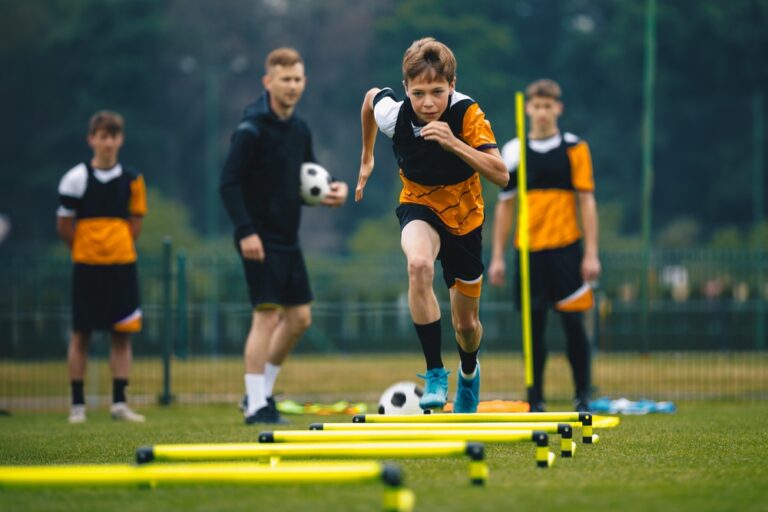
At the Grassroots stage (U4-U12), the focus is on “Physical Literacy.” This includes agility, balance, and coordination. If a child doesn’t learn how to move their body effectively, it’s much harder for them to move a soccer ball! As they progress toward the “Soccer for Life” stage, the training shifts to more complex tactics, but the foundation remains the same: a love for the game. In our local parks from Mount Pleasant to Summerville, you’ll see that the best players are often those who were allowed to explore and play freely during these early years.
| LTPD Stage | Age (Approx) | Primary Goal | Focus Area |
|---|---|---|---|
| Active Start | U4-U6 | Discovery | Ball familiarity & movement |
| FUNdamentals | U6-U8 | Fun | 1v1s, basic dribbling, and joy |
| Learning to Train | U9-U12 | Skill Acquisition | Technical mastery & small games |
| Training to Train | U13-U16 | Application | Positional roles & tactical awareness |
Key Features of Effective Youth Soccer Skill Development Programs
So, how do you spot a program that actually follows these principles? Look for “Skill Centres” or dedicated player programs that prioritize inclusion over early selection. One of the biggest mistakes in youth soccer is “early talent ID”—trying to pick the “best” 8-year-old. Research shows we can’t actually predict who will be a great player at 18 based on how they play at 8. Many “late bloomers” in the Lowcountry end up being the strongest players if they are given the right environment early on.
Effective programs should offer at least 50% open registration. This ensures that every child, regardless of whether they were “invited” to a team, has access to high-quality coaching. You should also look for specific player-to-coach ratios. In a high-energy small-group session, you want your child to get individualized attention. If there are 30 kids and only one coach, your child is just a face in the crowd, and their technical errors will go unnoticed and uncorrected.

Training frequency is another clue. For U8-U12 players, 2-3 sessions per week (plus one game day) is the sweet spot. This allows for enough repetition to build “muscle memory” without causing burnout. It also leaves time for kids to be kids—playing at the beach on Sullivan’s Island or riding bikes around Daniel Island.
The Importance of High Ball Contact in Youth Soccer Skill Development
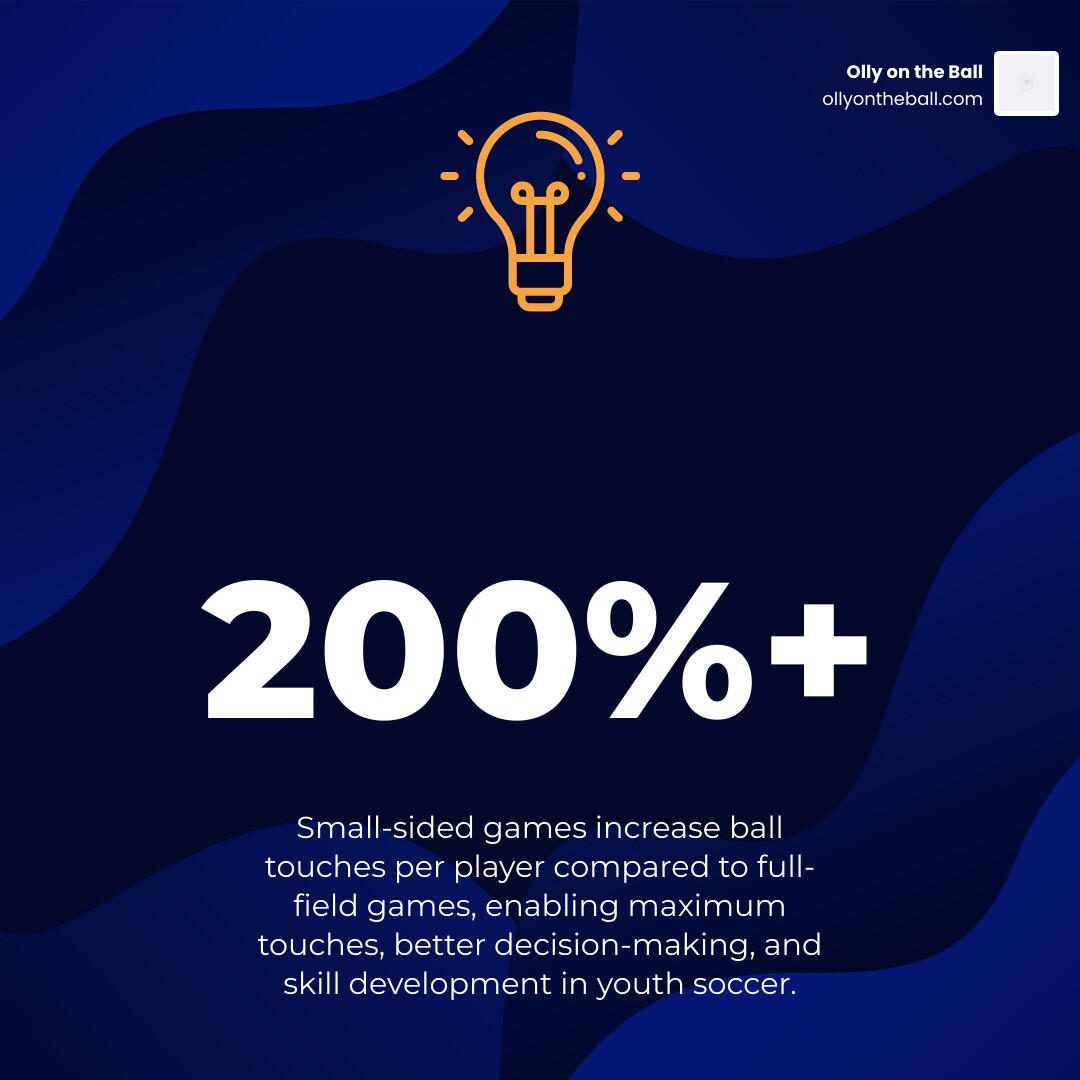
If you walk past a practice and see kids standing in a long line waiting to kick one ball, keep walking! The most critical element of youth soccer skill development is high ball contact. A child needs to touch the ball hundreds of times per session to develop the “feel” required for high-level play.
A quality training session should be split roughly into:
- 40% Soccer Technique: Dribbling, passing, and shooting drills.
- 40% Small-Sided Games: 3v3 or 4v4 games where everyone is involved.
- 10% General Movement: Agility and balance exercises.
- 10% Coordination: Complex movements with and without the ball.
This structure ensures “perception-action coupling.” That’s a fancy way of saying kids learn to see a situation (perception) and react to it (action) in real-time. According to the MLS GO Playbook for U8-U9 players, children at this age learn by playing, not by listening to long lectures from a coach. They need maximum touches to build confidence and the ability to make quick decisions under pressure.
What to Look for in Age-Appropriate Training (U8-U12)
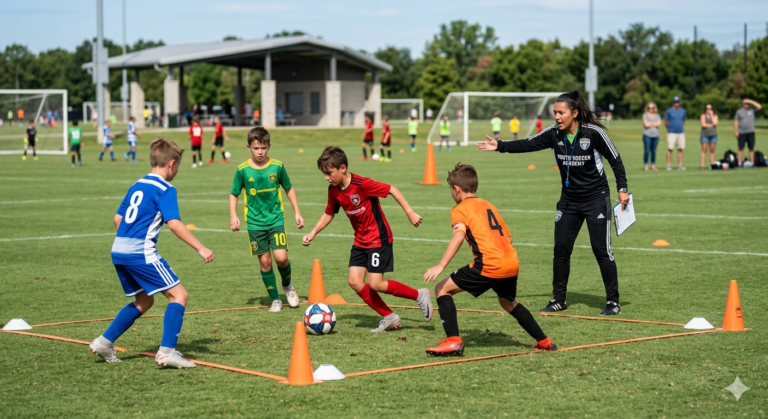
The U8 to U12 window is often called the “Golden Age of Learning.” This is when children s brains are like sponges, ready to soak up technical skills. A great program in Mount Pleasant or Summerville will use a “Station Model.” This keeps the environment dynamic and ensures that players are constantly challenged in different ways throughout the afternoon.
In this model, players rotate through different stations-one for coordination, one for technique, and one for a small-sided game. This keeps the energy high and prevents boredom. Sessions usually last 75-90 minutes, which is just enough time to get deep into the skills without losing focus. When kids are having fun and moving constantly, they don’t even realize how much they are learning.
Mastering Core Techniques for Youth Soccer Skill Development
When we talk about “the fundamentals,” we aren’t just talking about kicking the ball. We mean mastering the “Four Moments of the Game.” A high-quality development program will explicitly teach players how to navigate these moments so they become “soccer savvy” rather than just athletic. These moments include:
- When we have the ball: Dribbling, protecting the ball (shielding), and passing.
- When they have the ball: Intercepting and pressing.
- The transition when we win it: Looking for space and playing forward.
- The transition when we lose it: Recovering quickly.
Focusing on these areas helps players become more intelligent on the pitch. For example, teaching a player to scan the field before they receive the ball is just as important as the pass itself.
Because a program can only cover so much in a few hours a week, it helps to have simple, at-home fundamentals to reinforce between sessions. If you want a clear checklist of core techniques (like first touch, dribbling moves, and clean passing mechanics), check out our in-depth guide here: more info about mastering soccer skills. It s made for young players and parents who want quick, practical ideas they can use at a local field-from Park West to the pitches on Daniel Island.
The Role of Parents and Coaches in Fostering a Love for the Game
We’ve all seen the “sideline coach”—the parent yelling instructions from the bleachers. While it comes from a place of love and a desire to see the child succeed, research shows it actually hurts development. When a child is constantly told what to do, they stop making their own decisions. On the field, they start looking at the sideline for answers instead of looking at the game. We want to develop independent thinkers who can solve problems on the fly.
Instead, both parents and coaches should focus on fostering a “growth mindset.” This means praising effort over results. Instead of saying, “Great goal!” try saying, “I loved how you kept trying that dribble even after you lost the ball the first time.” This encourages resilience and a willingness to take risks, which are essential for long-term youth soccer skill development.
In the Charleston soccer culture, we want to avoid “tournamentitis”—the obsession with traveling every weekend to play five games in two days. This often leads to “survival mode” soccer, where kids just kick the ball away to avoid mistakes because they are exhausted. Real growth happens in a supportive, local environment where it’s okay to fail, try a new move, and laugh along the way. Training should be the highlight of the week, not a chore.
As a peer-mentor, I’ve found that kids often respond best to someone who is currently “in the trenches” with them. When a young player sees a 16-year-old doing the same drills they are, it makes the goal feel reachable. It’s about inspiration, not just instruction. Being a mentor means showing them that the hard work is worth it because the game itself is so rewarding.
Frequently Asked Questions about Youth Soccer Programs
What is the ideal player-to-coach ratio for skill development?
The smaller the better! For U8-U9, we aim for 8:1. For U10-U11, 10:1 is standard, and for U12, 12:1 works well. These ratios ensure every child gets quality feedback. If a coach can’t see what every player is doing, they can’t correct the small technical errors—like the angle of a foot during a pass—that make a big difference later on. Individualized attention is the fastest way to see improvement.
Should my child specialize in one position before age 12?
Absolutely not. Early specialization is one of the quickest ways to limit a player’s potential. A child who only plays defense never learns the creativity needed to score, and a striker who never defends won’t understand how to win the ball back. Rotating positions builds tactical awareness and empathy for teammates. Every player should experience being the “goal scorer” and the “goal stopper” during these formative years to become a well-rounded athlete.
How many days a week should a youth player train?
For most kids in the Charleston area, 2 to 3 sessions per week is ideal. This allows for skill retention while leaving room for other sports, school, and rest. Rest is a vital part of development! It’s also great for kids to play other sports like basketball or swimming. These activities build different types of athleticism, such as hand-eye coordination and cardiovascular endurance, which actually help their soccer game in the long run. Avoiding specialization in just one sport too early helps prevent overuse injuries and keeps the child excited about being active.
Conclusion
Choosing the right program for your child doesn’t have to be overwhelming. Whether you are in Mount Pleasant, Daniel Island, or North Charleston, the “secret sauce” is always the same: fun + fundamentals + frequency.
At Olly on the Ball, we believe that the best way to learn is from someone who truly understands the modern game. Our private and small-group training sessions are designed to be the highlight of your child’s week. We focus on the core skills—ball control, passing, and shooting—while building the confidence that every young player needs to succeed on and off the field.
Ready to see your child take their game to the next level? Let’s get to work!
Book a session to start your youth soccer skill development journey