
Why Beginner Goalkeeper Drills Are the Foundation of Every Great Keeper
Beginner goalkeeper drills are the building blocks every young keeper needs to develop confidence, safe technique, and real game-ready skills. If you’re looking for a quick overview, here are the core drills to start with:
- Ready Position Practice – Squat on your toes, knees bent, hands at thigh level, palms out
- Wall Ball – Throw against a wall and catch the rebound to sharpen reactions
- Cone Shuffle Drill – Shuffle between cones without crossing your feet
- Ball Drop Drill – Partner drops a ball from shoulder height; catch it before the second bounce
- Catch and Collapse – Step toward the ball, catch it, and land safely on your hip and shoulder
Playing in goal is unlike any other position on the soccer field. You’re the last line of defense. Every save you make can swing the momentum of a game — and every goal you let in feels personal.
That’s a lot of pressure for a young keeper.
The good news? With the right fundamentals drilled early, goalkeeping becomes one of the most exciting and rewarding roles in the sport. Whether your child is just starting out in a recreational league here in Charleston or eyeing a spot on a competitive Mount Pleasant club team, the journey starts the same way — with the basics done well.
This guide walks through the essential drills, techniques, and tips to help beginner goalkeepers build a rock-solid foundation. No complicated jargon. No overwhelming training plans. Just clear, practical steps that work.
Let’s get started.
Getting Started: Essential Gear and the Ready Position
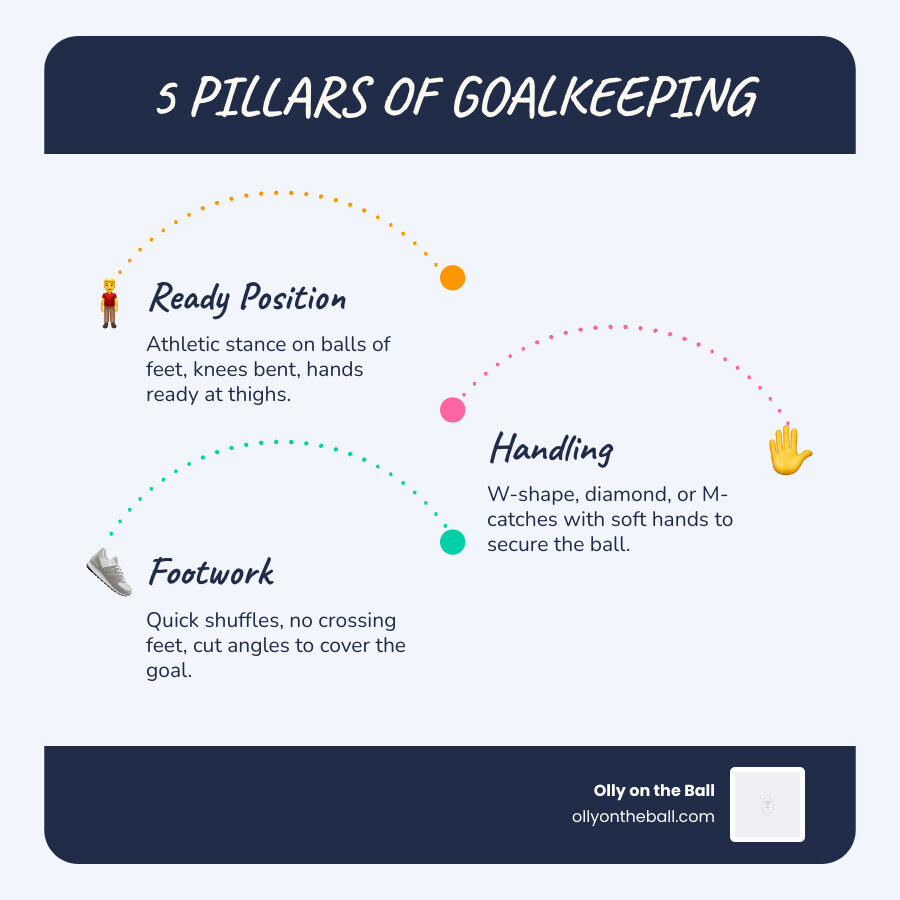
Before we jump into the beginner goalkeeper drills, we have to talk about how you stand. In the Lowcountry, whether we are training at the Bayfront or out on Daniel Island, the first thing we teach is the Ready Position.
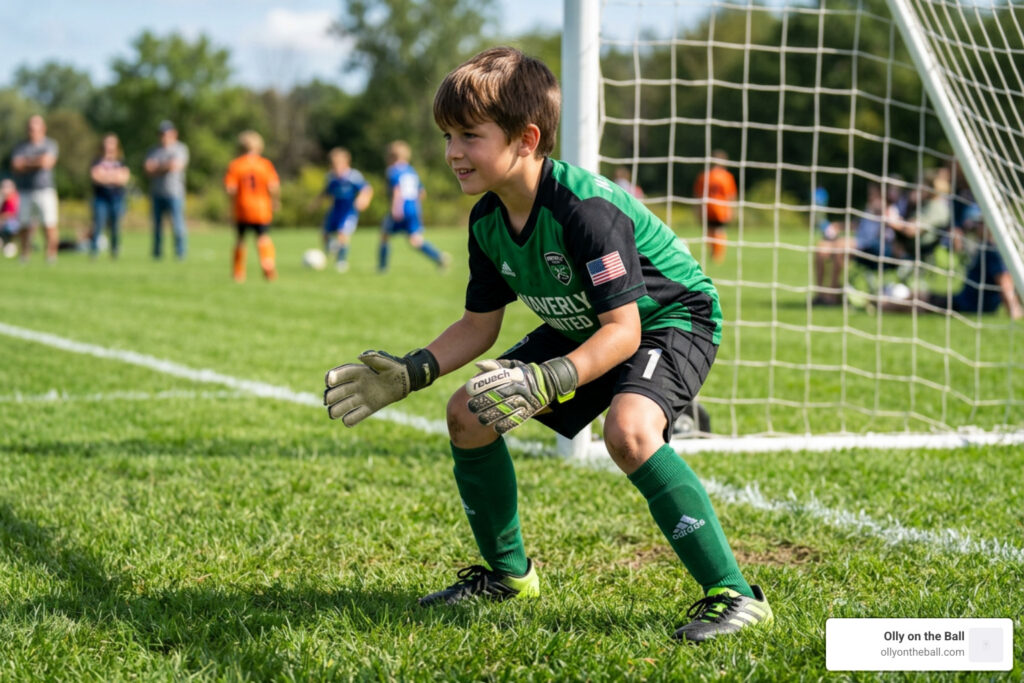
Think of this as your “home base.” If you aren’t in a neutral, athletic stance, you won’t be able to react to a shot from a striker. To get into the perfect ready position:
- Weight on the balls of your feet: Never stand flat-footed or on your heels. Being on your toes makes you explosive.
- Knees slightly bent: This lowers your center of gravity, helping you move left or right instantly.
- Hands at thigh level: Keep your hands out in front of your body, palms facing outward.
- Shoulders square: Always face the ball, not the player.
For a deeper dive into how these basics evolve as you grow, check out this Goalkeeper Development Guide.
Essential Equipment for New Keepers
You don’t need a professional contract to look like a pro, but the right gear keeps you safe. Goalkeeping can be tough on the body, especially on some of the harder turf fields in North Charleston or Summerville.
- Goalkeeper Gloves: Look for gloves with “finger spines” or finger protection. These help prevent your fingers from bending backward when stopping a hard shot.
- Padded Jersey and Pants: Beginners spend a lot of time hitting the ground. Padding on the elbows, hips, and knees is a lifesaver.
- Shin Guards: These are mandatory! Even as a keeper, you’ll be involved in scrambles where feet are flying.
- Turf vs. Grass Gear: If you’re playing on the grass at Isle of Palms, standard cleats are fine. For turf, consider turf-specific shoes to save your knees from the impact.
Want to see what else we recommend for young players? Check out more tips on our blog.
Mastering the Hands: Catching Techniques and Handling Rules
Your hands are your most important tools. Most beginners make the mistake of having “T-Rex hands”—keeping their elbows tucked tight to their ribs. Instead, reach out to meet the ball!
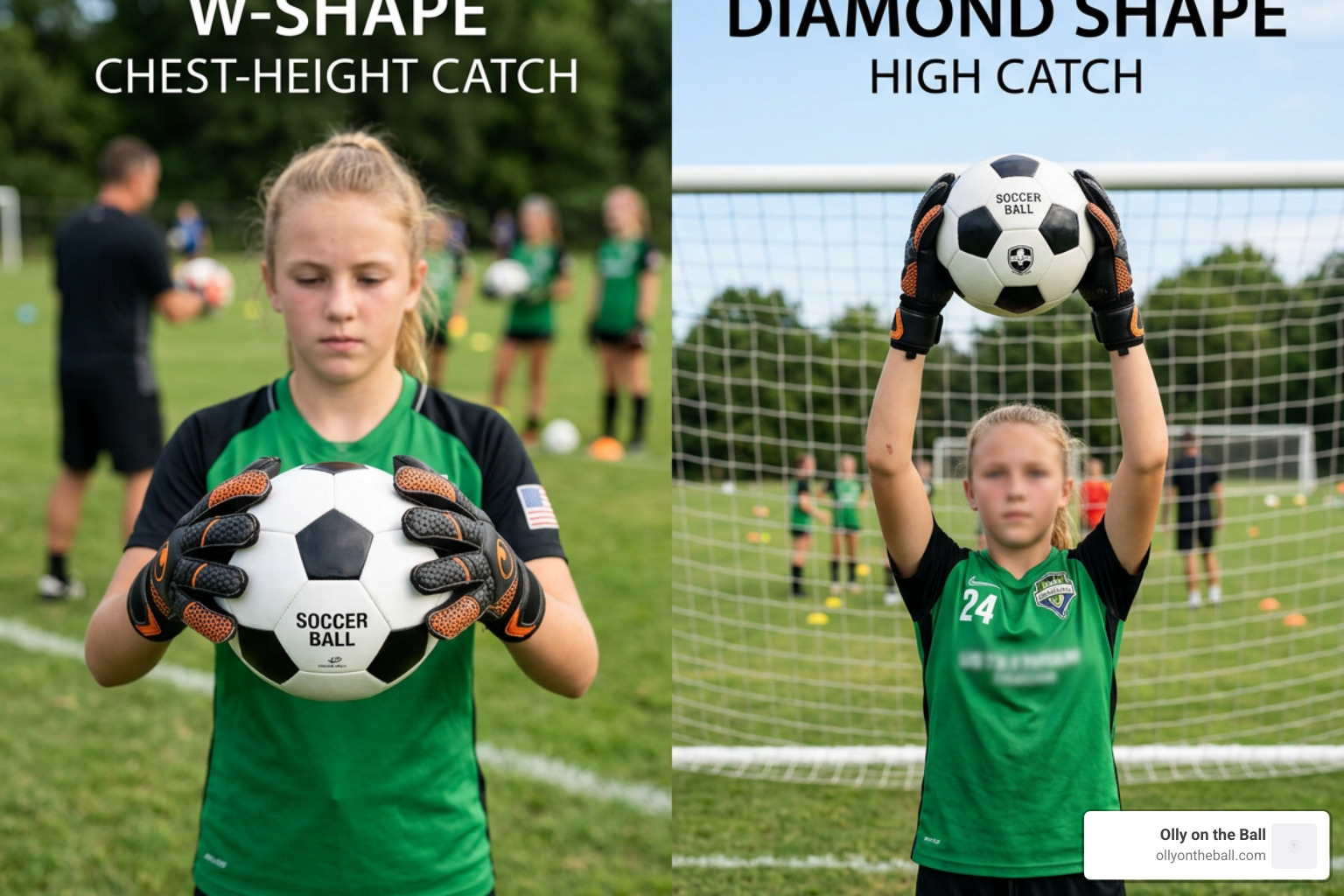
There are three main hand shapes you need to master:
- The W-Shape: For balls coming at your chest or face. Place your hands together so your thumbs almost touch, forming a “W.” This ensures the ball doesn’t slip through and hit you in the nose!
- The Diamond: Similar to the W, but with index fingers and thumbs touching. This is great for high balls.
- The M-Shape (or Scoop): For low, rolling balls. Turn your pinkies toward each other and “scoop” the ball into your chest like you’re grabbing a loaf of bread.
Handling Rules Every Beginner Must Know
- The 6-Second Rule: Once you pick up the ball, you have six seconds to release it.
- The Backpass Rule: You cannot pick up the ball with your hands if a teammate intentionally kicks it to you. You have to use your feet! (However, if they head or chest it to you, your hands are fair game).
- Penalty Line: During a penalty kick, you must keep at least one foot on the goal line until the ball is kicked.
Top Beginner Goalkeeper Drills for Home Practice
You don’t need a full team to get better. Some of the best beginner goalkeeper drills are solo exercises you can do in your backyard in Mount Pleasant.
- Wall Ball: Find a sturdy brick wall. Throw the ball against it at different heights and catch it using the W or Diamond shape. This is the #1 way to improve hand-eye coordination.
- Tennis Ball Reactions: Have a parent or sibling throw tennis balls at you. Because they are smaller and faster, they force your brain to react quicker.
- Solo Punts: Practice dropping the ball and kicking it out of your hands. Focus on locking your ankle and hitting the “sweet spot” of the ball for power.
To see how I started my own training journey and why I love helping the next generation, learn more about Olly’s journey.
Footwork and Positioning: Moving Like a Pro in the Lowcountry
Footwork is the most underrated part of goalkeeping. If your feet are in the right place, you won’t even have to dive! The golden rule is shuffling. Never cross your feet when moving across the goal. If you cross your legs and the striker shoots, you’ll be tripped up and unable to dive.
The Goalkeeper Arc
Imagine a semi-circle (an arc) that moves from one post to the other. You should always be positioned on this arc, between the ball and the center of the goal. This “cuts the angle,” making the goal look much smaller to the shooter.
| Feature | Shuffling | Crossover Steps |
|---|---|---|
| When to use | Small adjustments / Close shots | Long distances / Breakaways |
| Body Position | Always square to the ball | Side-on for speed |
| Balance | High – ready to dive | Lower – harder to react instantly |
Footwork Drills for Agility
One of our favorite spots for footwork is Alhambra Park. Try these beginner goalkeeper drills to get faster:
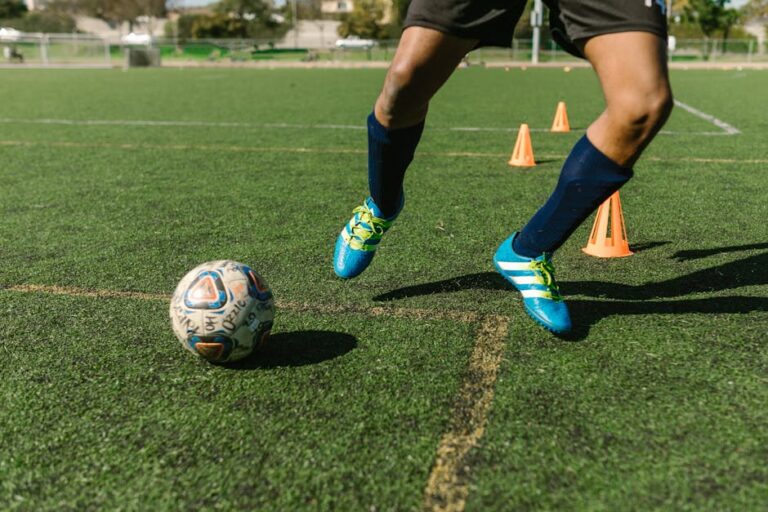
- Cone Shuffles: Set up 5 cones in a line. Shuffle through them as fast as you can without touching them.
- Zig-Zag Recovery: Sprint to a cone, shuffle to the next, and then backpedal to your starting “goal line.”
- STEP Framework: We use the STEP framework (Space, Task, Equipment, People) to make drills harder. If a drill gets too easy, we reduce the Space or speed up the Task.
Safe Diving and Reaction Drills for Beginner Goalkeepers
Diving is the most “superhero” part of being a keeper, but it has to be done safely. We never want to land on our elbows or knees—that’s how injuries happen.
The Catch and Collapse Technique:
- Step to the ball: Always take a small diagonal step toward the ball.
- The Save: Catch the ball (or parry it away) before your body hits the ground.
- The Landing: Land on your “soft” parts—the side of your calf, your hip, and your shoulder. Avoid landing flat on your stomach or back.
Teaching Bravery and Quick Reflexes
It’s normal to be a little scared of the ball at first. To build bravery, we start on soft grass or even sand (Sullivan’s Island is great for this!).
- Ball Drop Drill: Stand in your ready position. Have a partner hold a ball at shoulder height and drop it. You have to catch it before it bounces twice.
- Rapid Fire: Have a partner throw 5-10 balls at you in quick succession. Don’t worry about holding them all—just focus on getting your hands to the ball.
- Superman Dives: Practice diving from your knees first to get the landing right, then move up to a standing position.
If you want to master these diving techniques safely, contact Olly for private sessions.
Communication and Common Mistakes to Avoid
A goalkeeper who doesn’t talk is just a shot-stopper. A goalkeeper who communicates is a leader. You have the best view of the whole field, so you need to be the “voice of the defense.”
Key Cues to Shout:
- “KEEPER!” – Shout this loud and proud when you are coming to grab a cross or a loose ball. It tells your defenders to get out of the way.
- “AWAY!” – Tell your defenders to clear the ball.
- “STEP UP!” – Tell your defensive line to move forward.
Common Mistakes to Avoid
- Flat-Footedness: If you’re on your heels, you’re stuck. Stay on your toes!
- Giving Up: Even if the ball gets past you, chase it. You never know if it might hit the post or if a defender might save it on the line.
- Quietness: Don’t be shy. In the Charleston soccer community, the loudest keepers are often the most respected.
Beginner Goalkeeper Drills for Game-Day Communication
Try a Partner Call Drill. Have a partner throw a ball high into the air. You must sprint out, jump to catch it at the highest point, and scream “KEEPER!” as loud as you can. It builds the habit of claiming your space. We see this all the time with the pros at the Charleston Battery—they command their box with total confidence.
Frequently Asked Questions about Beginner Goalkeeping
My child is scared of the ball, what should I do?
This is totally normal! Start with softer balls, like a foam ball or even a beach ball. Practice the catching motion without the fear of a hard impact. As they get comfortable with the technique, transition back to a standard soccer ball. Positive reinforcement is key—celebrate the effort, not just the save!
How often should a beginner goalkeeper practice?
For players aged 5-14, we recommend 1-2 goalkeeper-specific sessions per week, in addition to their regular team practices. Quality is better than quantity. A focused 30-minute session on beginner goalkeeper drills is better than two hours of standing around.
At what age should a player specialize in goal?
We believe kids shouldn’t specialize solely in goalkeeping until they are at least 12 years old. It’s important for young players to play on the field too. This helps them understand the game, improves their foot skills, and makes them a more well-rounded athlete.
Conclusion
Mastering the art of goalkeeping takes time, patience, and a lot of grass stains. But there is no better feeling than making that game-winning save and hearing your teammates cheer.
At Olly on the Ball, we are dedicated to helping the next generation of Lowcountry legends find that confidence. Whether we are training in Mount Pleasant, James Island, or downtown Charleston, our focus is always on the fundamentals, building your self-belief, and having a blast on the pitch.
Ready to take your game to the next level? From mastering the ready position to learning advanced diving saves, I’m here to help you every step of the way.