
Why Forward Training Drills for Kids Build Better Soccer Players
Forward training drills kids can practice don’t have to be complicated to be effective. Here are the best options by age group:
Quick Answer: Best Forward Drills by Age
| Age Group | Best Drills to Start With |
|---|---|
| U5-U8 | Down and Back Dribbling, Animal Runs, Ball Mastery Rolls |
| U9-U12 | Forward Pass Combinations, 1v1 Finishing, Feed Your Forward |
| U13+ | Combination Play, Shooting Under Pressure, Small-Sided Games |
Every kid who plays up front wants to score goals. But the best young forwards aren’t just good finishers — they move well, receive cleanly, and make smart decisions fast.
The problem? Most club practices in the Charleston and Mount Pleasant area are packed with players. Coaches don’t always have time to give individual forwards the focused reps they need.
That’s where the right drills make all the difference.
Whether your child is just starting out in a Lowcountry recreational league or trying to earn more playing time on a competitive club team, building forward skills early sets them up for long-term success. Quick passing upfield, smart movement off the ball, and confident finishing are all skills that can be trained — at any age, with the right approach.
This guide breaks down the best forward training drills for every stage, from U5 all the way up, so your child can develop the skills that actually matter on match day.
Essential Skills for Young Strikers
When we look at the top strikers playing at Patriots Point or the James Island Youth Soccer Club, they all share a specific “striker mindset.” It’s not just about having a big kick; it’s about the technical foundation that allows them to get that shot off in the first place.
Ball Control and Finishing
A forward’s first touch is their most important tool. If the ball pops three feet away when it’s passed to them, a defender in the Charleston Battery academy is going to take it every time. We focus on “soft feet”—cushioning the ball so it stays within playing distance. Finishing isn’t just about power; it’s about accuracy. We teach kids to look for the corners of the net rather than just “lacing” it at the keeper.
Receiving to Play Forward
One of the biggest game-changers for a young attacker is learning Practice 1: Receiving to play the ball forward. This drill emphasizes receiving the ball with an “open body” on the back foot.
Why does this matter? If a player receives with their back to the goal and their body “closed,” they can only see what’s behind them. By opening up, they can see the ball, the defender, and the goal all at once. This allows for a quick turn and an immediate shot or pass.
Scanning and Body Shape
Before the ball even reaches them, a great forward is “scanning”—looking over their shoulder to see where the space is. We encourage players to make a “double movement”—darting one way to pull a defender out of position before checking back into the space they actually want. This kind of movement off the ball is what separates average players from elite ones.
At Olly on the Ball, we believe that building these technical skills is the fastest way to boost a child’s confidence. When they know they can control a hard pass, they stop playing scared and start having fun. You can find more soccer tips on the blog to help your child develop that competitive edge.
Fun Forward Drills for Beginners (U5-U8)
For our youngest players in Mount Pleasant and Summerville, the goal is simple: make them fall in love with having the ball at their feet. At this age, we aren’t worried about complex tactics. We want “touches, touches, and more touches.”

The Down and Back Dribbling Game
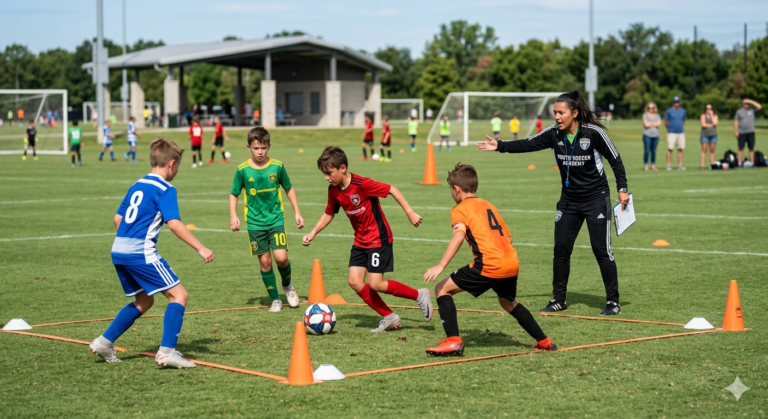
The Down and Back Dribbling Game is a fantastic way to introduce competition and pressure in a fun way.
- Setup: Create a 20×20 yard grid. Split the kids into two groups on adjacent sides.
- Action: On “Go,” they race to the opposite side and back.
- The Twist: Because they are starting from adjacent sides, they have to navigate through “traffic” in the middle. This teaches them to keep their heads up and keep the ball close—essential forward training drills kids need to master early on so they don’t run into defenders (or teammates!) during a game.
Ball Mastery: Forwards & Backwards Roll
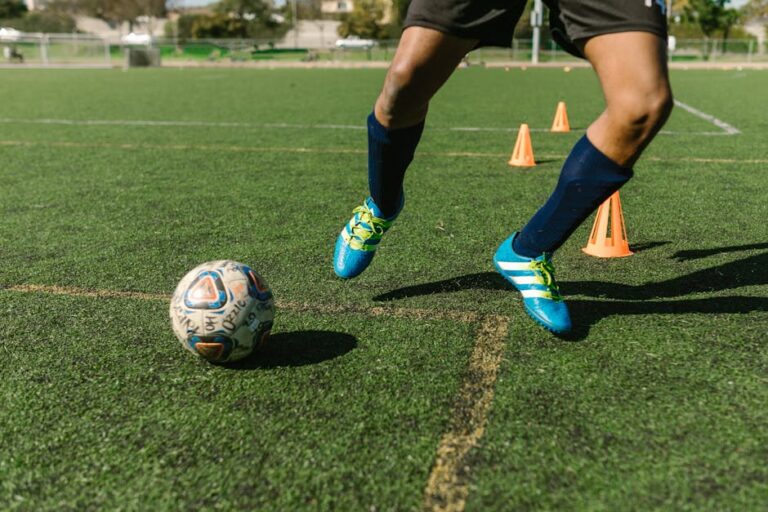
The Forwards & Backwards Roll is a foundational ball control exercise. Players use the sole of their foot to roll the ball forward while moving, then drag it back while moving backward.
- Coaching Point: Stay light on the toes and keep the knees high. This builds the coordination needed for more advanced moves later on. It’s also a great “backyard drill” for those afternoons between team practices on Daniel Island.
Making it Fun
In Lowcountry youth leagues, the kids who enjoy themselves the most are the ones who improve the fastest. We encourage big goal celebrations and “animal runs” (like bear crawls or frog jumps) to build agility while keeping the energy high. If a drill feels like a game, they’ll want to do it 100 times.
Top Forward Training Drills for Kids to Master
As players move into the U9-U12 age groups, the drills become more focused on game-like scenarios. This is where we start connecting passing to finishing.
Combination Play and Forward Passing
The Soccer Forward Passes # 1 Training Drill is excellent for teaching kids how to bypass a midfield and get the ball to the “danger zone.”
- The Drill: Teams play 3v3 in end zones. To score, they must make a successful forward pass to a teammate in the attacking zone.
- Why it works: It forces players to look up and find their forwards early. It also teaches forwards how to hold their position and wait for the right moment to receive.
Feed Your Forward
If a striker has “lost their touch” or is struggling to get shots off, we use the Feed Your Forward session.
- Setup: A 3v3 battle in the midfield with a dedicated forward in a “scoring channel” at the end.
- Action: Once the ball is played to the forward, they are free to turn and shoot.
- Pro Tip: Midfielders can only join the attack once the forward has touched the ball. This creates a sense of urgency for the striker to make a quick decision—shoot or hold?
1v1 Attacking and Finishing Under Pressure
In a real game at the North Charleston sports complexes, a forward rarely gets a “free” shot. They almost always have a defender breathing down their neck. We practice 1v1 drills where the forward starts with their back to the goal, receives a pass, and has to turn and beat a defender to score. This builds the physical strength and mental “grit” needed to lead the line. Learn more about my training approach and how we simulate these high-pressure moments in our private sessions.
Speed and Agility: Moving Like a Charleston Battery Pro
You don’t have to be the tallest kid on the field to be a great forward, but you do need to be “explosive.” Think about the pros—they aren’t just fast in a straight line; they are “twitchy.” They can change direction in a heartbeat.
Speed vs. Agility: What’s the Difference?
| Feature | Speed Training | Agility Training |
|---|---|---|
| Focus | Straight-line sprinting | Changing direction quickly |
| Goal | Maximize top-end velocity | Maintain balance while turning |
| Example | 20-yard dash | T-Drill or Z-Drill |
| Game Use | Beating a defender to a long ball | Shaking a marker in the box |
Explosive Starts and Reaction Time
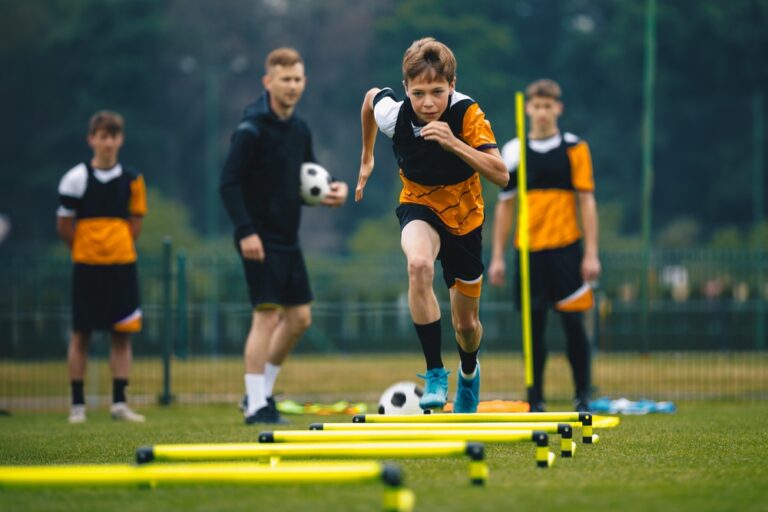
For forwards, the first three steps are more important than the next twenty. We use “Falling Starts” to teach proper acceleration. A player leans forward until they almost lose balance, then explodes into a sprint. This teaches the body the “drive” angle needed to beat a defender to a loose ball.
Lateral Movement and Awareness
Agility drills like the “Mirror Drill” (where one player tries to mimic the movements of another) are great for developing the lateral quickness needed to find space in a crowded penalty area. We also use “Reactive Cone Drills,” where I’ll shout a color or a number, and the player has to react and sprint to that spot. This mimics the unpredictable nature of a soccer match.
Frequently Asked Questions about Forward Training
What equipment is needed for forward training drills for kids?
You don’t need a professional stadium to get better. For basic forward training drills kids can do at home or at a local park in Mount Pleasant, you just need:
- Cones: To mark out boundaries and targets.
- Soccer Balls: Ideally more than one so you aren’t chasing the ball after every shot!
- Mini Goals: Or even just two cones to act as goalposts.
- Athletic Shoes: Proper cleats for grass or turf shoes for harder surfaces. If you’re looking for specific gear that holds up to the Charleston humidity, contact me for gear recommendations.
How often should my child practice forward training drills for kids?
Consistency is the secret sauce. Practicing for 20 minutes three times a week is much better than doing one three-hour marathon session once a month. This builds “muscle memory”—the ability to perform a skill without thinking about it. However, we always keep a “fun-first” approach. If a kid starts to feel burned out, we switch to a game or a fun challenge to keep the love for the game alive.
How do you teach kids to receive and play forward quickly?
It comes down to three things: Scan, Shape, and Surface.
- Scan: Look around before the ball arrives.
- Shape: Keep the body open to the field, not square to the passer.
- Surface: Use the “back foot” (the foot furthest from the ball) to take the first touch into the space you want to go. This naturally sets the player up to move forward immediately.
Conclusion
Becoming a top-tier forward takes more than just a lucky shot on Saturday morning. It takes the dedication to practice the “boring” fundamentals until they become second nature. From mastering the back-foot receive to developing explosive speed, every drill is a building block toward becoming a more confident, effective player.
At Olly on the Ball, we love seeing the “lightbulb moment” when a young player in Charleston or Mount Pleasant realizes they have the skills to take on a defender and score. Whether you’re looking for a one-on-one session to fix a specific habit or a small group clinic to improve game awareness, we’re here to help.
The Charleston soccer community is growing fast, and there’s no better time to get started. Let’s work together to build your child’s skills, confidence, and love for the game.
Ready to take the next step? Book a Private Session in Charleston and let’s get to work!