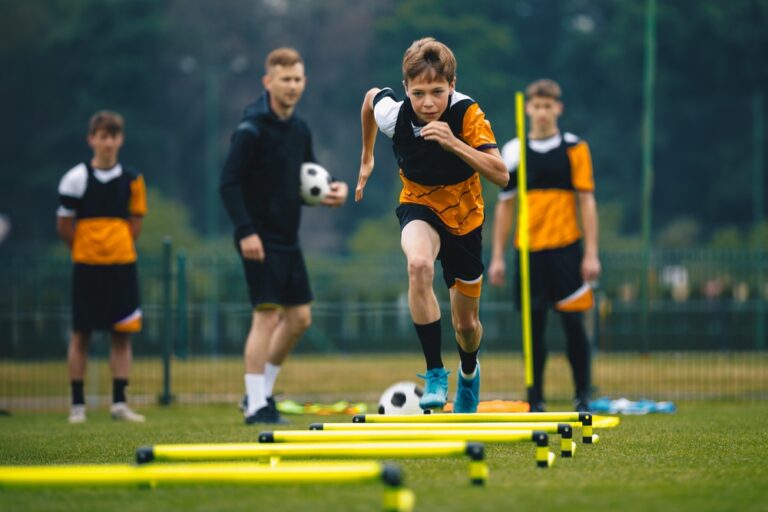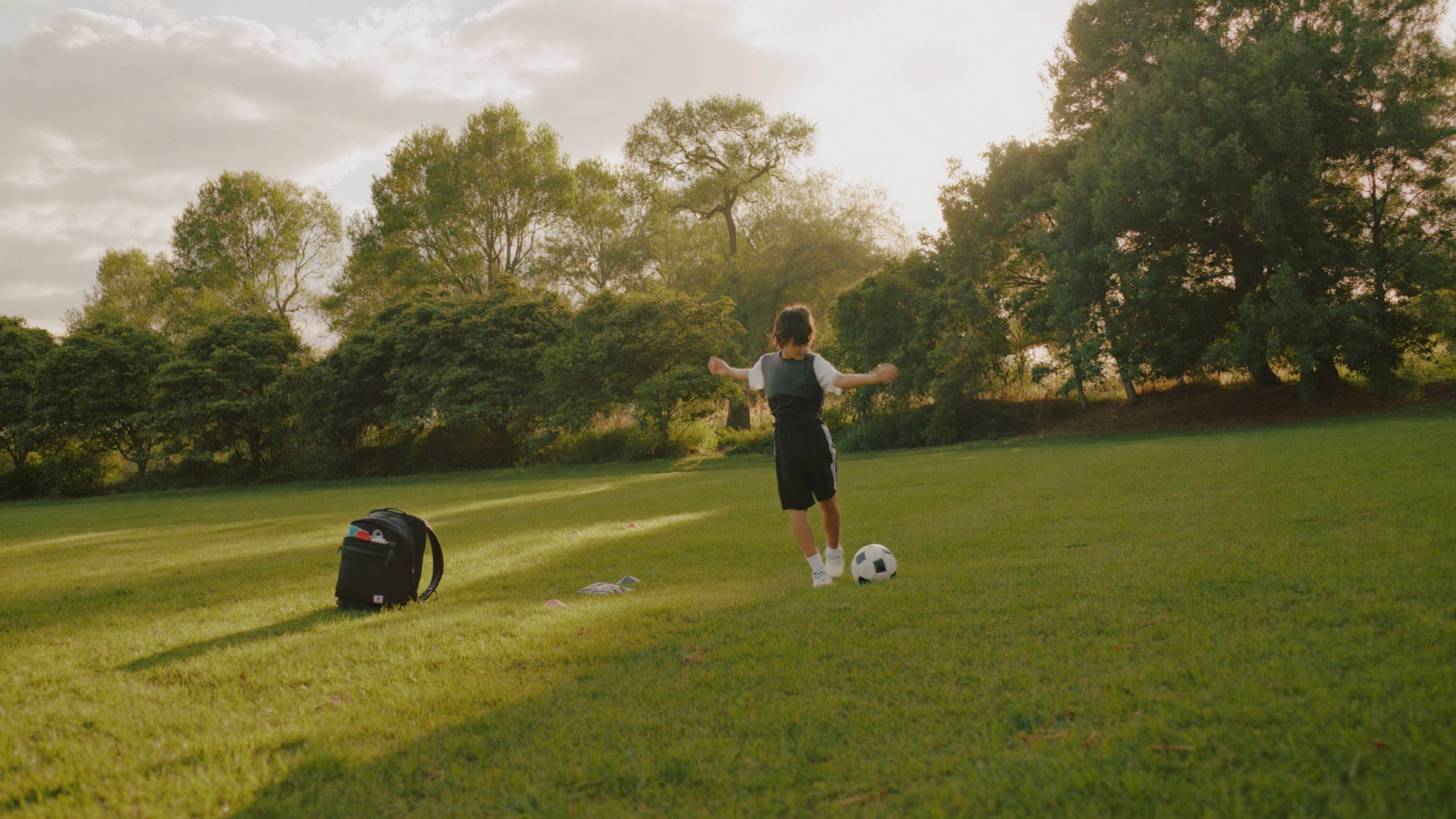


Semi-private soccer training is when two to four players train together with one coach instead of one player training alone. In Mount Pleasant, it’s honestly my favourite way to run a session. You still get real coaching and real reps, but there’s someone next to you pushing the pace — and for a lot of families it makes regular training possible instead of a once-in-a-while treat.
I’m Olly. I play for Surf, I volunteer with the Charleston Battery, and I train younger players around Mount Pleasant and the Charleston area. Below is exactly how semi-private sessions work with me, what they cost, and how to know whether your player is a good fit.
What semi-private soccer training actually means
A semi-private session is a small group — usually 2 to 4 players — working with one coach for an hour. It sits between a private session (just your player and me) and a big group camp where a coach is splitting attention across fifteen kids.
Here’s the honest trade-off. In a private session, every single rep gets corrected. In a semi-private session, you get maybe 70% of that individual attention, plus something a private session can’t give you: a real opponent. Somebody to defend. Somebody to pass to. Somebody who beats you at a drill and makes you want to run it again.
For a lot of players — especially in the 8 to 12 range — that competitive edge is worth more than the extra correction. Kids train harder when a friend is watching.
What a semi-private session with me looks like
Sessions run an hour, usually at a park in Mount Pleasant or somewhere close by that works for your family. A typical hour:
- 10 minutes — warm-up and ball mastery. Both players on a ball, working through touch patterns. No standing around.
- 20 minutes — technical block. Whatever the group needs most: first touch, dribbling under pressure, passing weight, finishing. Both players get the same rep count.
- 20 minutes — 1v1 and small-sided. This is where semi-private earns its keep. Live reps against a real defender at real speed.
- 10 minutes — finishing and a challenge. Something competitive to end on, because that’s what they’ll remember on the drive home.
The whole session is built for game situations. Details matter, but I’d rather a player leaves sharp and confident than leaves having been corrected forty times.
What it costs
Semi-private sessions are $30 per player for a one-hour session. A private one-on-one session is $45 for the hour.
So if your player brings a teammate, you’re each paying $30 instead of $45 — and for a lot of families that’s the difference between training once a month and training every week. Consistency is what actually moves a player forward. One brilliant session in October does far less than eight ordinary ones between now and Christmas.
You can book directly through the site, and if you’re not sure which format fits, just ask me. I’d rather point you at the right thing than sell you the expensive thing.
Who should bring a friend — and who shouldn’t
Semi-private works really well when:
- The two players are close in age and roughly close in ability. They don’t have to be identical, but a U9 beginner paired with a U13 travel player doesn’t work for either of them.
- Your player is a bit shy and does better with a familiar face there.
- You’re training teammates who play the same position, or who need to build a partnership.
- Cost is a real factor and you want steady sessions instead of occasional ones.
Go private instead when:
- Your player is working on something very specific — a goalkeeper’s footwork, a striker’s finishing off the weak foot — that a partner would just be waiting through.
- They’re preparing for tryouts on a tight timeline and need maximum correction per hour.
- They get distracted easily and a friend turns the session into a laugh.
You don’t have to guess. Plenty of families start semi-private, and we move to private for a few weeks when there’s a specific goal, then go back.
Finding a partner if your player doesn’t have one
This comes up a lot. If you want semi-private pricing but don’t have a second player, a few things that work:
- Ask the team group chat. There’s almost always another family thinking about extra training and not sure who to ask first.
- Pair up with a neighbour or a school friend who plays — they don’t need to be on the same club team.
- Siblings count. Training two siblings together works better than people expect, as long as the age gap isn’t huge.
- Let me know you’re looking. I sometimes know another family in Mount Pleasant or Daniel Island in the same spot.
How semi-private fits with club practice
This isn’t a replacement for your club team, and I’d be suspicious of anyone who told you it was. Club practice is where players learn to compete inside a team. Semi-private training is where they get the touches a team session can’t give them — because when a coach has eighteen players, nobody’s getting corrected on their first touch forty times in an hour.
Most of the players I work with train with me once a week alongside two club sessions and a game. That’s a sensible load. If you’re already stretched on time, after-school and weekend slots tend to be the easiest to fit around everything else.
If you’re still deciding whether extra training makes sense at all, it’s worth reading how to choose a private soccer coach in Charleston first — the questions in there apply to semi-private just as much.
What players actually work on
The technical work in a semi-private hour is the same foundation I’d cover one-on-one. Most groups spend the bulk of their time on ball control and close touch, because almost everything else gets easier once a player is comfortable on the ball.
From there it depends on the pair. Two defenders might spend weeks on body shape and clearing under pressure. Two attacking players might live in 1v1s and finishing. A mixed pair works well as attacker versus defender — both get exactly what they need from the same rep.
FAQ
How many players can be in a semi-private soccer session?
Two to four. Two is the sweet spot for most young players — every rep is live and nobody waits. At four it starts to feel like a small group session, which is still useful but a different thing.
How much does semi-private soccer training cost in Mount Pleasant?
With me it’s $30 per player for a one-hour session, compared to $45 for a private one-on-one hour. Prices around the Charleston area vary, and some coaches quote per group rather than per player, so it’s worth asking which one you’re being quoted.
Do both players need to be the same age?
No, but they should be close in ability. A year or two of age gap is fine. A big skill gap isn’t, because one player ends up bored and the other ends up discouraged.
Is semi-private training as good as private training?
For most young players, it’s close — and for competitive reps it’s better, because you can’t practise beating a defender without a defender. If your player has one very specific technical problem to fix, private is more efficient.
Where do semi-private sessions take place?
Parks and fields around Mount Pleasant, with Daniel Island, Isle of Palms and the wider Charleston area doable depending on the schedule. We usually pick whatever’s easiest for the families involved.
What should my player bring?
Cleats, shin guards, a ball, and a full water bottle. Charleston heat is real well into September — hydration isn’t optional.
Ready to book?
If you’ve got a player who wants more touches and a friend who wants the same thing, semi-private is the easiest way to make regular training happen. Grab a partner, pick a slot, and let’s get to work.
Get in touch to book a semi-private session — tell me your player’s age, their club team, and what you’d like them to get sharper at, and I’ll tell you honestly whether semi-private or private is the better fit.
About Olly: Oliver “Olly” Sovenyhazy is a 16-year-old soccer player with Surf and a volunteer with the professional Charleston Battery. Through Olly on the Ball he coaches private, semi-private and small-group sessions for young players across Mount Pleasant and the Charleston area — building confidence through reps, and skills that hold up in real games.