

Off-season soccer training is where most young players either quietly get better or quietly go backwards, and almost nobody notices which one happened until March. The fall season ends, the games stop, and there’s a long stretch with no structure. I’m Olly — I play for Surf and coach younger players around Mount Pleasant — and this is the part of the year I actually look forward to.
Here’s why: the off-season is the only time a player is allowed to be temporarily worse at something. No Saturday to protect, no coach picking a starting eleven. That freedom is exactly what real technical change needs.
The off-season trap
The usual pattern looks like this. Season ends in November. Ball goes in the garage. Player comes back in March, spends a month getting back to where they already were, and the season is half gone before they’re playing at their level again.
The players who jump a level over the winter aren’t doing anything heroic. They’re doing fifteen minutes, most days, on one or two things. That’s it. Over ten weeks that’s roughly fifteen hours of focused touches — more individual ball time than a whole season of team practice gives them.
Small, boring, consistent. Outwork yesterday’s version of yourself.
First: actually rest
Before any of this, take two weeks completely off. Properly off — no sessions, no drills, no ball. A player who’s been going since August has accumulated more load than parents usually realise, and young bodies need the gap.
Two weeks off does not cost a player anything technically. Ten weeks off does. Take the rest, then start.
The four things worth working on
Off-season work should be narrow. A player trying to improve eight things improves none of them. Pick one or two from this list and stay with them until spring.
1. The weak foot
This is the single highest-value off-season project and almost nobody does it, because it’s embarrassing to be bad at something in front of teammates. In December, nobody’s watching. Ten minutes a day of weak-foot-only touches, passes off a wall, and simple finishes will change how a player is defended within one season. Here are the weak foot drills I give players.
2. First touch under pressure
Most young players have a decent touch standing still and a bad one moving. The off-season fix is a wall. Pass, receive on the move, pass again. Then do it faster than is comfortable. A wall never gets tired and never lets you cheat.
3. Ball mastery and close control
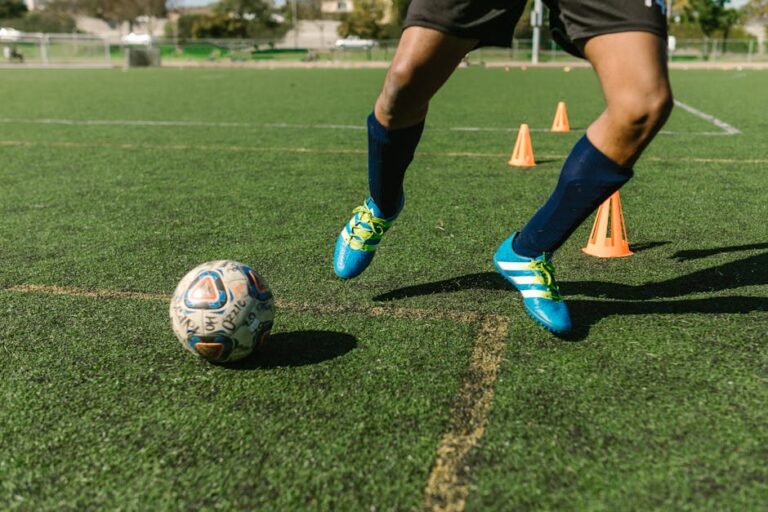
Touch patterns in a small space — sole rolls, toe taps, V-pulls, inside-outside. Fifteen minutes in a garage or on a patio. This is the base layer everything else sits on. My dribbling and footwork drills work fine in about two metres of space.
4. Athletic base
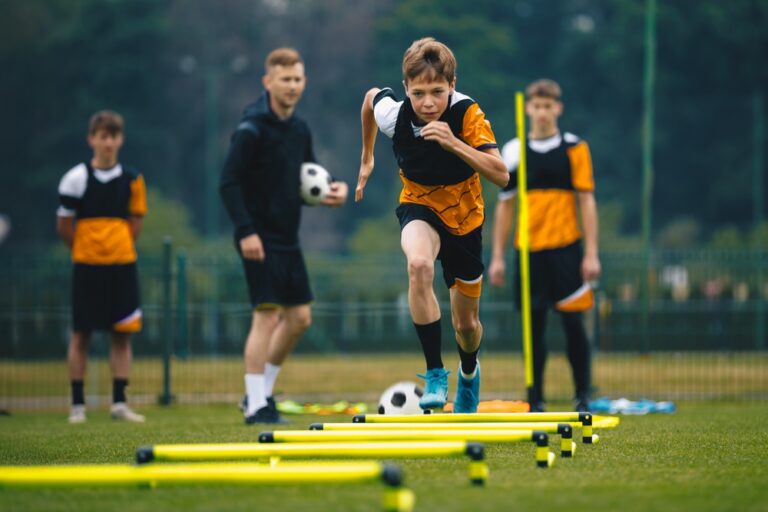
For older players — roughly 12 and up — the off-season is when you build the engine. Bodyweight strength, hopping and landing mechanics, short sprints. Nothing heavy, nothing complicated. For younger kids, skip this entirely; playing other sports does the job better than any program.
A realistic weekly off-season plan
This is what I’d actually give a 10-year-old:
- Monday — 15 min ball mastery
- Tuesday — 10 min weak foot only
- Wednesday — off, or a different sport
- Thursday — 15 min wall work, first touch
- Friday — 10 min weak foot only
- Saturday — play. A pickup game, futsal, the yard with friends. Unstructured and competitive.
- Sunday — off
That’s about an hour of deliberate work a week. It’s not a lot to ask and it’s enough to change a player.
Play other sports
I mean this seriously. Basketball, swimming, track, anything. Young players who only play soccer year-round pick up more overuse injuries and often develop worse general athleticism than kids who mix it up. Basketball in particular does great things for a soccer player’s footwork, spatial awareness and change of direction.
The winter is the natural window for it. A soccer player who spends January playing basketball is not falling behind.
Where structured sessions fit
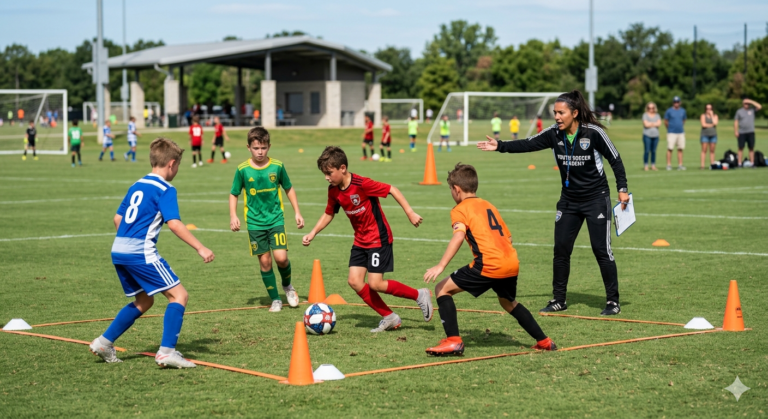
You don’t need coaching in the off-season, but a session every week or two does two useful things: it keeps the work honest, and it gives the player something to aim at.
With me that’s $45 for a one-on-one hour or $30 per player semi-private. Over the winter, most families go semi-private — friends are off school and the competitive edge makes the work feel like play. If you’re weighing the options over the holidays specifically, I’ve written about holiday and winter break soccer camps in Charleston.
And if a player’s confidence took a knock during the fall season, the off-season is the right time to rebuild it away from an audience — more on that in building soccer confidence in young players.
Frequently asked questions
How long is the soccer off-season for youth players?
In Charleston, most youth programs finish in November and restart in late February or March, so roughly three to four months. Club players often have a shorter gap with winter futsal or training blocks.
How often should a young player train in the off-season?
Four short sessions a week of 10 to 15 minutes is plenty, plus unstructured play at the weekend. Frequency matters far more than duration at this age.
Should kids take a complete break from soccer?
Yes — about two weeks fully off at the end of the season. After that, ticking over is better than stopping. Complete inactivity for three months is what costs players their touch.
What is the best off-season soccer drill?
Wall passing with the weak foot. It builds first touch, weak-foot confidence and repetition volume all at once, needs no partner and no space, and can be done in any weather.
Should young players do strength training in the off-season?
From around 12 or 13, bodyweight strength work is appropriate and useful. Below that, general play and other sports do a better job. Nothing heavy, and always technique before load.
Is it OK to play another sport in the soccer off-season?
More than OK — it’s a good idea. Multi-sport athletes generally end up better movers and get injured less. Basketball is especially good for soccer players.
Make the winter count
If you want a plan for your player’s off-season, or a session every couple of weeks to keep it honest, message me. Tell me their age and the one thing you’d like different by March.
Small details change games. Train with purpose.
About Olly: Oliver “Olly” Sovenyhazy is a 16-year-old soccer player with Surf and a volunteer with the professional Charleston Battery. Through Olly on the Ball, he coaches private, semi-private and small-group soccer training for young players across Mount Pleasant and the Charleston area.