

Youth soccer gear for beginners is one of those things that looks expensive until someone tells you what’s optional. Walk into a sports store with a six-year-old and you’ll leave $300 lighter carrying things they will never use. I’m Olly — I\x27m 16, I play for Surf, and I coach younger players around Mount Pleasant. Here’s the honest list, from someone who uses this stuff every day rather than sells it.
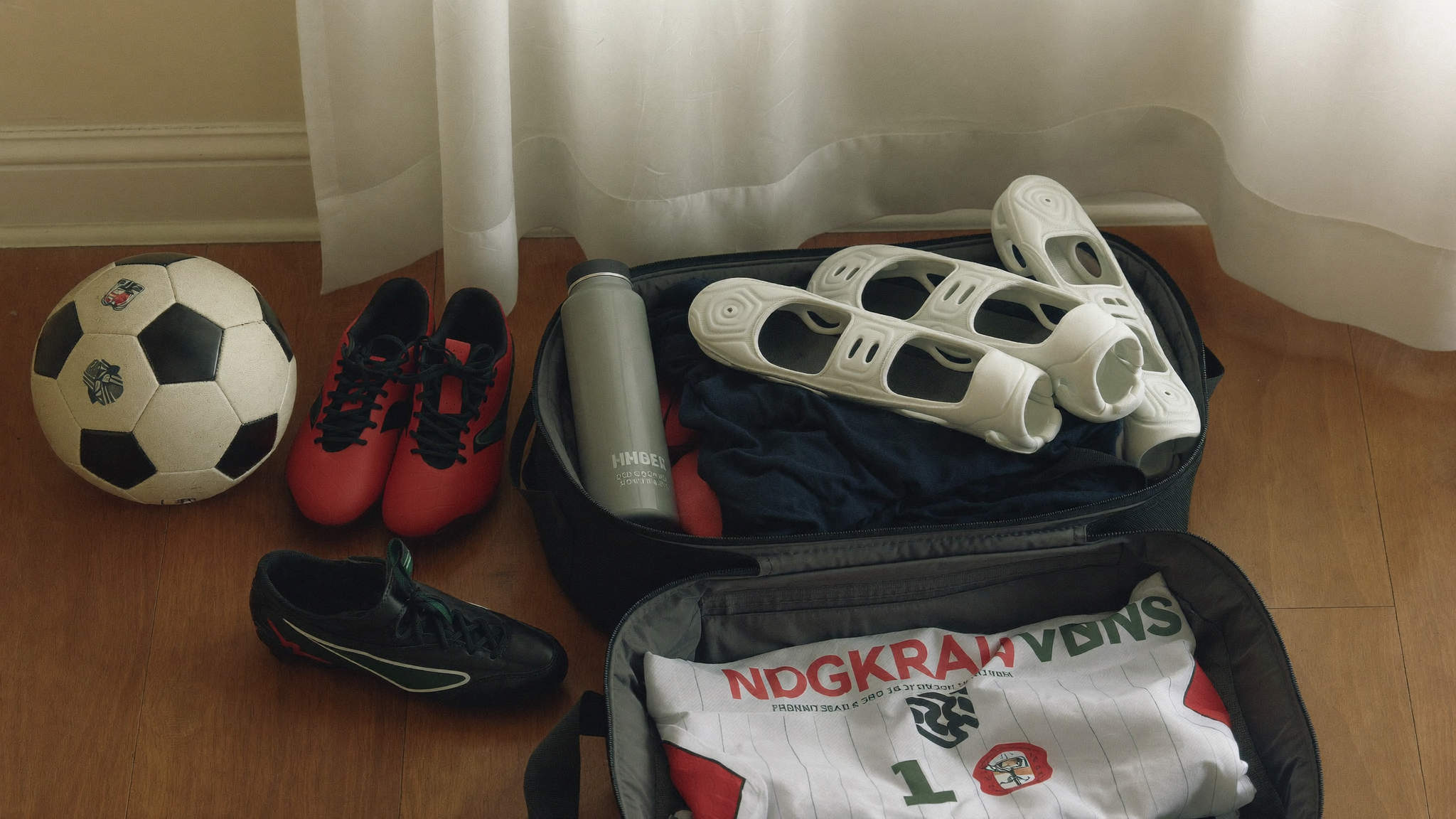
The actual list
Four things. That’s the whole starter kit.
- Cleats that fit. The only item worth spending on, and even then, not much.
- Shin guards. Required for any organised game. Non-negotiable.
- A ball in the right size. The most important purchase for development, and the one people get wrong most often.
- Water. In Charleston, this counts as equipment.
Socks tall enough to cover the shin guards, and shorts. That’s it. Everything else can wait until your kid has decided they actually like this.
Soccer ball sizes by age
This is the one I get asked about most, and it genuinely matters. A ball that’s too big makes a small player look clumsy — they can’t get their foot around it, their touch looks heavy, and they lose confidence for no reason at all.
- Size 1 — mini/skills ball, any age. Not for games. Brilliant for close-control practice at home.
- Size 3 — ages roughly 5 to 8 (U6–U8).
- Size 4 — ages roughly 8 to 12 (U9–U12).
- Size 5 — ages 12 and up. Full adult size, used from U13 through pro.
Two things worth knowing. First, check your league — some programs set their own ball size and the cutoffs move around a bit. Second, if you’re buying one ball, buy the size they play games with. Training with a different size than you compete with is a small handicap you don’t need.
A size 1 as a second ball is the best cheap upgrade there is. Ten minutes a day of touches on a tiny ball makes a normal ball feel enormous.
Cleats: what matters and what doesn’t
Fit matters. Roughly a thumb’s width at the end, snug across the middle, heel not sliding. Try them on with the socks they’ll actually wear.
Firm ground (FG) studs are right for almost everything in Charleston. Our fields are grass and rarely get hard enough or soft enough to need anything else. Ignore soft-ground, turf and indoor variants unless a coach specifically asks.
Price doesn’t matter much. A $45 pair and a $220 pair do the same job for a nine-year-old. The expensive ones are lighter and thinner, which is a downside for a growing foot, not a benefit. Buy mid-range, buy the right size, replace when they grow.
One thing worth spending on instead: a second pair of trainers for training on hard surfaces. Cleats on concrete wreck both the studs and the ankles.
Shin guards
Get the slip-in type with a sock sleeve for younger kids — the ankle-guard versions are hot and most kids hate them. The guard should cover from just below the knee to just above the ankle. Too small is common and pointless; too big stops them running properly.
If your kid refuses to wear them, it’s almost always because they’re the wrong size. Fix the size, not the argument.
Charleston-specific: heat and water
This is the part parents from cooler places underestimate. August and September sessions here are brutal, and dehydration shows up as a kid who suddenly looks lazy or sulky rather than one who complains.
- A big bottle, frozen halfway the night before. It’ll still be cold at the end of a session.
- Light-coloured, loose training shirts. Dark shirts in Lowcountry sun are a mistake.
- Sunscreen — genuinely equipment here, not a nicety.
There’s more on fuelling around sessions in my piece on what to eat before a soccer game.
What you don’t need yet
Save your money on all of these until your player is older or genuinely asking:
- Goalkeeper gloves — unless they’re actually keeping. Even then, rec keepers rotate. If they do end up in goal, my goalkeeper guide for beginners covers what’s worth buying.
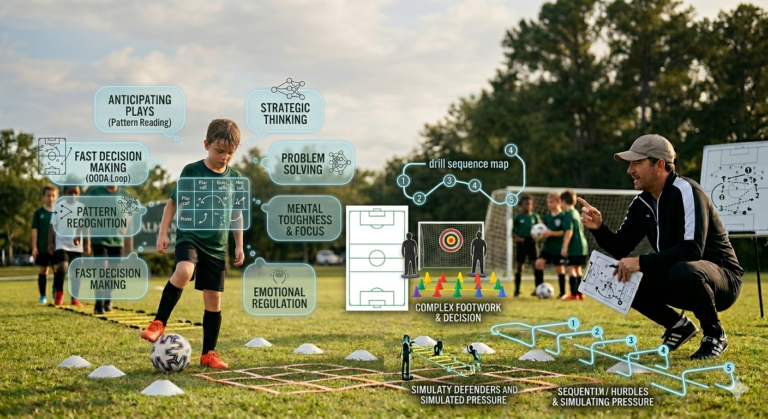
- Agility ladders and cone sets — a ladder can be drawn in chalk and anything can be a cone. Shoes work.
- Compression gear, base layers, expensive training tops — cosmetic at this age.
- A rebounder — a wall is free and better.
- Boot bags, personalised kit, name-printed shirts — fun, but not development.
The one thing worth more than all of it
A flat patch of ground and a wall. Every player I know who improved fast had somewhere they could go on their own with a ball. No equipment required, no booking, no cost.
If you’ve got a garage door, a fence, or a brick wall, your kid has a training partner who never gets bored. Start there. My backyard first touch drills need nothing but that.
Frequently asked questions
What size soccer ball should a 10-year-old use?
A size 4. That’s the standard for roughly ages 8 to 12 (U9–U12). They’ll move up to a size 5 at around 12 or 13, but check what your league specifies.
What size soccer ball do 7-year-olds use?
A size 3, which covers roughly ages 5 to 8. It’s noticeably smaller and lighter, which lets a young player actually get their foot around it.
Do 12-year-olds use a size 5 soccer ball?
Usually yes — size 5 typically starts at U13, so most 12-year-olds are moving up around that point. Some leagues hold size 4 a little longer, so check before buying.
How much should I spend on my child’s first soccer cleats?
Around $40 to $70 is plenty for a beginner. Fit matters far more than price, and kids outgrow them fast. Save the money for the next pair.
Does my child need different cleats for different surfaces?
Not in Charleston, for most players. Firm-ground studs handle grass fields here year round. Only buy a second pair if their program uses artificial turf regularly.
What does a beginner need for their first soccer practice?
Cleats, shin guards, tall socks, shorts, a ball in the right size, and a lot of water. Bring the ball even if the club supplies them — having their own matters more than you’d think.
Getting started
If your player is new to the game and you want a session that’s about enjoying it rather than drilling them, get in touch. Beginners usually do best semi-private with a friend — it’s less intimidating and a lot more fun.
Train hard. Play free.
About Olly: Oliver “Olly” Sovenyhazy is a 16-year-old soccer player with Surf and a volunteer with the professional Charleston Battery. Through Olly on the Ball, he coaches private, semi-private and small-group soccer training for young players across Mount Pleasant and the Charleston area.