

A good soccer game day routine starts the night before, not an hour before kickoff. Kit packed, an early night, a normal breakfast, arriving early enough not to rush, and a warm-up that gets the touch sharp. That’s it. The point of a routine isn’t superstition — it’s removing all the small decisions so a player walks onto the field thinking about the game and nothing else.
I’m Olly. I play for Surf, and I’ve had game days where everything was calm and game days where we were hunting for a shin guard in the car at 8:40. The calm ones go better. Here’s the routine I’d give any young player in Mount Pleasant.
The night before
Almost all of game-day calm is built here.
- Pack the bag completely. Cleats, shin guards, both socks, kit, water bottle, a light snack. Do it the night before, every time. The pre-game panic over a missing sock costs more focus than people realise.
- Eat a normal dinner. Something with carbs in it — pasta, rice, potatoes. Nothing unusual, nothing heavy, nothing you’ve never eaten before a game.
- Start hydrating. Charleston stays hot into September. You cannot fix dehydration with one bottle of water at the field. Drink through the whole day before.
- Sleep. The single biggest performance factor for a young athlete, and the most ignored. Phone out of the room.
Game-day morning
Eat properly, and eat early. Aim for a real meal two to three hours before kickoff, then a small snack about an hour out if they need it. The mistake I see most is a big meal 45 minutes before a game — the player then spends the first half feeling heavy. What to eat before a game or practice covers the timing in detail.
Keep the morning boring. This sounds odd but it works. Don’t fill game-day morning with errands, a birthday party, and a trip across the bridge. A quiet morning means a player arrives with energy.
Get dressed early. Kit on before leaving the house where possible. One less thing at the field.
The drive
This is the part that’s actually for the parents, so I’ll be direct about it.
The car ride to a game is not the time for tactical instructions, reminders about last week’s mistake, or “make sure you shoot today”. Young players arrive at the field carrying whatever mood the car created.
The best game-day car rides I’ve heard about are music, or nothing much at all. If you want a line, “have fun out there, I love watching you play” is genuinely the best one there is.
At the field: the last 30 minutes
Arrive at least 30 minutes before kickoff. Not 10. The rush is what wrecks it.
- Boots on, bag down, straight to the ball. Even before the team warm-up starts, two or three minutes of toe taps and sole rolls. Wake the feet up.
- Team warm-up, done properly. Movement, ball work, passing, a few sprints, a finish. Full effort in the ball work, controlled effort in the running. A structured 20-minute warm-up is worth building the habit around.
- Water, five minutes out. Small amounts, not a litre.
- One quiet minute. Every player I know who plays well has some version of this — headphones, a walk to the corner flag, staring at the goal. Ninety seconds of quiet before the noise starts.
Two things to think about before kickoff — and only two
Young players get given far too much to remember. I’d give them two:
- One job. Something small and completely in their control. “Get on the ball early.” “Win my first duel.” “Talk to my centre back.” Not “play well” — that’s not actionable.
- A reset word. Something they say to themselves after a mistake. “Next one.” That’s it. The best players in the world misplace passes; the difference is how fast they let it go.
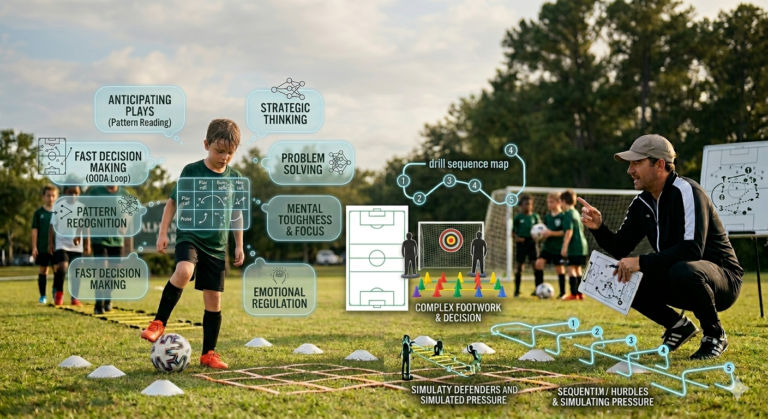
That’s the whole mental routine. Anything more and they’re playing the coach’s game instead of their own. It’s the same principle behind reading the game — a clear head makes better decisions than a full one.
Half time
Water first, always. Then listen to the coach. Then one adjustment for the second half — one, not five.
If they’re struggling, the useful question isn’t “why did that go wrong”. It’s “what’s one thing I can do differently”. Forward-looking beats backward-looking every time.
After the game
This is where parents have the most influence and often the least idea what to say. A few things that work:
- Give it ten minutes. Let them come down before any conversation about the game. Especially after a loss.
- Ask about them, not the result. “Did you enjoy it?” “What was the best bit?” beats “why didn’t you shoot in the second half?”
- Let the coach coach. If a player gets two sets of technical feedback, they follow neither.
- Food and water within an hour. Recovery starts straight away, particularly in Charleston heat.
The one thing that undoes everything: the post-game analysis in the car. It’s well intentioned and it teaches players to dread the drive home. If there’s something worth saying, it’ll still be worth saying tomorrow — and they’ll actually hear it.
Building the soccer game day routine into a habit
None of this is complicated. It’s just consistent. Players who do the same thing every game day stop wasting energy on logistics and nerves, and start showing up expecting to play well.
Write it down and stick it on the fridge if that helps. Most young players will follow a routine happily once it exists — it’s the deciding-every-week part they find hard.
FAQ
What should a young soccer player do the night before a game?
Pack the bag fully, eat a normal dinner with carbohydrates, drink plenty of water through the evening, and get a proper night’s sleep. Nothing dramatic — consistency matters more than any single trick.
How early should you arrive before a youth soccer game?
At least 30 minutes before kickoff, and closer to 45 if the team warm-up is long. Arriving in a rush is the fastest way to start a game flat.
What should a player eat on game day?
A proper meal two to three hours before kickoff, mostly carbohydrates with some protein, and a light snack about an hour out if they’re hungry. Avoid anything heavy, greasy, or that they haven’t eaten before a game before.
What should parents say before a game?
Very little about soccer. “Have fun, I love watching you play” is genuinely the most useful sentence available. Tactical instructions from the car park mostly add pressure.
How do you help a nervous young player before a game?
Give them one small, controllable job for the game and a reset word for after mistakes. Nerves usually come from a vague sense of needing to “play well” — replacing that with something specific and achievable helps a lot.
What should a player do straight after a game?
Rehydrate, eat something within the hour, and stretch a little. Then leave the game alone until they bring it up themselves.
Get the preparation right
Game day is where preparation shows up. Everything that makes a player calm and sharp on a Saturday was built on the days in between.
If your player wants to build that foundation, get in touch about a session — we’ll work on the things that hold up when the whistle goes.
About Olly: Oliver “Olly” Sovenyhazy is a 16-year-old soccer player with Surf and a volunteer with the professional Charleston Battery. Through Olly on the Ball he coaches private, semi-private and small-group sessions for young players across Mount Pleasant and the Charleston area — building confidence through reps, and skills that hold up in real games.