

Club soccer vs rec soccer is the decision almost every Charleston soccer family hits eventually, usually around the time a coach or another parent says “you know, she could probably play club.” I’m Olly — I play for Surf and coach younger players around Mount Pleasant — and I’ve seen this go well and I’ve seen it go badly, and the difference is almost never the player’s ability.
This is the honest version: what actually separates the two, what club really costs in time and money, and the questions that tell you whether your kid is ready.
The real difference
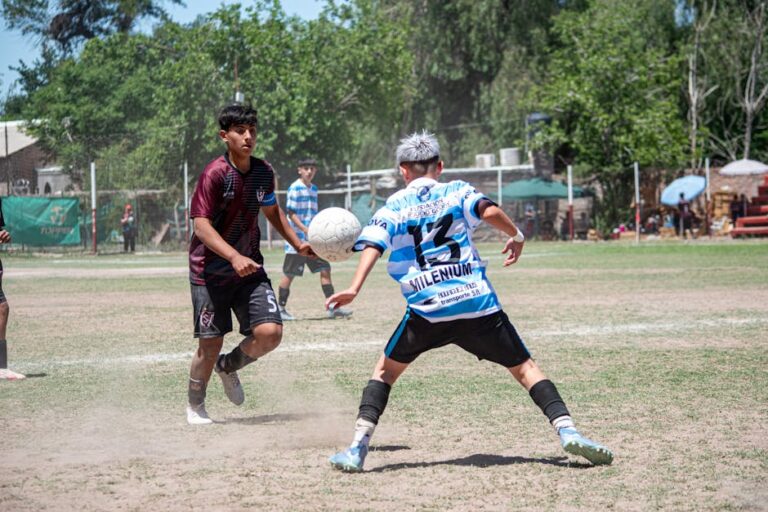
People describe the gap as “competitive vs fun,” which isn’t right — rec players are competitive and club players have fun. The actual differences are these:
- Selection. Rec takes everyone. Club holds tryouts and cuts players.
- Commitment. Rec is typically one practice and one game a week, for about two and a half months in the fall and again in spring. Club is usually two to three practices a week, most of the year, plus weekend games and some travel.
- Cost. Rec seasons in this area generally run in the low hundreds. Club runs into the thousands once you add fees, kit, tournaments and travel.
- Coaching. Rec coaches are usually volunteer parents doing a genuinely good job with limited time. Club coaches are usually paid and licensed.
- Playing time. Rec generally guarantees minutes. Club generally doesn’t.
That last one catches families out more than anything else. A kid who was the best player in rec and played every minute can move to club and sit. That’s not a failure — it’s the point of moving up — but nobody warns you how much it stings.
What rec soccer is actually good at
Rec gets treated like the thing you do before real soccer. That’s wrong, and it costs kids.
Rec is where most players learn to love the game, which is the only thing that keeps anyone playing long enough to get good. It leaves room for other sports, which makes better athletes. It fits around family life. And it’s affordable enough that a kid can try it for a season without anyone feeling they’ve made an investment that has to pay off.
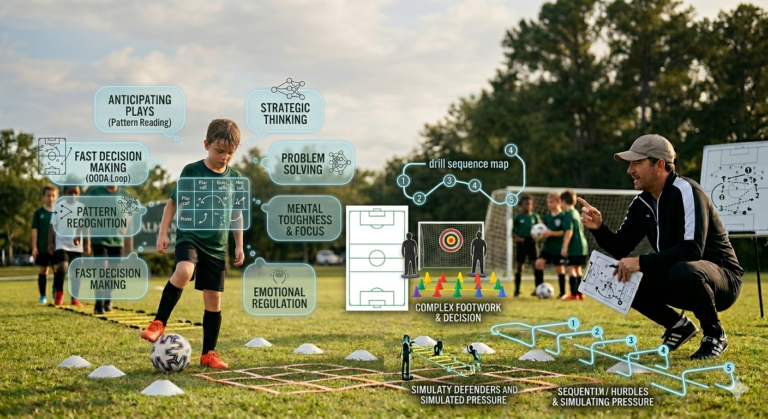
A player can absolutely develop in rec. What rec generally doesn’t give them is volume of quality reps and consistent pressure — one practice a week only goes so far. But that’s a gap you can fill without changing their whole life.
The middle option nobody mentions
The choice is usually presented as rec or club. There’s a third path that suits a lot of Charleston families: stay in rec and add individual training.
For a fraction of club fees, a player gets focused technical work that fixes the exact gap rec leaves — first touch, weak foot, confidence on the ball — while keeping the schedule, the cost and the friendships they already have.
Practically, that looks like one session every week or two. With me that’s $45 for a one-on-one hour, or $30 per player if they bring a teammate. Several of the players I work with went this route for a year, then made a club team comfortably instead of scrambling. If you want the numbers side by side, I’ve broken down whether private soccer training is worth it.
Five questions that tell you if your kid is ready for club
Ability is the least useful signal here. These are better:
- Do they ask to play, or do you remind them? Club demands more than a reminded kid will give.
- Do they touch a ball outside of practice? Not because they should — because wanting to is the thing that survives a hard season.
- How do they handle not being the best? Club means being ordinary in a good group. Some kids find that motivating. Some find it crushing. Both are normal.
- Can your family genuinely do it? Three evenings a week, weekend travel, and the cost — for several years, with siblings in the mix.
- What do they say when you ask them directly? Ask plainly, on a normal day, not after a good game. Kids usually tell you the truth if the question isn’t loaded.
If four of those are yes, they’re probably ready. If it’s mostly you who wants it, wait a year. Nothing is lost by waiting — players join club at 9, 11 and 14 and turn out fine.
What tryouts are actually like
Club tryouts in the Charleston area usually run in late spring for the following year, with some clubs holding extra sessions in the fall. They’re typically two sessions across a week.
Coaches are watching a shorter list than parents think: does the player look comfortable receiving the ball, do they defend when they lose it, are they engaged when they’re not involved, and do they cope when something goes wrong. Almost nobody gets picked for skill moves.
I’ve written up what Charleston coaches actually look for at tryouts and a practical guide to preparing for club tryouts.
You can go back
Worth saying, because families treat this as a one-way door. Plenty of players do a year of club, find it’s too much, and go back to rec — and have a great time. That isn’t a failure and it doesn’t close anything off. Kids develop at wildly different rates, and the player who’s average at 11 is regularly the best one at 15.
The only genuinely bad outcome is a kid who quits the sport entirely because the level they were pushed into wasn’t the one they wanted.
Frequently asked questions
What’s the difference between club and rec soccer?
Rec is open to everyone, runs about two and a half months per season, usually one practice and one game a week, and costs a few hundred dollars. Club selects players by tryout, runs most of the year with two to three sessions a week plus travel, and costs thousands.
What age should kids start club soccer?
Most clubs start competitive teams around U9 to U10, so roughly 8 or 9. Earlier than that, there’s very little evidence it helps, and plenty that unstructured play develops better players. Joining at 11 or 12 is completely normal.
Is club soccer worth the money?
It’s worth it if your child wants the higher level and your family can sustain the commitment without strain. It’s not worth it as a shortcut to skill — an hour a week of individual training develops technique more efficiently and costs far less.
Is rec soccer good enough for a player who wants to improve?
Yes, especially with something added. Rec plus consistent individual work is a strong combination and gets a player technically ahead of many club kids who only do team sessions.
How much does club soccer cost in Charleston?
Club fees in this area typically run from around $1,000 to $3,000 or more per year once uniforms, tournaments and travel are included. Rec programs generally sit in the low hundreds per season.
Can my child play club soccer and another sport?
At younger ages, usually yes, and most good clubs encourage it. It gets harder around U13 and up as schedules tighten. If multi-sport matters to your family, ask the club about it directly before you commit.
Not sure which way to go?
Message me and tell me your player’s age, where they’re playing now, and what you’re weighing up. I’ll give you a straight answer — including if that answer is “stay in rec another year.”
Train with purpose. Play free.
About Olly: Oliver “Olly” Sovenyhazy is a 16-year-old soccer player with Surf and a volunteer with the professional Charleston Battery. Through Olly on the Ball, he coaches private, semi-private and small-group soccer training for young players across Mount Pleasant and the Charleston area.