
Why Tryouts Preparation Soccer Youth Can Make or Break Your Child’s Season
Tryouts preparation soccer youth players need starts well before they set foot on the field — and getting it right can be the difference between making the team and going home disappointed. At Olly on the Ball, we know that the right preparation is what builds the confidence needed to stand out.
Here’s a quick answer for parents and players wondering where to begin:
How to prepare for youth soccer tryouts:
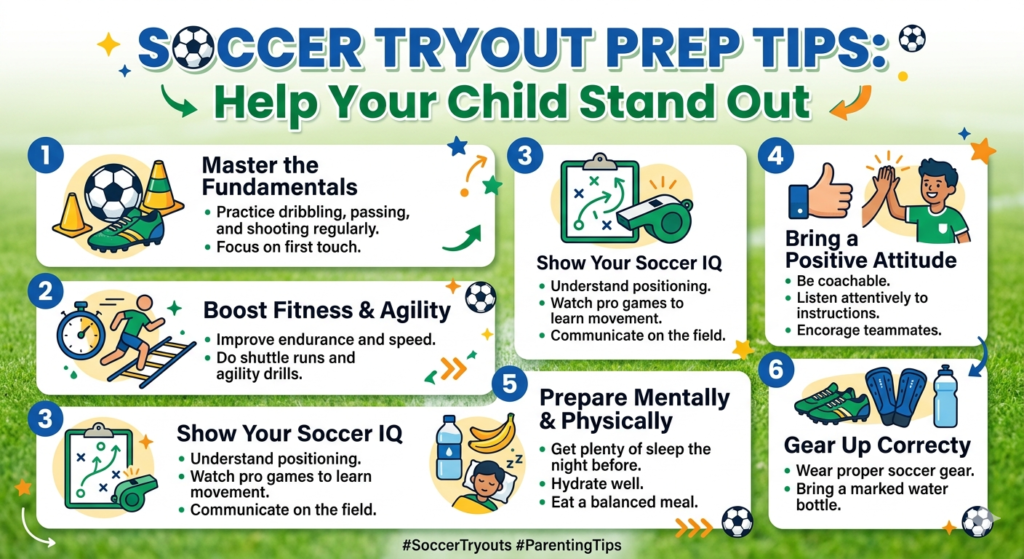
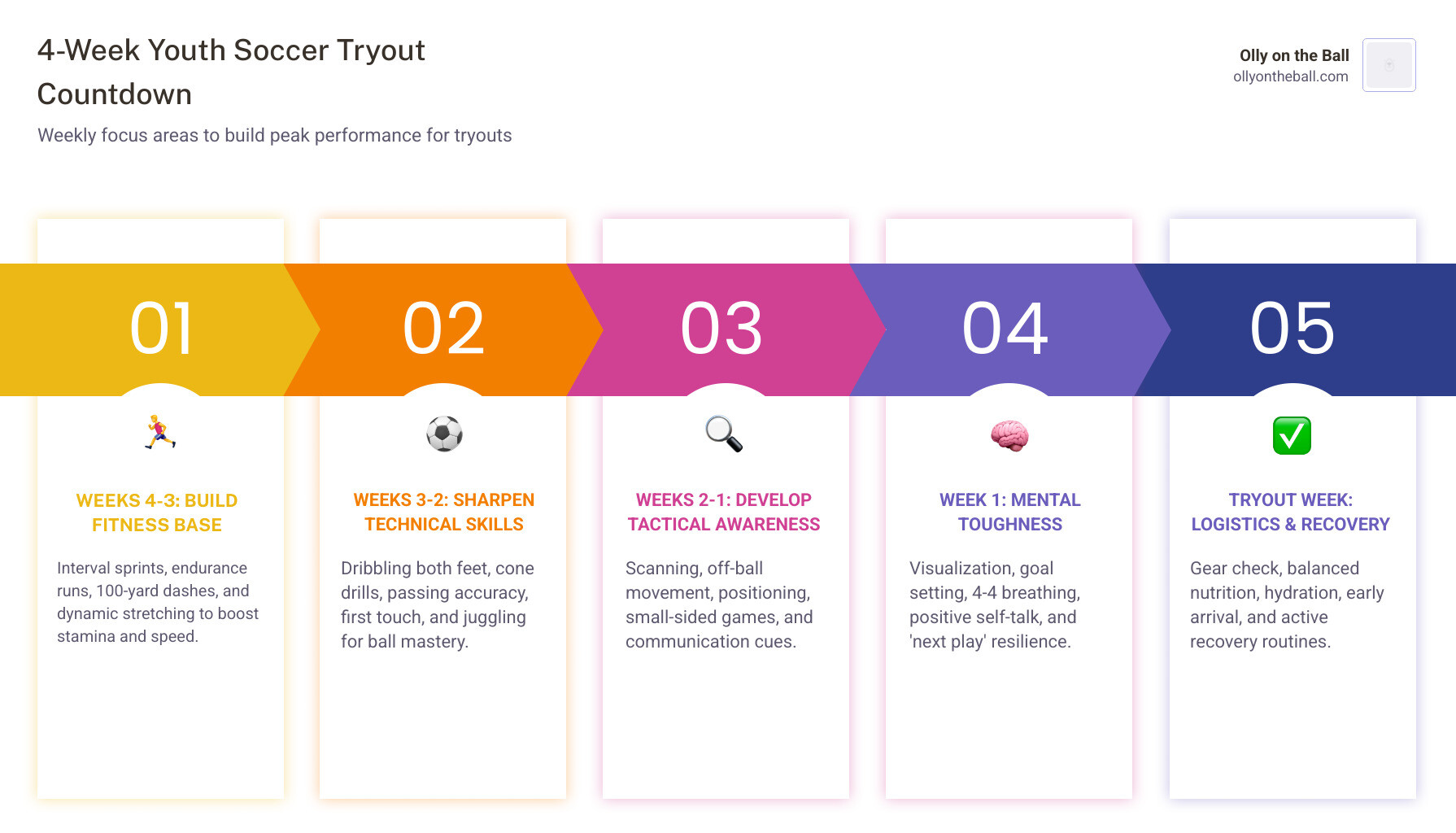
- Start 4-6 weeks early — build fitness, sharpen skills, and research clubs
- Train physically — interval sprints, endurance runs, and agility work
- Practice technical skills — dribbling, passing, shooting, and first touch with both feet
- Build tactical awareness — scan the field, communicate, and understand your role in scrimmages
- Prepare mentally — use visualization, goal-setting, and a “next play” mindset after mistakes
- Sort the logistics — proper gear, good sleep, balanced meals, and arrive 20 minutes early
- Evaluate the club too — look for low player turnover, good coaching, and a positive environment
Soccer tryouts can feel nerve-wracking — for kids and parents. One coach working with multiple teams can evaluate 500+ players across a single tryout cycle. That’s a lot of competition for limited spots.
But here’s the good news: most players who stand out do so not just because of raw talent, but because of preparation, attitude, and effort.
In Charleston and Mount Pleasant, tryout season brings real energy to the Lowcountry soccer scene. Local clubs are competitive, and the kids showing up are hungry. Whether your child is chasing a spot on an A-team or stepping into their first competitive environment, the right preparation gives them the best possible shot.
This guide covers everything — physical conditioning, technical skills, mental toughness, gear, nutrition, and how to evaluate clubs smartly — so your family walks into tryout day feeling ready and confident.
Physical and Technical Tryouts Preparation Soccer Youth
To succeed during a 2-3 day tryout event, a player needs to be at their physical peak. Coaches aren’t just looking for who is fast; they are looking for who is still working hard in the final ten minutes of a scrimmage. If a player is gassed, their technical skills—like that crucial first touch—will be the first thing to disappear.
Interval Training and Endurance
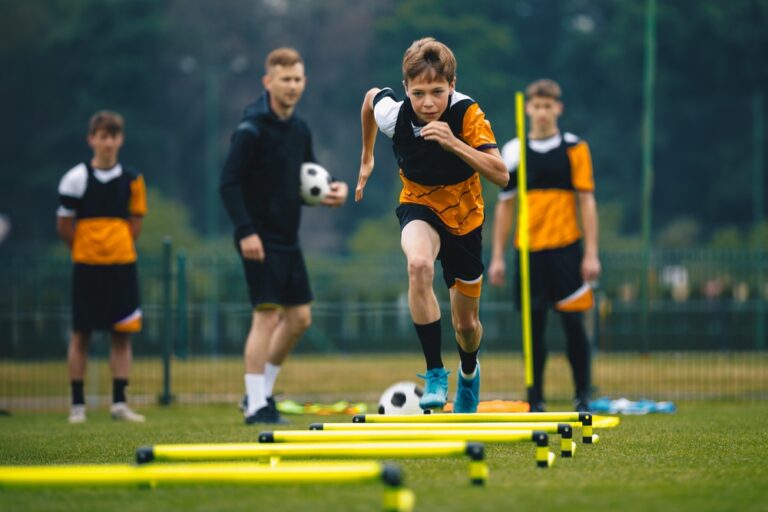
Soccer is a game of “stop and go.” We recommend interval training to mimic match demands. Instead of just jogging, players should alternate between high-intensity sprints and moderate recovery jogging.
- 100-Yard Sprints: Aim for 8-10 reps, three times a week.
- Endurance Running: A solid baseline is being able to run 3 miles in 25-30 minutes.
- Shuttle Runs: These build the “soccer brakes” needed for quick changes of direction.
Strength, Agility, and Plyometrics
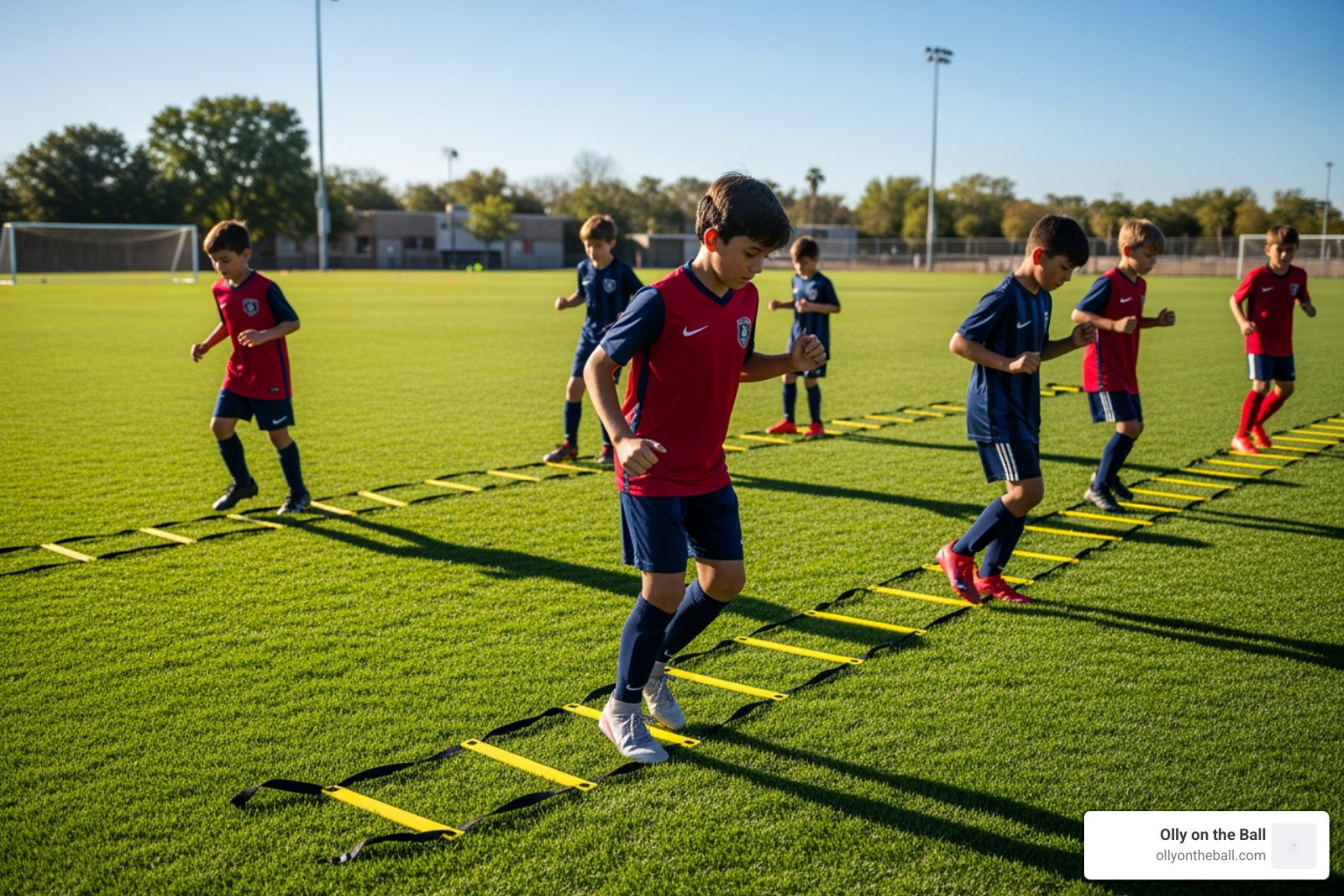
Building explosive power helps with winning 50/50 balls and beating defenders. Focus on age-appropriate fitness tests for youth players to ensure they are developing at a healthy pace. Exercises like squats, lunges, and pushups provide a strength foundation, while ladder drills improve foot speed.
Recovery and Stretching
We can’t emphasize this enough: use dynamic stretching (high knees, butt kicks, leg swings) before training and static stretching after. Tapering training 2-3 days before the actual tryout ensures the body is rested and “snappy” for the first whistle.
Mastering Technical Skills for Tryouts Preparation Soccer Youth
Technical skills are the tools in a player’s toolbox. At tryouts, coaches often use a scoring system (typically 1-5 points) to rate these fundamentals.
- Ball Control & Dribbling: Practice “attacking the cone” drills. Use both feet and all surfaces of the foot (inside, outside, laces).
- First Touch: This is often the #1 thing coaches notice. A soft first touch that sets up the next play shows high-level composure.
- Passing Accuracy: Focus on crisp, “weighted” passes. Practice with a partner or a wall to get hundreds of reps.
- Shooting Under Pressure: Don’t just shoot at an empty net. Practice dribbling at speed and finishing into the corners.
- Shielding & Juggling: Juggling isn’t just a trick; it builds incredible “feel” for the ball. Shielding shows the aggression and strength coaches love to see.
For a deeper look at what coaches are actually marking down on their clipboards, you can View the Tryout Resource Packet and Evaluation Sheets to see sample drills and scoring criteria.
Tactical Awareness and Standing Out in Scrimmages
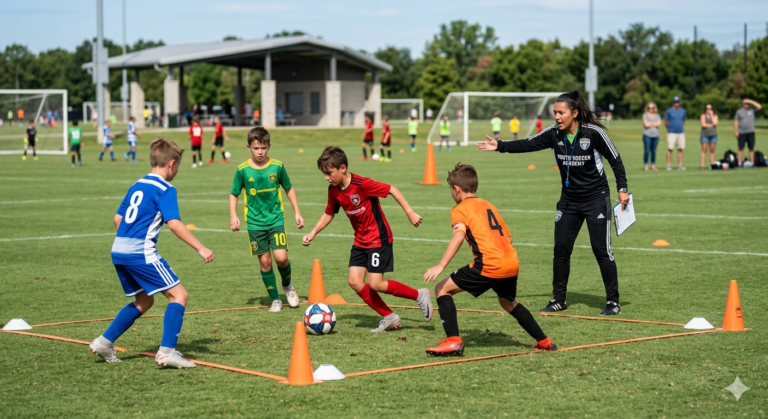
Once the drills are over and the small-sided games (4v4 or 7v7) begin, coaches switch their focus to “game intelligence.” Tactical awareness is about what you do when you don’t have the ball.
Scanning and Positioning
The best players are constantly “checking their shoulders.” Scanning the field before receiving the ball allows for faster decision-making. We want our players to understand spacing—don’t just “bunch up” around the ball. Find the gaps, create passing lanes, and understand the transitions between attacking and defending.
Small-Sided Game Success
In 4v4 or 7v7 games, there are fewer players, which means more touches. This is where coaches assess:
- Decision Making: Did they make the simple pass or try to dribble through three people?
- Pressing Cues: Do they work to win the ball back immediately after a turnover?
- Movement Off-Ball: Are they standing still, or are they making runs to pull defenders away?
Communication and Leadership for Tryouts Preparation Soccer Youth
You don’t have to be the loudest kid on the field, but you do need to be vocal. Most youth players are silent, so a player who talks instantly stands out as a leader.
- Use Specific Calls: “Man on!” “Turn!” “Time!” “Square!”
- Positive Body Language: If a teammate makes a mistake, encourage them. Coaches hate “finger-pointing.”
- High Work Rate: Jogging between drills and being the first one to listen when the coach speaks shows you are coachable.
- The “Invisible” Extras: Picking up a stray cone or helping with the ball bag might seem small, but it tells a coach you are a team-first player.
Mental Toughness and the “Next Play” Mindset
Tryouts are 90% mental. Nerves are normal, but they shouldn’t paralyze your play. We teach the “Next Play” mindset. If you lose the ball or miss a shot, you have exactly two seconds to be upset, and then you must focus entirely on the next task.
Visualization and Goal Setting
Before the tryout, spend 10 minutes visualizing success. See yourself making a perfect tackle or slotting a pass through the defense. Set small, controllable goals rather than outcome goals. Instead of “I will make the A-team,” try “I will call for the ball 10 times” or “I will win three 1-v-1 duels.”
Coping with Anxiety
If the pressure feels heavy, use the 4-4 breathing technique: breathe in for 4 seconds, hold for 4, and exhale for 4. This centers the nervous system and brings focus back to the present moment. Coaches aren’t looking for perfection; they are looking for resilience.
Evaluating Charleston Clubs and Tryout Logistics
Tryouts are a two-way street. While the club is evaluating your child, you should be evaluating the club. In the Charleston and Mount Pleasant area, we have a wealth of options, from the professional influence of the Charleston Battery to local community clubs.
Spotting Green and Red Flags
Not every club is a good fit for every player. Use this table to help navigate your “incognito spy mission” while observing practices or talking to current families.
| Feature | Green Flag (Good Sign) | Red Flag (Warning) |
|---|---|---|
| Player Turnover | 10-15% annual turnover (Normal) | 50%+ turnover (Something is wrong) |
| Coaching Style | Constructive feedback, organized | Constant yelling, on phone during drills |
| Philosophy | Development over winning | “Win-at-all-costs” mentality |
| Atmosphere | Kids are engaged and smiling | High tension, kids look afraid to fail |
Handling Scheduling Conflicts
It’s common for clubs in the Lowcountry to schedule tryouts on the same nights. Don’t panic. Most clubs will find a spot for a talented player even if they miss a session.
- Communicate Early: Email the Director of Coaching (DOC) and explain the conflict.
- Request a Makeup: Ask if there is an alternate evaluation session or if your child can attend a regular team practice for an assessment.
- Split the Time: If necessary, attend the first half of one tryout and the second half of another.
Essential Gear and Nutrition for Tryout Day
Peak performance requires the right fuel. You wouldn’t put cheap gas in a race car, so don’t fuel your athlete with sugary snacks right before a tryout.
Nutrition and Hydration
- Pre-Tryout Meal: Eat a balanced meal 2-3 hours before. Focus on complex carbs (brown rice, pasta) and lean proteins (chicken, fish).
- Hydration: Start hydrating the day before. On tryout day, sip water consistently rather than gulping it all at once.
- Avoid: High-sugar sports drinks or heavy, greasy foods that cause energy crashes.
Gear Checklist
Don’t let a gear mishap distract you.
- Cleats: Never wear brand-new cleats to a tryout. Ensure they are broken in to avoid blisters.
- Shin Guards: Ensure they fit snugly and cover from just above the ankle to below the knee.
- The Essentials: Pack a pumped-up ball, plenty of water, a small healthy snack (like an orange or banana), and a backup jersey.
Pro Tip: Arrive 20 minutes early. This gives your child time to settle in, meet the coaches, and get a feel for the field before the pressure starts.
Frequently Asked Questions about Soccer Tryouts
How early should my child start preparing for tryouts?
We recommend a 4-6 week timeline. The first two weeks should focus on building a fitness base (endurance and sprints). The final weeks should be about “sharpening” technical skills and getting as many touches on the ball as possible. Consistency is more important than intensity—20 minutes of daily ball work is better than one 3-hour session once a week.
What do coaches look for beyond technical skills?
Coaches are building a team, not just a collection of individuals. They look for:
- Coachability: Do they listen and try to implement feedback immediately?
- Attitude: How do they react when things go wrong?
- Teamwork: Do they look for the pass, or are they trying to be the “hero” every play?
- Effort: Are they the first one to the ball and the last one to stop running?
How should we handle overlapping tryout schedules?
In our local Charleston community, clubs often overlap. The best approach is transparency. Contact the Directors of Coaching (DOCs) at both clubs. Most are professional and understand that families are exploring options. They often have makeup dates or “ID sessions” specifically for these situations.
Conclusion
The Charleston soccer community is a fantastic place for young athletes to grow, learn, and compete. While the tryout process can feel intense, it is just one step in a much longer journey. Whether your child is playing at the fields in Mount Pleasant, James Island, or Summerville, the goal is the same: personal growth and a lifelong love for the game.
At Olly on the Ball, we believe that mastering the fundamentals is the key to confidence. When a player knows their first touch is solid and their fitness is high, the nerves naturally fade away. If you’re looking for more tips or personalized coaching to help you stand out, Olly on the Ball is here to help the next generation of Lowcountry players reach their potential.
Ready to get tryout-ready? Book a Private Session with Olly today and let’s get to work on those fundamentals!