
Why Soccer Fundamentals for Youth Are the Foundation of Everything
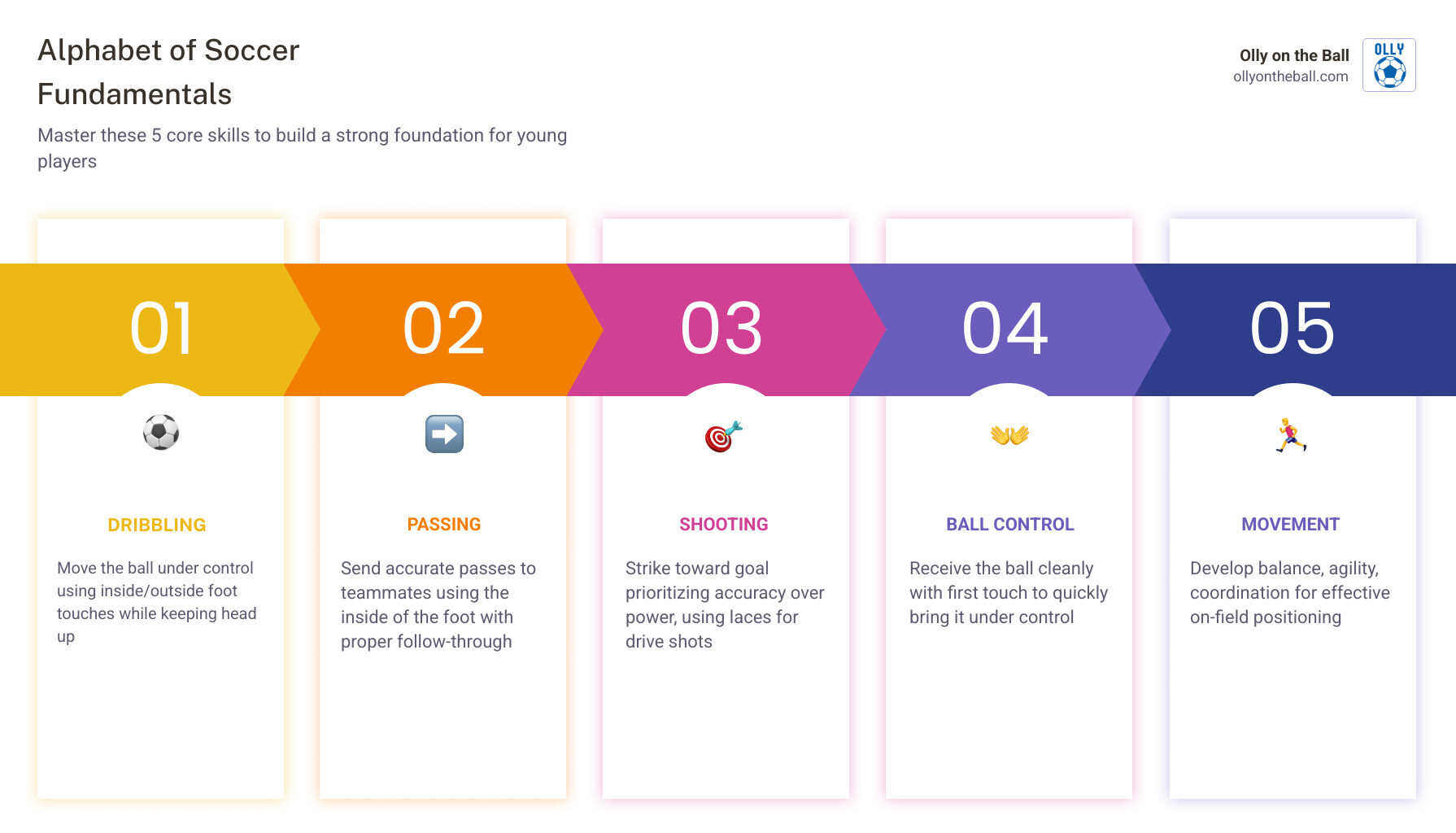
Soccer fundamentals for youth are the core building blocks every young player needs before anything else — tactics, positions, and advanced moves all come later.
Here’s a quick summary of the key fundamentals:
| Fundamental | What It Means |
|---|---|
| Dribbling | Moving with the ball under control using the inside and outside of the foot |
| Passing | Sending the ball accurately to a teammate using the inside of the foot |
| Shooting | Striking toward goal with accuracy first, then adding power |
| Ball Control / First Touch | Receiving the ball and bringing it under control quickly |
| Movement & Body Control | Balance, agility, and coordination — the base for all other skills |
Think of these as the alphabet of soccer. Just like you can’t write sentences before you know your letters, young players can’t build advanced skills without mastering the basics first.
And here’s the thing — getting this right early matters a lot. Research shows that over 70% of young athletes quit competitive sport by age 14, often because they stop enjoying it. The best way to keep kids engaged is to make learning these fundamentals fun, game-like, and rewarding from the very start.
Whether you’re a parent in Mount Pleasant watching your child take their first kick, or you’re supporting a competitive player at a Charleston-area club who wants more playing time — this guide walks you through every fundamental skill, step by step.
At Olly on the Ball, we believe that the best way to learn is from someone who lives and breathes the game. Based right here in the Lowcountry, we focus on helping young players in Charleston and Mount Pleasant find their rhythm on the pitch. Whether we’re training at a local park or in your backyard, our goal is to build that “Alphabet of Soccer” so every player feels confident when they step onto the field.
Essential Gear for Soccer Fundamentals for Youth
Before we get into the drills, we need to make sure our young athletes are set up for success. You don’t need a professional stadium, but having the right equipment makes a massive difference in safety and skill development.
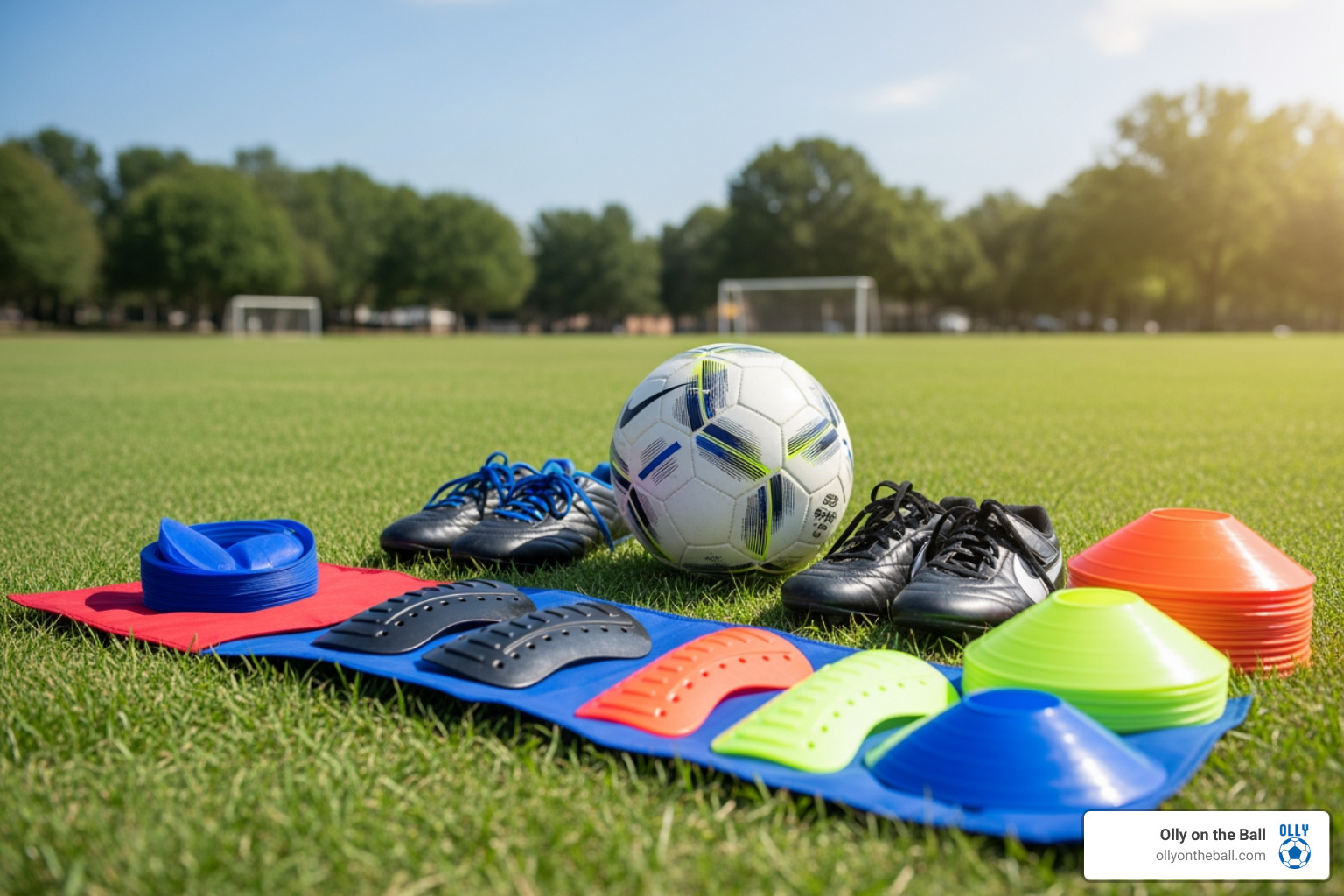
Here is the “must-have” list for any beginner:
- The Right Soccer Ball: This is the most important tool. Make sure you have the appropriate size for your child’s age (Size 3 for U8, Size 4 for U10-U12, and Size 5 for U13+). A Soccer Ball that is too big or heavy can lead to bad habits and toe-kicking.
- Cleats and Shinguards: Safety first! Shinguards protect those shins from accidental kicks, and Cleats provide the grip needed to move quickly on the grass without sliding around. Remember: soccer socks go over the shinguards!
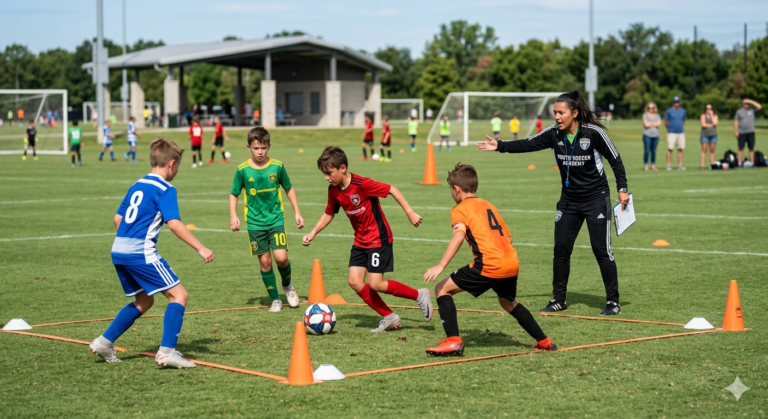
- Cones: These are essential for marking boundaries and creating obstacle courses. While you can use shoes or water bottles in a pinch, Cones are inexpensive and easy to transport to any Charleston park.
- Pop-Up Goals: For younger kids, the concept of an “imaginary” goal between two cones can be confusing. A Pop Up Goal gives them a clear target to hit, which makes scoring much more exciting.
If you’re looking for more personalized advice on what gear fits your child’s specific needs, check out More info about training services to see how we can help.
Mastering the Big Three: Dribbling, Passing, and Shooting
When you watch a movie like ALEX AND ME, you see the inspiration that drives kids to the field. But behind every highlight reel is a player who has mastered three core skills: dribbling, passing, and shooting.
As UK Elite youth sports growth statistics show, soccer is exploding in popularity because it’s a game of constant action. To stay in the action, players need to know which tool to use and when.
| Skill | Primary Goal | Key Surface |
|---|---|---|
| Dribbling | Keeping possession while moving | Inside/Outside/Laces |
| Passing | Moving the ball to a teammate | Inside of the foot |
| Shooting | Putting the ball in the net | Laces or Inside |
Dribbling Techniques for Soccer Fundamentals for Youth
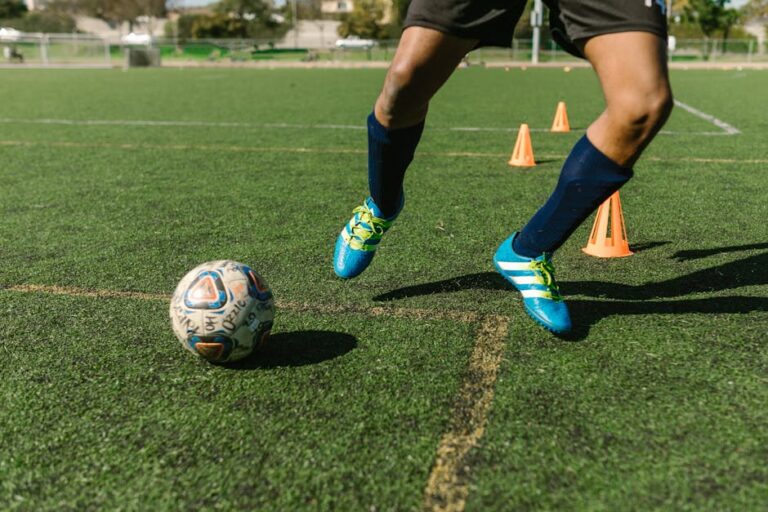
Dribbling is the art of keeping the ball close to your feet while moving. We want to teach kids two main types: close control (for tight spaces) and speed dribbling (for open fields).
- Close Control: Use the insides and outsides of both feet. Encourage players to take “baby touches”—keeping the ball within one step of their body at all times.
- Speed Dribbling: When there is open space, players can use the “laces” of their cleat to push the ball further ahead. This allows them to run at full speed.
- Keep Your Head Up: This is the hardest part for beginners! We use the dribble to the cone drill to get players comfortable moving toward a target while occasionally glancing up to see the “field.”
- Fun Games: Games like Sharks and Minnows or Red Light Green Light are perfect. They force kids to change speed and direction while protecting the ball from “sharks” (defenders).
Passing and Shooting: Soccer Fundamentals for Youth
Passing and shooting are about “propelling” the ball. For beginners, the inside foot push pass is the gold standard.
- The Plant Foot: The non-kicking foot should be placed right next to the ball, pointing exactly where you want the ball to go.
- The Inside Foot: Turn the kicking foot outward like a hockey stick. Strike the middle of the ball with the flat, inside part of the foot.
- Shooting Technique: We often tell our players that shooting is just a “hard pass to the goal.” While the practice shooting drill emphasizes using the laces for power, accuracy should always come first.
- Bowling Pin Game: A great way to practice accuracy is the bowling pin passing game. Set up cones or plastic bottles and have the kids try to “bowl” them over with a pass. It’s way more fun than just passing back and forth!
Movement Education and Body Control
Before a child can master a ball, they have to master their own body. In youth soccer, we call this movement education. If a player can’t balance on one foot, they’ll struggle to kick a ball properly.
We focus on three main areas:
- Balance and Coordination: Using a fun balloon game for control is a fantastic way to build this. Because a balloon falls slowly, it gives kids time to coordinate their feet and knees to keep it in the air.
- Agility: Soccer is a game of 45-degree angles. We teach players to backpedal in a “V” shape, which helps them learn how to move backward and forward quickly without tripping over their own feet.
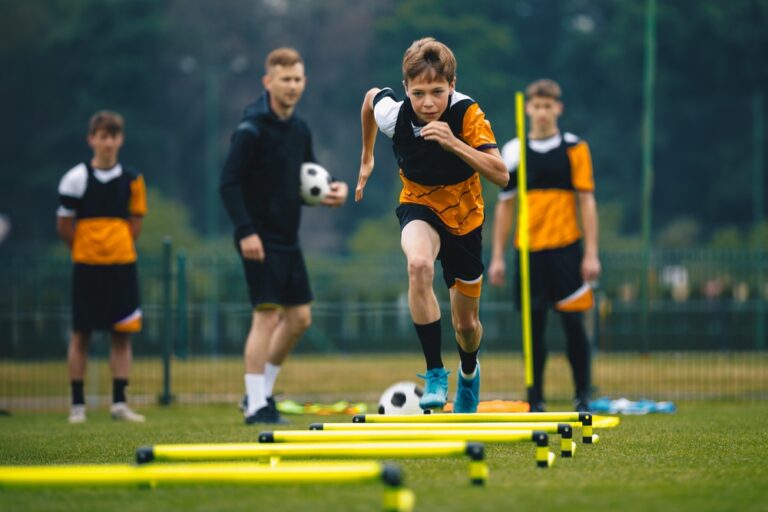
- Gross Motor Skills: Running, jumping, and hopping are all part of the game. An agility ladder is a great tool for this, helping kids develop “fast feet.”
For more drills on how to improve your child’s coordination at home, check out More tips on our blog.
Age-Appropriate Progressions from U6 to U14
One size does not fit all in soccer. A 6-year-old in Isle of Palms has very different needs than a 13-year-old in Summerville. Following US Soccer coaching guidelines, we break development down into phases.
- U6 – U8 (The Discovery Phase): At this age, it’s all about ball manipulation. Every kid should have a ball at their feet as much as possible. We don’t worry about positions; we just want them to love the feeling of the ball. Use a Size 3 ball.
- U10 – U12 (The Golden Age of Learning): This is when players develop mastery. They can start to understand more complex passing patterns and basic defending. We use a Size 4 ball here. This is also the best time for positional rotation—letting everyone try being a striker, a defender, and even a goalie.
- U14 (The Development Phase): Now we start looking at tactical awareness. Players begin to understand “the why” behind the moves. They move to a full-size Size 5 ball.
I’ve spent years playing through these exact stages in the Charleston area, and I know how much the right coaching at the right age matters. You can read more About Olly’s experience to see how that journey shaped my approach to training.
Structuring a Fun and Effective Training Session
A common mistake in youth coaching is talking too much. Kids want to play, not listen to a lecture! We follow the “70% Rule”—at least 70% of the session should have the “ball rolling.”
Here is our 60-minute “Olly on the Ball” blueprint:
- 0-10 Minutes: Dynamic Warm-up: Fun movement games (like Tag) to get the heart rate up.
- 10-30 Minutes: Technical Skill: Focusing on one specific soccer fundamental for youth (like dribbling with the left foot).
- 30-50 Minutes: Small-Sided Games: 3v3 or 4v4 games. These are better than full-field games because every kid gets more touches on the ball.
- 50-60 Minutes: The Scrimmage: A chance to put it all together in a “real” game environment.
A key secret we use is the 1-minute coaching rule: never stop the game for more than 60 seconds to give instructions. Keep them moving!
Common Mistakes and How to Fix Them
Even with the best drills, kids will naturally fall into some “bad” habits. Here’s how we help them adjust:
- The “Toe-Kick”: Many beginners kick with their toes because it feels powerful. The Fix: Remind them to “turn their toe out” to use the inside of the foot for accuracy, or “point their toe down” to use their laces for power.
- Looking at Feet: Beginners stare at the ball like it’s going to disappear. The Fix: Use “guided discovery.” Ask them, “If you’re looking at the ball, can you see where your teammate is?”
- The “Beehive”: This is when every kid on the field runs toward the ball at once. The Fix: Use “cones as houses.” Tell players they have to stay near their “house” to help their teammates.
- Standing Still: Kids often wait for the ball to come to them. The Fix: Encourage “active feet.” Tell them to stay on their toes like they are standing on hot sand!
If you’re seeing these habits and want some one-on-one help to correct them, Contact Olly for a session. A few private sessions can often fix a year’s worth of “toe-kicking” in just a few weeks.
Frequently Asked Questions about Soccer Fundamentals
What are the three core skills every youth player needs?
The “Big Three” are Dribbling (keeping the ball), Passing (sharing the ball), and Shooting (scoring with the ball). If a player masters these, they can play any position on the field.
How do I stop my child from kicking with their toe?
The best way is through repetition with the “inside foot” pass. Set up the bowling pin game mentioned above. It’s hard to knock down a bottle with your toe accurately, so they will naturally start using the inside of their foot to “aim” better.
What size soccer ball does my child need?
- U8 and younger: Size 3
- U10 to U12: Size 4
- U13 and older: Size 5 (Standard adult size)
Conclusion
At the end of the day, soccer fundamentals for youth are about more than just winning games—they are about building confidence. When a child knows they can control the ball, they stop being afraid of making mistakes and start having fun.
Whether you are in Daniel Island, James Island, or right in the heart of Mount Pleasant, the Charleston soccer community is a great place to grow. We want every player to walk off the pitch with a smile and a love for the game that lasts a lifetime.
Ready to take your child’s skills to the next level? Book a session to start today and let’s get to work!