
Why One on One Shooting Can Make or Break Your Child’s Season
One on one shooting is one of the most important skills any young soccer player can develop — and one of the most commonly missed opportunities on the pitch.
You know that moment. Your child is clean through on goal. Just them and the keeper. The crowd holds its breath. And then… the shot goes wide. Or straight at the goalkeeper. Or they take one touch too many and the chance is gone.
It hurts to watch. And for your child, it can quietly chip away at their confidence.
Here’s the good news: this is a teachable skill. Clinical finishing in 1v1 situations doesn’t come from talent alone — it comes from deliberate, focused practice.
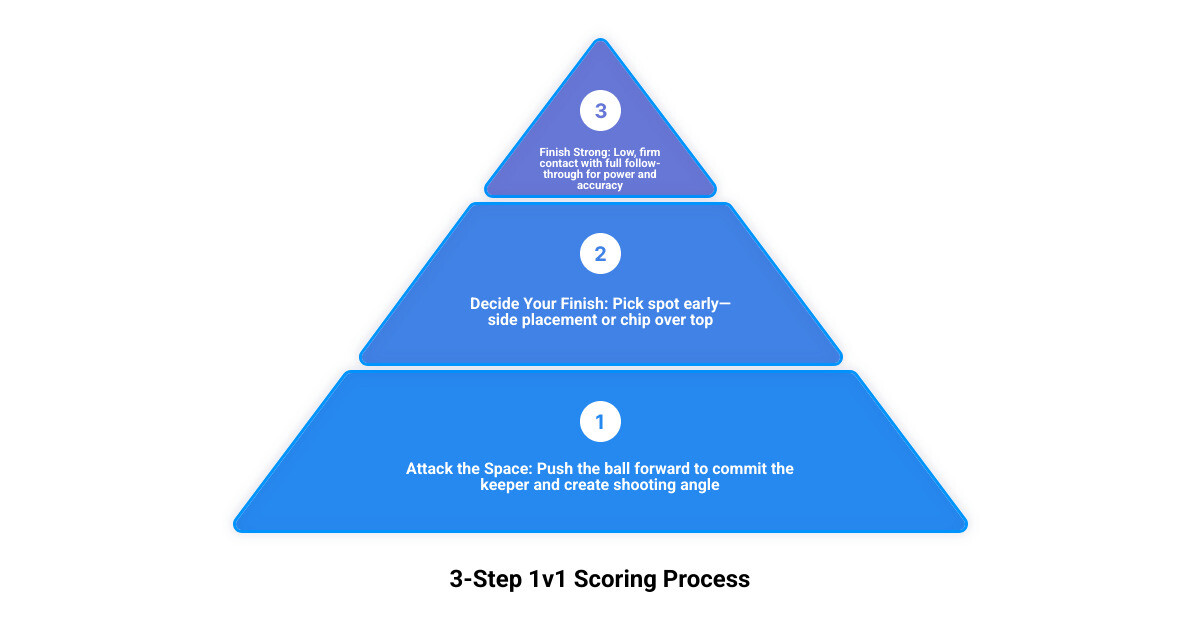
Quick answer — how to score more in one on one situations:
- Stay calm — slow your breathing and pick your spot before you shoot
- Attack the space — push the ball forward to commit the keeper
- Choose your finish — decide early: placement to the side, or chip over the keeper
- Follow through — low, firm contact wins more often than blasting it
Whether your child plays for a club team in Mount Pleasant or is just getting started in recreational soccer across the Lowcountry, improving their 1v1 finishing can be the difference between a good season and a great one.
This guide breaks down exactly how to do it — with drills, techniques, and tips built for young players.
What is One on One Shooting and Why It Matters
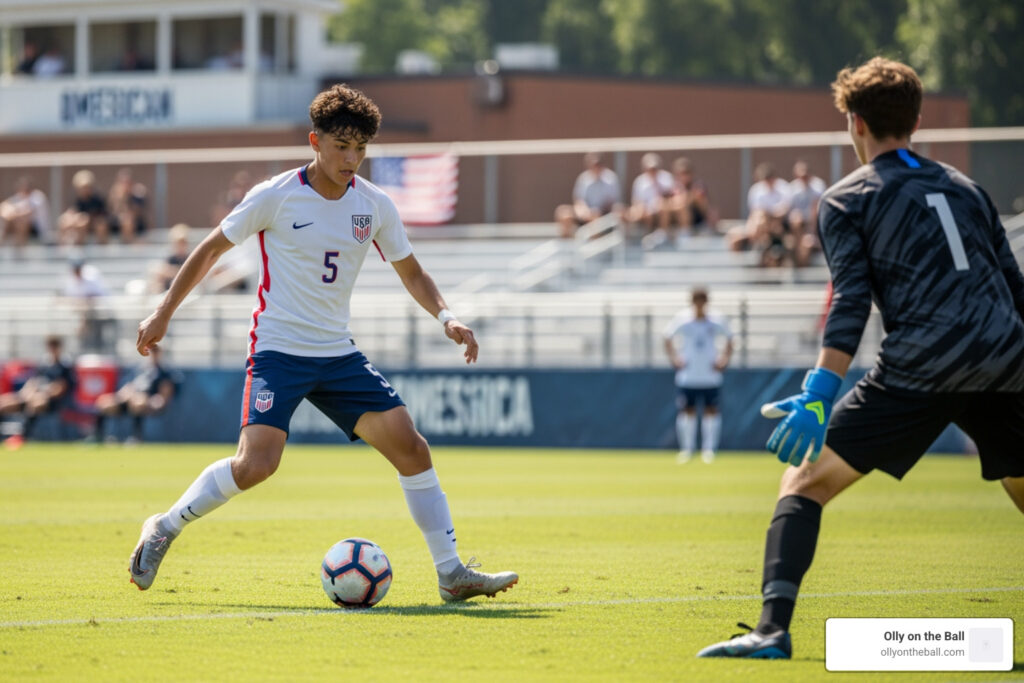
At its core, one on one shooting is the ultimate showdown between the striker and the goalkeeper. It is the moment where tactical team play ends and individual brilliance begins. In these high-pressure seconds, a player must balance physical coordination with extreme mental composure.
The primary benefit of mastering this skill is the massive boost in a player’s confidence. When a young athlete knows they can reliably beat a keeper, they play with more freedom and less fear of failure. In a team setting, being the “clinical finisher” makes a player an invaluable asset during those tight, game-winning moments common in local matches at James Island or North Charleston.
The Skill Gap and Personalized Instruction
Many players struggle because team practices often focus on group tactics rather than the fine mechanics of finishing. This is where personalized instruction benefits a player most. Just as specialized training in other disciplines helps individuals master stance and control, private soccer coaching allows us to isolate the “why” behind a missed shot.
We find that when a young player works with a peer mentor—someone who is actively playing at a high level—the advice feels more relatable. We aren’t just telling them what to do; we are showing them how we handle that same pressure on the weekend. This individual growth is the foundation of a great soccer career.
Mastering the Mechanics of One on One Shooting
Scoring consistently requires more than just a hard kick. It requires a sequence of mechanical steps that become second nature through repetition.
- The Setup Touch: Your last touch before the shot should be slightly out of your feet and angled toward your preferred shooting side. This opens up your hips.
- Eyes Up: You must glance at the keeper to see their position. Are they staying on their line? Are they rushing out?
- The Non-Kicking Foot: Plant your standing foot pointing exactly where you want the ball to go.
- The Strike: Clean contact with the laces or the inside of the foot, depending on the goal.
Power vs. Finesse: Making the Choice
Choosing the right finish is half the battle. Use the table below to understand when to use each technique.
| Feature | Power Finish (Laces) | Finesse Finish (Inside Foot) |
|---|---|---|
| Best Distance | 12-18 yards out | 6-12 yards out |
| Goalie Position | Standing tall, covering angles | Rushing out or off-balance |
| Success Key | High follow-through, firm ankle | Placement in the side netting |
| Risk | Higher chance of missing the frame | Keeper might reach it if not wide enough |
Stance and Follow-Through
A common mistake we see at fields in Mount Pleasant is players “falling away” from the ball. To keep the shot low and accurate, keep your chest over the ball and follow through toward the target. Think of it like a “stick the landing” moment—your momentum should carry you forward into the space where the ball just was.
The “First Shot” Mentality in One on One Shooting
In a real game, you don’t get ten warm-up shots. You get one. This is what experts call the “first shot” problem. Traditional drills where you shoot 50 balls in a row don’t simulate game pressure effectively because the second shot is always easier than the first.
To fix this, we incorporate “sudden reps” into our training. We might be working on ball handling, and suddenly I’ll yell “Live!”—forcing the player to immediately transition into a 1v1 sprint and finish. This builds mental toughness and ensures that when that lone opportunity arrives in the 80th minute, the player’s body knows exactly what to do.
Competitive One on One Shooting Games
The best way to learn is to have fun while doing it. Competition naturally raises the stakes and forces players to focus.
- Knockout: A classic adapted for soccer. Two players start at the edge of the box. The first shoots; if they miss, they must retrieve their ball and score before the person behind them scores. It’s high-energy and teaches players to finish under the literal pressure of someone chasing them.
- Make-it-Take-it: In this game, if you score, you keep possession and get to attack again from a different angle. It rewards clinical finishing and forces the defender (or keeper) to stay sharp.

These games are effective because they replicate the “high-stakes” feeling of a match. When there is a “winner” and a “loser” in a drill, the brain treats the rep with more importance, leading to faster skill acquisition.
Pro-Level Drills to Beat the Keeper
Ready to take it to the next level? Here are three drills we use to turn “sitters” into “goals.”
1. Spanish 1v1 (Transition Focus)
- Setup: Place a cone on the baseline and a cone at the top of the “D.”
- Action: The attacker starts on the baseline, passes the ball out to the coach, then sprints around the top cone. The coach passes the ball back into space.
- Goal: The attacker must gather the ball at speed and beat the keeper who is now rushing out. This teaches transition speed and how to handle a ball that isn’t perfectly sitting still.
2. The Rollout Drill (Physicality)
- Setup: Attacker and defender stand back-to-back at the penalty spot.
- Action: The coach rolls the ball toward the corner of the box. Both players turn and sprint.
- Goal: The attacker must use their body to shield the defender while preparing for a 1v1 finish. This is great for building the physical toughness needed to score in traffic.
3. Beating the Helper
In a real game, you often have a “helper” defender chasing you from behind while you face the keeper. We practice this by giving the defender a 2-yard head start but requiring them to run around a further cone. This creates a realistic “closing window” where the striker has to make a decision quickly before the defender catches up.
Getting Started with Private Training in Charleston
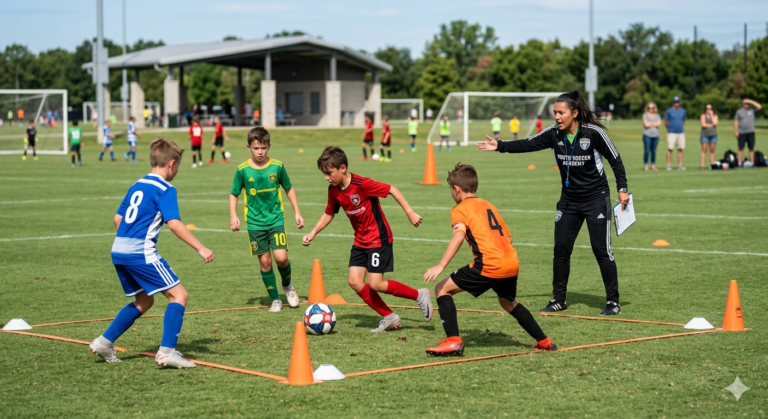
If you are looking for a way to help your child master these skills, Olly on the Ball is here to help. We provide hyper-local, private soccer training throughout the Lowcountry—from the fields of Daniel Island to the parks in Summerville and Isle of Palms.
Why Choose Olly on the Ball?
We believe in the power of peer-to-peer mentoring. As a 16-year-old competitive player and Charleston Battery volunteer, I (Oliver) understand the modern game from the inside. I don’t just coach from the sidelines; I get on the pitch with the kids. We focus on:
- Fundamental Skills: Ball control, passing, and clinical shooting.
- Confidence Building: Creating a positive environment where it’s okay to make mistakes.
- Love for the Game: Keeping it fun so they want to keep playing.
Our sessions are designed to be intense but encouraging. We use the same drills that top-tier academies use, but we translate them into language that a 7-year-old or a 12-year-old can actually use on Saturday morning.
Frequently Asked Questions about 1v1 Training
Who is the ideal candidate for private shooting lessons?
Any player aged 5-14 who wants to improve their game! Whether your child is an “absolute beginner” who needs to learn how to kick the ball properly, or an intermediate player looking to refine their “scoring moves,” one-on-one sessions provide the tailored attention they can’t get in a large team practice.
What equipment do I need for a session?
Just the basics! Your child should bring:
- Soccer cleats and shin guards.
- A properly inflated ball (Size 3, 4, or 5 depending on age).
- Plenty of water.
- A positive attitude! We provide the cones, goals, and specialized training gear.
How long does a typical training session last?
Most of our private sessions are 1 hour long. We find this is the “sweet spot” for maintaining focus and getting enough high-quality repetitions without the player becoming overly fatigued. For those looking for a more intensive experience, we can discuss longer blocks or small-group clinics.
Conclusion: Start Your Journey Today
At the end of the day, soccer is about the joy of the game. There is no feeling quite like seeing a young player’s face light up after they tuck a ball into the corner of the net for the first time. By focusing on one on one shooting, we aren’t just teaching them to score goals—we are teaching them that with practice and composure, they can overcome any challenge on the field.
The Charleston soccer community is growing every day, and we are proud to be a part of it. Whether you are at Sullivan’s Island or downtown, let’s get to work on those fundamentals.
Ready to stop missing sitters? Book a Private Session today and let’s get your child playing with the confidence they deserve. For more details on our philosophy and location availability, check out more info about our services.
See you on the pitch!