
Why Every U7 Coach in Charleston Needs to Stop the Swarm
Passing drills u7 coaches rely on are the fastest way to break the classic “swarm ball” habit — where every player on the field chases the ball at once.
Here are the best passing drills for U7 players to get you started:
- Passing Pairs — Two players pass back and forth using the inside of the foot, gradually moving apart
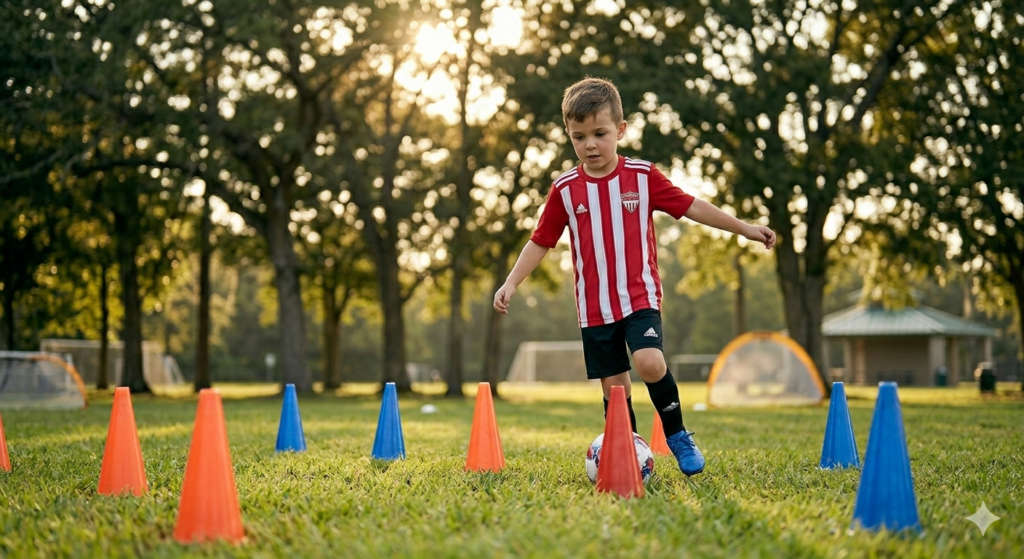
- Zig Zag Passing — Players pass through a line of cones, focusing on accuracy and first touch
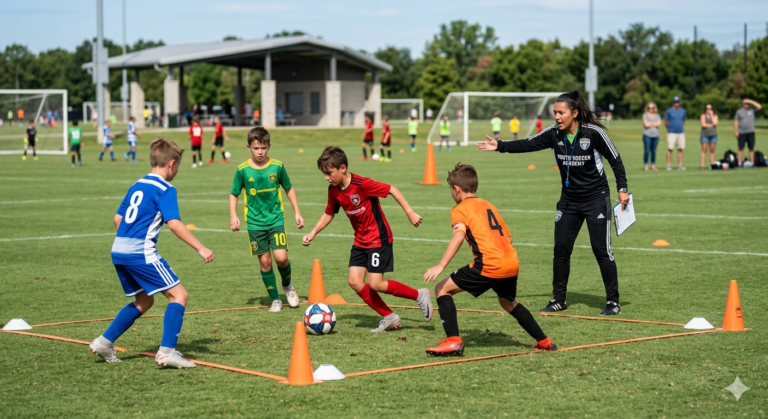
- Pass & Move Square — Set up a small grid; players pass and move to a new cone after each pass
- Through the Gates — Scatter small cone gates around the area; players score by passing through them
- 4v4 Small-Sided Game — Require a set number of passes before shooting to reward teamwork
If you coach U7 soccer in Mount Pleasant or anywhere in the Lowcountry, you’ve seen it. The ball drops, every single player swarms it, and the game looks like a chaotic beehive for 40 straight minutes.
It’s completely normal at this age. But it can be fixed.
The answer isn’t yelling “spread out!” from the sideline. It’s building passing habits through short, fun, and age-appropriate drills that kids actually enjoy.
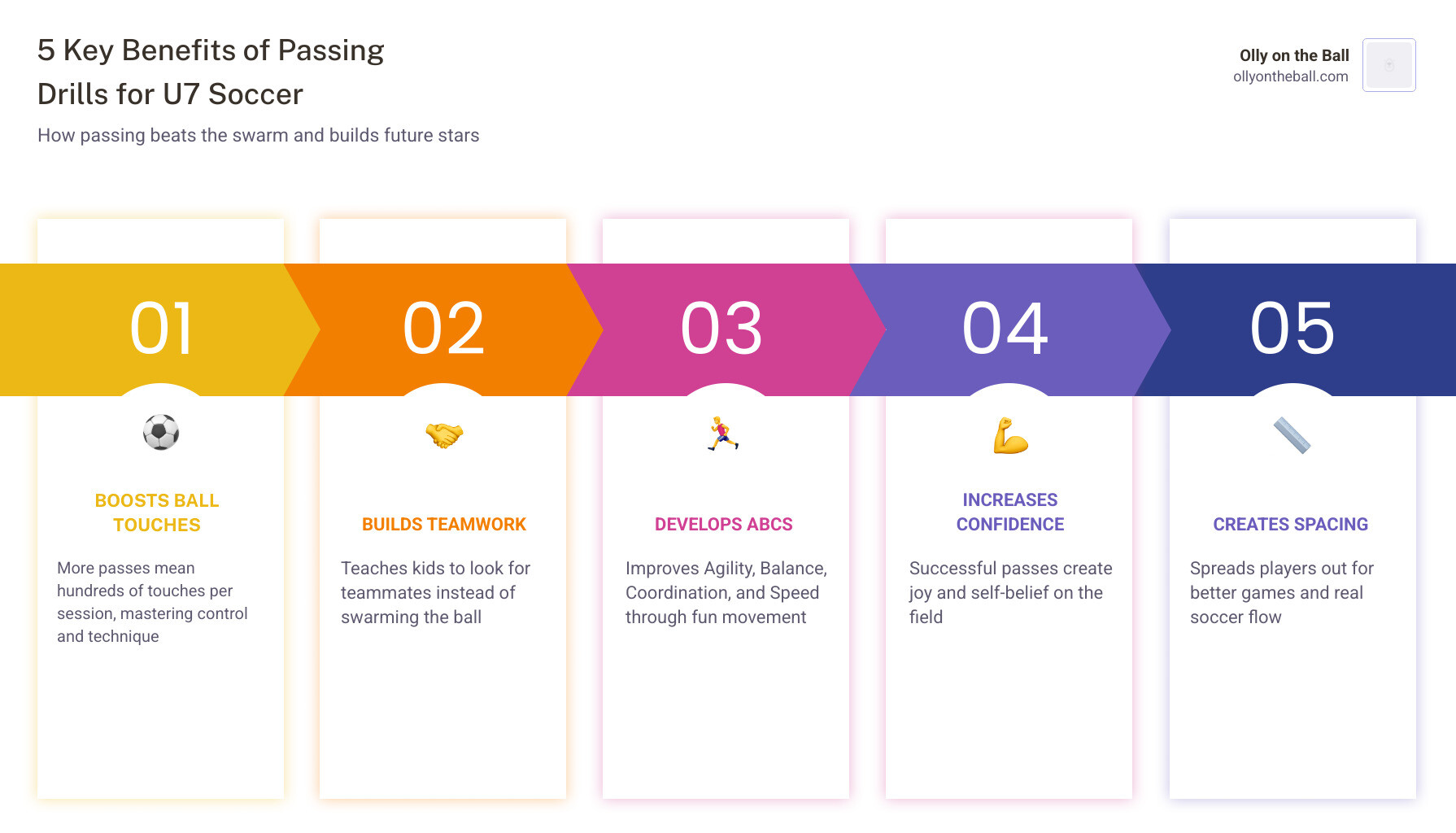
At this age, the priority is simple: have fun while learning the basics. According to coaching experts, U7 players benefit most from developing their ABCs — Agility, Balance, Co-ordination, and Speed — alongside fundamental ball skills like passing and receiving.
The good news? You don’t need fancy equipment or a coaching license. You need the right drills, a positive attitude, and maybe a few silly challenges to keep the kids laughing and moving.
This guide gives you exactly that.
Why Focus on Passing at the U7 Age Group?
At Olly on the Ball, we believe the U7 stage is the “Golden Age” for falling in love with the game. While it’s tempting to just let them run and kick, introducing passing drills u7 players can wrap their heads around builds a massive foundation for their future.
Developing the ABCs
Research shows that U7 Soccer Drills and Games should prioritize Agility, Balance, Coordination, and Speed (the ABCs). Passing isn’t just about the foot hitting the ball; it’s about balancing on one leg, coordinating the swing, and having the agility to adjust to a moving target.
Building Confidence and Teamwork
When a 6-year-old successfully passes to a teammate, their face lights up. They realize they aren’t just playing “against” everyone; they are playing “with” someone. This shift from individual play to teamwork is a huge milestone in Charleston youth soccer. By focusing on passing now, we help them move away from the “swarm” and toward a version of the game that actually resembles soccer.
Maximizing Ball Touches
The best drills for this age group provide a high volume of ball touches. A simple passing warm-up on a 20×30 field can have a massive impact. In fact, popular passing warm-up drills have been viewed over 115,000 times by coaches looking for these exact results. The more touches they get, the more comfortable they become. For more insights on youth development, check out more tips on our soccer blog.
Fundamental Techniques and Coaching Points
Before we dive into the drills, we have to talk about the “how.” If a kid tries to pass with their toe (the “Toe Poke”), the ball goes everywhere. We want to teach them the “Push Pass.”
The Inside Foot Technique
We teach our players to create an “L” shape with their feet.
- The Plant Foot: This is the non-kicking foot. It should point directly at the target, about a few inches away from the ball.
- The Kicking Foot: Turn the toe out so the inside of the foot is facing the ball.
- The Strike: “Punch” through the middle of the ball. We often tell the kids to “paint the ball” with the inside of their shoe.
Key Coaching Points
- Eye Contact: Look at the ball when striking, but look at the teammate before passing.
- Weight of Pass: Is it too soft? (The “Snail Pass”) Is it too hard? (The “Rocket Pass”). We want the “Goldilocks Pass”—just right.
- Receiving: Teach them to use the inside of the foot to “catch” the ball, like they are catching an egg so it doesn’t break.
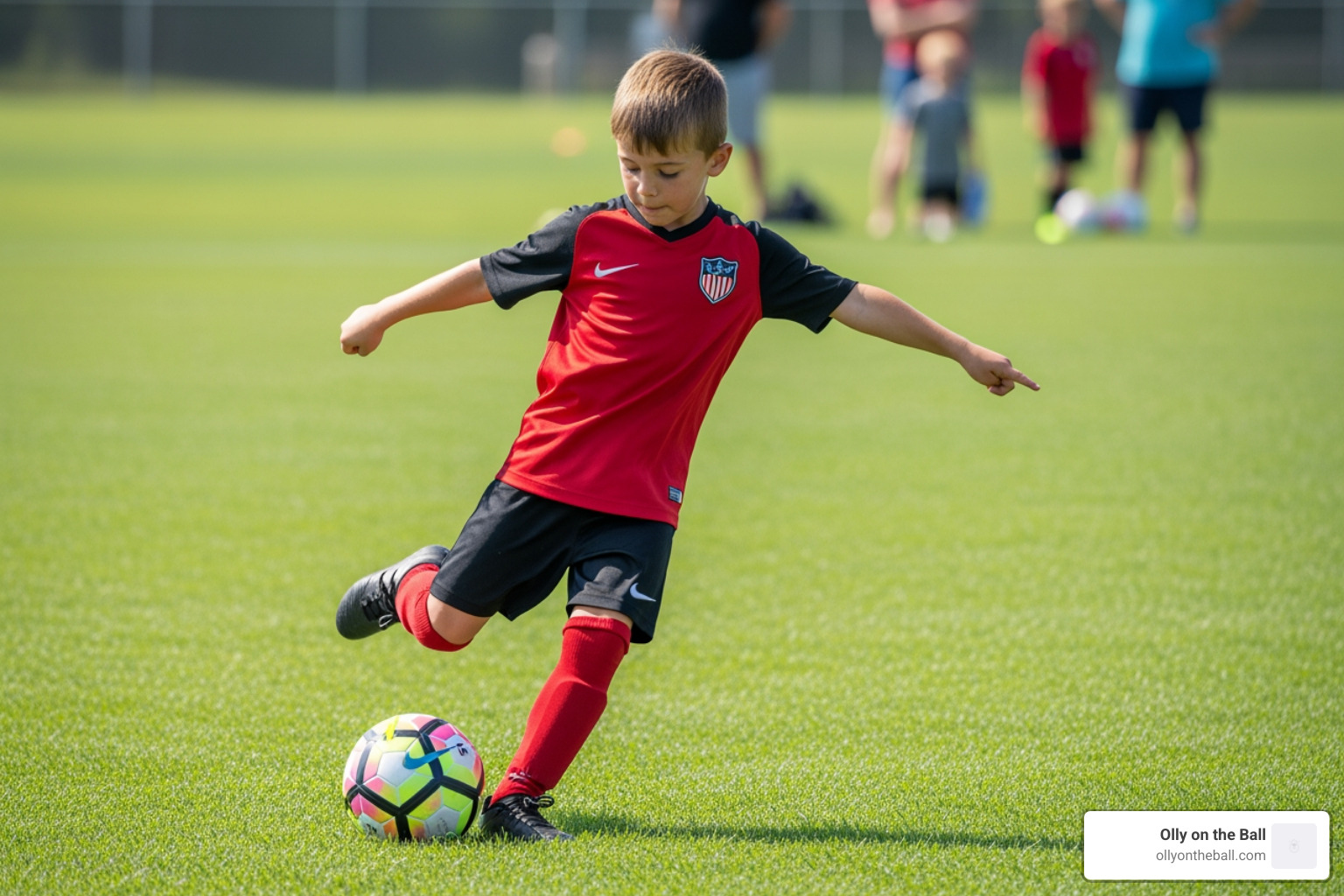
Table: Toe Pokes vs. Inside Foot Passes
| Feature | Toe Poke | Inside Foot Pass |
|---|---|---|
| Accuracy | Very Low (Random) | High (Targeted) |
| Control | Hard to receive | Easy for teammate to stop |
| Power | Unpredictable | Controlled and smooth |
| Visual | “The Swarm” style | “The Pro” style |
5 Best passing drills u7 for Charleston Youth Teams
Setting up a session at Patriots Point or your local park in Summerville doesn’t have to be complicated. You just need some cones, flat discs, and a lot of energy!
1. The “1, 2 Pass” Square
This is a classic for a reason. Set up a coned square. Half the players are inside with balls, and half are on the outside without balls.
- The Drill: Inside players dribble, find an outside player, and make a pass. The outside player takes a touch and passes it back (the “1, 2”).
- Why it works: It forces players to look up and find a teammate who isn’t in the “swarm.”
2. Through the Gates
Scatter pairs of cones (gates) all over your practice area.
- The Drill: Players pair up with one ball. They have to move around the field and pass the ball to each other through as many gates as possible in 60 seconds.
- The Challenge: Can they beat their score in the second round?
3. Zig Zag Passing Race
Line up two rows of cones in a zig-zag pattern.
- The Drill: Players stand at the cones and pass the ball down the line as fast as they can.
- Focus: This teaches body positioning and receiving the ball while facing the next target.
4. Pass & Follow (The “Relay”)
Set up three players in a line about 10 yards apart.
- The Drill: Player A passes to Player B and runs to take Player B’s spot. Player B passes to Player C and takes their spot.
- Pro Tip: It takes about 5 minutes for U7s to grasp the “follow your pass” concept, but once they do, it looks fantastic!
5. The “Ouch!” Drill
This is a fun one to work on accuracy.
- The Drill: The coach (that’s you!) jogs around a small circle. The players try to “pass” the ball and hit the coach’s shins.
- The Fun: Every time you get hit, yell “Ouch!” and make a silly face. They will love it.
How to Make passing drills u7 Fun and Engaging
Kids at this age have the attention span of a squirrel. You have to keep it moving!
- Themed Drills: Call it “Pirate Soccer” where the balls are “cannonballs” and they have to pass them to “sink the ship” (the goal).
- Coach Rewards: If the team completes 10 passes in a row, the coach has to do 5 press-ups. Nothing motivates a 6-year-old like seeing their coach do push-ups in the grass at James Island.
- High Energy: Use a “Set and Punch” mentality. For a visual on how to keep things moving, check out this Set and Punch Drill concept—while it’s often used in football, the “set and strike” energy translates perfectly to soccer.
When to Progress Your passing drills u7
Once they get the hang of a drill, don’t let them get bored.
- Add a “Shark”: Introduce one defender (the shark) into a passing square.
- Shrink the Space: Smaller areas force faster decisions.
- Two-Touch Limit: Tell them they have one touch to stop it and one touch to pass it. No “dribbling” allowed!
Using Small-Sided Games to Stop the Swarm
The best way to practice passing drills u7 is in a game-like environment. Small-sided games (SSGs) are the secret weapon for Charleston coaches.
The 4v4 Format
Moving from a massive swarm to a 4v4 game on a small field changes everything. With only 4 players per team, there is nowhere to hide. Everyone has to touch the ball.
- The Gate Game: Instead of big goals, use two small “gates” (cones) on each end line. To score, a player must pass the ball through the gate to a teammate or dribble through it. This rewards accuracy over just “booting” the ball.
Spacing and Width
Teach them about “The House.” The field is the house, and we don’t all want to be in the kitchen at the same time! Encourage them to stand in different “rooms” (the wings and the center).
Support Runs
In a 4v4, teach the player without the ball to move to a spot where they can “see” the player with the ball. We call this “finding a window.” If you can see your teammate’s eyes, you are in a window!
If you’re looking for more personalized help with these concepts, check out more about our private training services.
Frequently Asked Questions about U7 Passing
How do I stop my players from all running to the ball?
This is the million-dollar question! The best way is to use “Fixed Positions” during drills. Give them a “home base” (a cone) they must return to after they participate in a play. Over time, they realize that if they stay in their “home,” the ball eventually comes to them.
What is the best way to teach a 6-year-old to pass?
Keep it visual. Instead of long explanations, show them. Point to the inside of your foot and call it the “Big Surface.” Tell them to use the “Big Surface” to hit the “Big Ball.” Use a “follow the leader” approach where they mimic your movements.
How long should a U7 passing drill last?
No longer than 10-15 minutes. After that, their brains start to wander toward the playground or what they’re having for a snack. Keep the drills high-intensity and short, then transition into a fun game.
Conclusion: Building the Future of Charleston Soccer
At Olly on the Ball, we aren’t just teaching kids how to kick a ball; we’re building their confidence and a lifelong love for the game. As a Charleston Battery volunteer and a competitive player myself, I know that the skills learned at U7—like mastering passing drills u7—are the same ones that lead to success on the high school and club fields later on.
Whether you’re practicing at a park in Mount Pleasant, Isle of Palms, or Daniel Island, the goal is the same: keep it positive, keep it fun, and keep them passing! Peer-to-peer mentoring is a powerful tool. When kids see a player who isn’t much older than them showing them the ropes, it clicks in a way that adult coaching sometimes doesn’t.
Ready to take your child’s game to the next level? Let’s stop the swarm together.