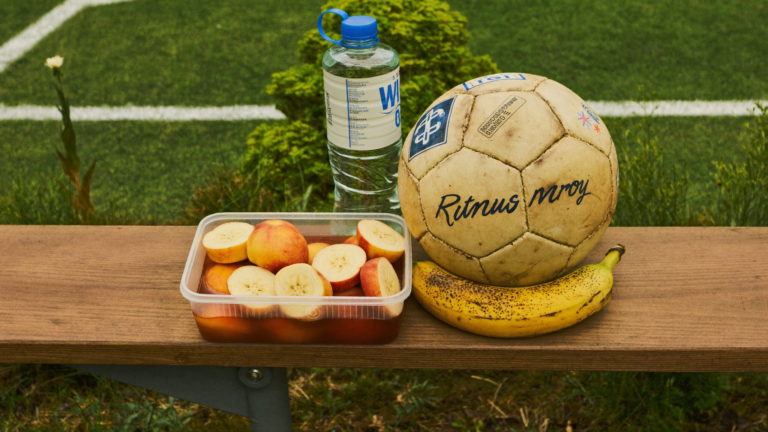


Short version: a tennis ball is the cheapest training tool in your house, and five focused minutes with one does more for a young player’s first touch than an hour of booting a size 4 around the yard. When parents message me about tennis ball soccer drills, they are usually asking one of two very different questions. The reason it works is simple: a tennis ball is smaller, faster, and far less forgiving, so it forces the quiet, controlled touches that make a full-size ball feel enormous afterward.
What people mean by tennis ball soccer
Two different things share that name, and mixing them up leads to a frustrating afternoon at the park.
Training with a tennis ball means swapping it in for a soccer ball on juggling, wall work, and tight dribbling. That is the version I use in sessions, and it is most of what follows.
Soccer tennis is a game, not a drill. You put a low net, a bench, or a line of cones between two players and volley the ball back and forth, allowing one bounce on each side. Plenty of pro teams play it as a warm-up. You will hear it called footy tennis or football tennis, and it is normally played with a real soccer ball despite the name.
Both are worth your time. Only one of them rebuilds a first touch.
Why a smaller ball builds a cleaner first touch
Your first touch is what you do with the ball in the moment it reaches you — the one touch that either sets you up or sends you chasing. It is the skill a coach notices first, and the difference between a player who looks calm and one who looks rushed.
A tennis ball shrinks the target. A soccer ball has a wide surface that forgives a lazy foot. A tennis ball does not. To keep one close, a player has to:
- Watch the ball all the way onto the foot instead of looking up early.
- Use one precise part of the foot — the inside, the laces, the sole — not the whole shoe.
- Soften the ankle so the ball settles instead of ricocheting away.
- Stay up on the toes, because there is almost no time to react.
Go back to a size 4 after that and everything feels slow. That is the whole trick, and it is the same idea behind training in a space the size of a phone booth: shrink the problem, and the normal version starts to feel easy.
My five-minute tennis ball routine
Five honest minutes a day beats forty minutes once a week. Here is the order I use, and all of it fits on a driveway, a patio, or a strip of grass.
1. Sole rolls and taps — one minute
Ball under the sole, roll it side to side, then tap it between the insides of both feet. Small, quick, quiet. If the ball keeps skipping away, the touches are too hard. That is the feedback, and it arrives instantly.
2. Wall taps — two minutes
Find a flat wall. Pass the tennis ball into it with the inside of the foot, control the rebound with one touch, then pass again. Count clean reps, not fast ones, and switch feet halfway. This is the best single use of a tennis ball I know, and the same drill shows up in my first touch drills for the backyard.
3. Juggling — two minutes
Drop the ball, let it bounce, catch it with the laces, let it bounce again. Bounce juggling first; no-bounce juggling comes much later. Three in a row with a tennis ball is a real achievement. A kid who can do ten is usually doing fifty with a soccer ball.
One rule for parents: let them count, and let them miss. For more on how to stand back and still be useful, read this piece on helping your kid practice at home without coaching them.
What to change for a 7-year-old versus a 12-year-old
Same ball, different session.
Ages five to eight. Keep it to three or four minutes and make it a game. Count out loud, chase a record, and stop while they still want more. At this age it is mostly about getting comfortable with a fast-moving object. If they get frustrated, swap back to a soccer ball and finish on something they can already do.
Ages nine to fourteen. Now it becomes a tool for a specific gap. A player whose touch runs away from them under pressure gets wall taps. A player who panics in traffic gets sole rolls inside a tight square. Add a timer so it feels like a test. That is the same thinking behind the ball control drills I run with young players in Mount Pleasant: pick the gap first, then pick the drill.
Three things a tennis ball will not fix
I would rather be straight with you than oversell a piece of fuzzy rubber.
- Striking. Shooting and long passing need a real ball with real weight. A tennis ball teaches the foot the wrong thing about contact.
- Weight of pass. How hard to hit it so it arrives right only transfers from a ball that behaves like a ball.
- Soccer IQ. Game awareness — scanning the field before the ball arrives, deciding where to be — does not come from a driveway. It comes from playing, watching, and being asked questions during a session.
So treat the tennis ball as a sharpening stone, not the knife. Five minutes with it, then go play the beautiful game with a proper ball.
Where to do this around Charleston and Mount Pleasant
A tennis ball travels better than anything else in the bag. It works in a garage in West Ashley, on a patio on Daniel Island, or on a hard court at a neighborhood park. When I train players at Hampton Park, Patriots Point, or out on James Island, the tennis ball comes out in the first ten minutes and goes away again before we use the full field.
At Olly on the Ball I come to your park instead of asking you to drive to a facility, and a session can be one-on-one or shared with a teammate or two. I play for South Carolina Surf, a club in the national ECNL league here in the Lowcountry, so most of what I show a player is something I was doing at my own training that week.
If you are weighing whether private sessions make sense for your family, start with how private soccer lessons in Charleston work and what happens in the hour. For more to do at home this week, try these five ways to practice soccer drills at home. Then grab a tennis ball, set a timer for five minutes, and let them figure it out. Train hard, play with passion, and always stay on the ball.
Frequently asked questions
Can I practice soccer with tennis balls?
Yes, as a supplement rather than a replacement. A tennis ball is excellent for first touch, close control and juggling, because the small surface forces precision. It is poor for shooting, heading and longer passing, where you need the real weight of a soccer ball. A good split is five minutes with a tennis ball at the start of a session, then the rest with a regular ball.
Does dribbling a tennis ball help soccer players?
It helps with close control and with keeping your head over the ball. Dribbling a tennis ball makes you take smaller, more frequent touches and watch the ball onto your foot, and that carries over to tight spaces in a game. It will not teach you when to dribble and when to release the pass, so pair it with small-sided games.
How do you juggle a tennis ball for soccer?
Start with a bounce between every touch. Drop the ball, let it hit the ground, then lift it with the laces or the top of the foot and catch it. Once three in a row feel comfortable, try two touches before the bounce. Keep the ball low, around knee height, and keep your standing foot moving so you stay underneath it.
Is a tennis ball better than a small soccer ball for first touch work?
They do different jobs. A tennis ball is the harshest test of precision and the easiest thing to carry, so it suits short daily reps. A smaller, low-bounce ball such as a futsal ball behaves much more like a real ball, which makes it better for passing work and for longer sessions. Plenty of players use both in the same week.
What age can a child start tennis ball drills?
Around five or six is fine if you keep it short and playful, three or four minutes at most, with catching allowed. From about nine it becomes a tool for a specific gap, such as a heavy first touch or panicking in a crowded space. Either way, stop the session while the child still wants one more go.