
Search Mt. Pleasant soccer and you get results from Texas, Michigan, and a couple of other towns named Mount Pleasant before you find anything near the Ravenel Bridge. So here is the local answer. Youth soccer in Mount Pleasant runs on four tracks: town rec leagues, travel clubs, school teams, and extra training on the side. Most kids start in rec, and extra training works alongside it rather than replacing it. I am Olly, and this is how the whole thing fits together.
Mt. Pleasant Soccer at a Glance
If you read one section, read this one. Four different things exist in town, and they do four different jobs.
- Rec league. The town-run recreational league, organized by the Town of Mount Pleasant Recreation Department. No tryout, mixed ability, and a schedule usually built around one practice and a weekend game. This is where most young kids begin.
- Club soccer. Tryout-based travel teams that train a few evenings a week and play against teams across the state. Several clubs serve the Charleston area, and families east of the Cooper can reach all of them.
- School soccer. Middle and high school teams, with their own season and their own tryouts, running separately from everything else on this list.
- Extra training. Private or small-group sessions that work on one thing at a time: a weak left foot, a heavy first touch, freezing up when a defender closes in.
Most families end up using two of these at once, usually a league for the games and the friendships, plus something that fills the gap a league cannot reach. Each one answers a different question. It is worth knowing which question you are actually asking before you sign up for anything.
Where Kids Actually Play in Mount Pleasant
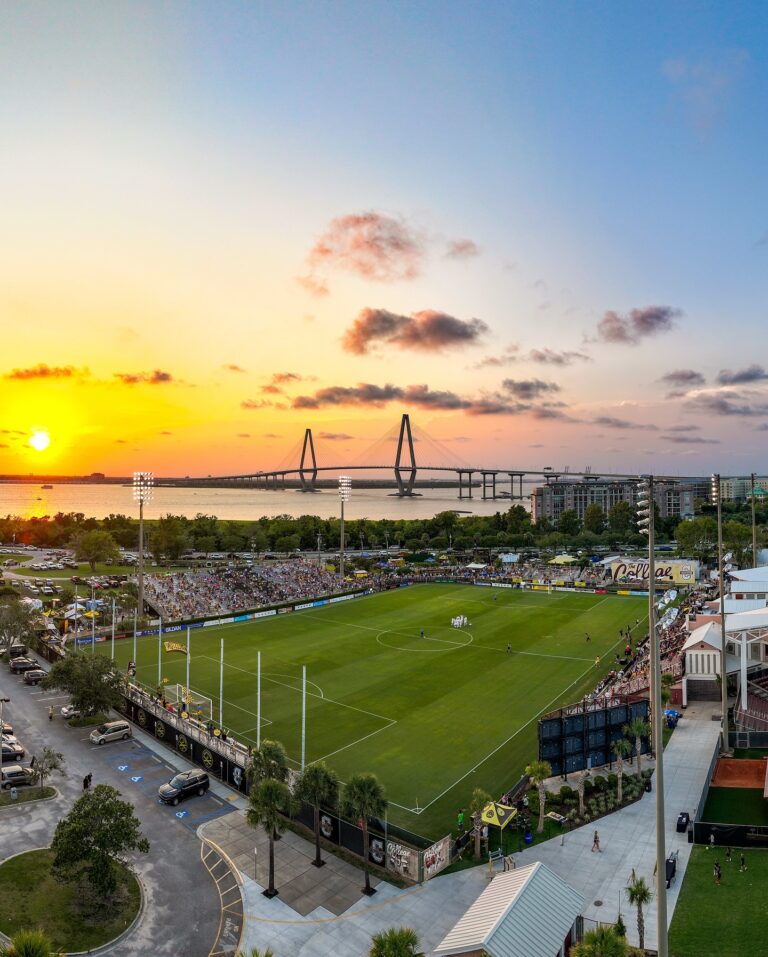
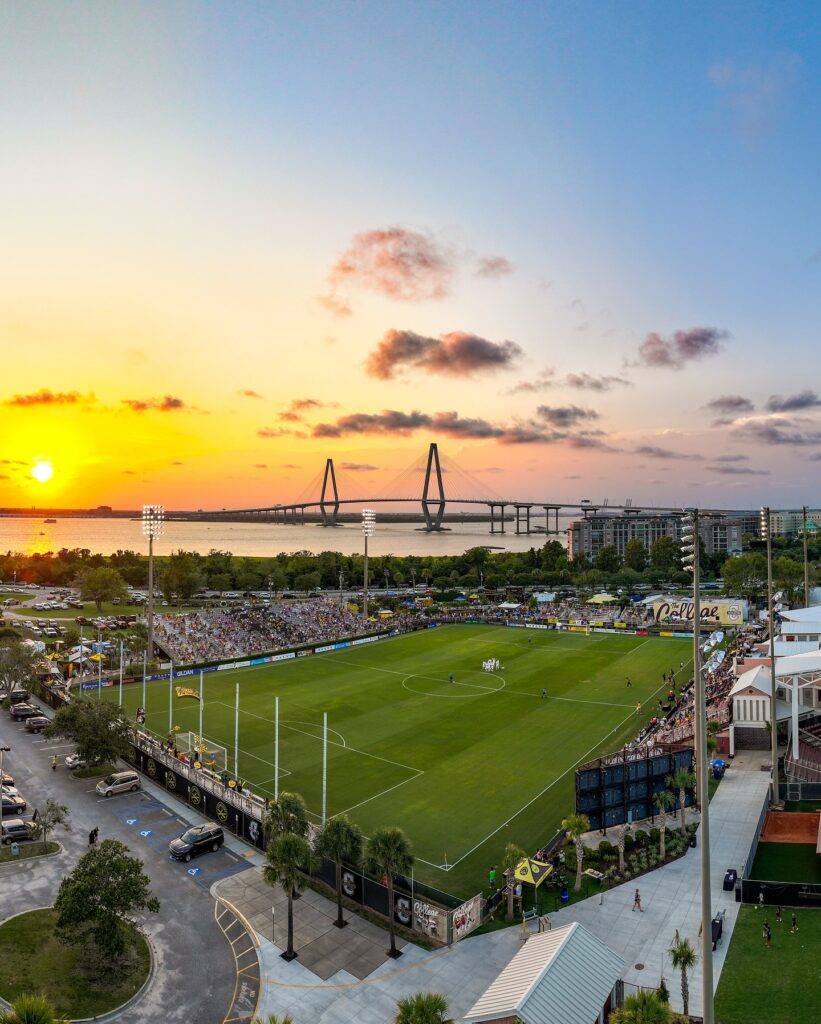
Which field you use changes what you can practice, so it matters more than most parents expect. Patriots Point is the field everybody knows, with open space near the water and room for small-sided games. Ackerman Park is the other name that comes up constantly for youth practices and weekend games. After that come the school fields, the neighborhood greens scattered around town, and the flat part of your own yard, which is a better training ground than it gets credit for.
I travel to whichever park a family already uses, so I spend a lot of time on all of them. If you are still deciding where to play, I put together a longer rundown of the best places to play soccer in Mount Pleasant with notes on what each spot is good for.
What makes a field worth the drive
- Flat grass. A rolling ball should stay honest. Bumps and divots teach a kid to stab at the ball instead of controlling it.
- Something to shoot at. A real goal changes a session, though two backpacks and an argument about whether it was in works almost as well.
- Shade and water. Lowcountry heat and humidity run deep into October, and a July thunderstorm will end a session with about ten minutes of warning.
- A short walk from the car. A seven-year-old who hikes across a complex in August has already spent the energy you came for.
- Room to miss. Shooting practice next to a parking lot turns into twenty minutes of ball-fetching. Find a backstop, a fence, or a long open stretch.
Mount Pleasant also sits in the middle of a wider map. Sullivan’s Island and Isle of Palms are a short drive over the bridges, Daniel Island is across the Wando, and I also train players at Hampton Park, on James Island, in West Ashley, in North Charleston, and out in Summerville. If you live in Mount Pleasant but your kid’s best friend plays in Summerville, a session can happen at either end.
Rec League: Where Most Mount Pleasant Players Start
Rec is short for recreational. It means no tryout, mixed ability, and a season built to fit around school. For a five-, six-, or seven-year-old, it is almost always the right first step. Kids find out what a real game feels like, they get a jersey with their name on it, they play with neighbors, and nobody is asking them to be anything yet.
What rec does well is the part that matters most early on: it makes the beautiful game feel like something a kid wants to do again next Saturday. A player who finishes the fall asking when the next season starts has gotten everything out of it that you could reasonably hope for.
What rec cannot do is give one player much individual attention. A volunteer coach with a dozen or more kids and an hour on the clock is managing a group, not watching your daughter’s standing foot or noticing that your son only ever turns to his right. That is not a knock on the coaches, most of whom are parents giving up their evenings, and the good ones are the reason a lot of kids stay in the sport. It is just arithmetic.
So the common pattern around here looks like this: rec league for the games and the friends, plus a little focused work on the ball during the week. That is why after-school and weekend training in Mount Pleasant tends to slot in around a rec schedule instead of competing with it. The league gives them the match. The extra hour gives them the touches.
Club Soccer and the Wider Charleston Picture
Somewhere around ages eight to ten, most families start hearing about club. Club soccer means tryout-based travel teams: more training nights, league play against teams around the state, tournaments some weekends, and a calendar that stretches across most of the year. The Charleston area has a handful of options, including CUSC, FC Charleston, Charleston City FC, and South Carolina Surf, which is the club I play for. Most youth clubs in the state compete under SCYSA, the South Carolina Youth Soccer Association, which sanctions the leagues and state competitions they play in.
I am not going to rank the clubs, and I am not going to publish anyone’s dues. Fees vary by club, by age group, and by how much the team travels, and each club publishes its own numbers. What I will say is that the differences that matter to a nine-year-old are the practical ones: how far you drive on a Tuesday night, who the coach is, how many kids are on the roster, and whether your kid comes home tired and happy or tired and quiet.
South Carolina Surf plays at ECNL level, the Elite Clubs National League, which is a national competition structure for youth clubs, and it is the only club in the Charleston area doing so. That is useful context for a parent comparing options. It is not a reason to rush a seven-year-old into anything.
Club tryouts usually land in late spring. If that is on your calendar, I wrote up what coaches look for at Charleston soccer tryouts, and, because it happens to good players every single year, what to do next if they do not make the team. A tryout is a snapshot of one afternoon in front of one coach. It is not a verdict on a kid, and plenty of players who heard no in May were unrecognizable by the following spring.
How the Mt. Pleasant Soccer Year Runs
The calendar is the thing nobody explains to new soccer parents, so here it is in one table.
| Time of year | What is happening | What usually helps |
|---|---|---|
| August to November | Rec and club fall seasons, weekend games, serious heat early on | Hydration, fitness, and sharpening skills they already have |
| December to February | A quiet stretch, school teams starting, the holiday break | Camps and indoor touches so they do not lose the feel of the ball |
| March to May | Spring season, club tryouts, school soccer in full swing | Match-realistic work: first touch under pressure, one-v-one |
| June and July | Off-season, camps, pickup games, and heat that decides your schedule | Technical work in short morning sessions, before the afternoon storms |
Each stretch has its own trap. Fall is when families overbook and a kid ends up playing four days a week in ninety-degree afternoons, which is why I keep a fall season prep checklist for Charleston players that starts with sleep and water rather than drills. December is when a lot of players quietly lose a month of progress, so holiday and winter break camps around Charleston are mostly about keeping the ball in their life. And summer is the stretch where the gap between players really opens up, which is what off-season training for young players is built around.
Where Extra Training Fits, and Where It Does Not
Extra training is a supplement. It is not a replacement for a team, and it is not a shortcut. A player who trains privately but never plays games is missing the part that teaches decisions. A player who plays three games a weekend but never touches a ball alone is missing the part that builds technique. The two feed each other, and a kid who only ever gets one of them plateaus.
Here is what an hour with one player can do that a team practice usually cannot:
- Spend twenty minutes on one weakness instead of four.
- Give a shy player a place to try something, get it wrong, and try it again without an audience.
- Match the session to the kid’s actual week. Tired on Thursday with a game Saturday means low volume and high quality, not a fitness punishment.
- Let a kid ask the question they would never ask in front of twelve teammates.
- Give a parent an honest read on what is actually holding their player back this month.
I run these as one-on-one soccer training in Mount Pleasant, and also as semi-private sessions with a teammate or a couple of friends, which a lot of kids prefer because competition makes them try harder than I ever could. If you want to picture the hour before you book anything, here is how a one-on-one session in Mount Pleasant, SC actually runs, start to finish.
Choosing a Format: a Seven-Year-Old Versus a Twelve-Year-Old
Ages five to eight
At this age the goal is touches and fun, in that order, and the two are not in conflict. Young players need thousands of contacts with the ball, and they will happily get them if the session feels like a game instead of a lesson. The one technical thing I care about early is first touch, which is the very first contact a player takes when the ball arrives. A clean first touch is what decides whether the next three seconds are calm or frantic. Sessions at this age are short, loud, and full of small competitions. The honest measure of whether it is working is simple: does your kid ask to go again?
Ages nine to fourteen
Now a session can be aimed at something specific, because the player can usually tell you what is going wrong. They lose the ball when they get pressed. They can only turn one way. They stop looking up the moment the ball comes to them. This is also the age where soccer IQ starts to separate players. Soccer IQ, or game awareness, means knowing where the ball should go before it gets to you, which comes from scanning the field early and practicing under some kind of pressure rather than in an empty space. Technical work still carries the load at this age, and a steady diet of ball control drills for young players in Mount Pleasant is usually the fastest way to fix the thing the coach keeps mentioning.
What Happens in the Hour, and How Pricing Works
A session is an hour, at your park, and it has a shape: a warm-up on the ball rather than laps, a technical block aimed at one thing, the same skill repeated with a defender and a clock on it, finishing, and something fun to end on so the last memory is a good one. Parents are welcome to watch, and I would rather you did, because the handful of things I say at the end are mostly for you.
On money, I would rather be straightforward than make you email to find out. I set out how pricing works and what happens in the hour on its own page, and if you are comparing options around town, I also wrote about what private soccer lessons cost and what drives the difference between one coach and another.
Practicing at Home Without Becoming the Coach
The biggest gains between sessions come from fifteen minutes in the yard, not from an extra league. The hard part for parents is staying out of the way. Most kids will take a lot of repetition from a ball and almost none from a parent correcting them, especially after a long day at school. The trick is to set up something they can win at, then say very little.
I wrote a whole guide on how to help your kid practice at home without coaching them, and if you want one thing that works in a driveway with no equipment, try the tennis ball drill. A smaller ball forces a cleaner touch, so a regular soccer ball feels enormous and easy by comparison.
Questions Worth Asking Before You Sign Up for Anything
Whatever you choose this season, these are the questions that tell you the most in the least time:
- How many kids per coach, and how many minutes will my child actually have the ball?
- How far do we travel on a weeknight, and how late does that make dinner and homework?
- What happens in the first fifteen minutes of a practice? Laps and a lecture, or touches?
- What does my child say on the drive home? That one answer is worth more than any brochure.
- Is this on top of a full school week, a sibling’s schedule, and a sport they also like? Burnout in a ten-year-old looks exactly like losing interest.
Starting with Mt. Pleasant Soccer
Olly on the Ball is my training work across Charleston and Mount Pleasant, for players roughly five to fourteen. I play for South Carolina Surf, I volunteer with the Charleston Battery, and I came up through the Charleston Battery Youth Team and Charleston Soccer Club, so a lot of what I bring to a session is stuff I was doing myself that same week. I am not a retired coach talking about how it used to be. I am a player who is still in it, which is a big part of why younger kids listen.
There is no facility to drive to. I come to your park, whether that is Patriots Point, Ackerman Park, a school field, or the open patch behind your neighborhood. If you want to start, get in touch through my contact page and tell me your player’s age, what the coach keeps saying, and which field is easiest for you.
Anything you can conceive, you can achieve. Train hard, play with passion, and always stay on the ball.
Frequently asked questions
What age can kids start playing soccer in Mount Pleasant?
Most kids around here start in a town rec league somewhere between four and six, and that is usually the right entry point. At that age the point is touches, friends, and finding out that the game is fun. Private or small-group work tends to make more sense a little later, once a player can tell you what they are trying to get better at.
Is rec soccer enough, or does my child need to play club?
Rec is plenty for a lot of players, and it is the best first step for nearly all of them. Club adds more training nights, longer travel, and a longer calendar, which suits a kid who is asking for more rather than a family that feels pushed into it. Plenty of players stay in rec and add an hour of focused work during the week, which covers the individual attention a big group practice cannot.
When are club soccer tryouts in the Charleston area?
Club tryouts in this area usually fall in late spring, though each club sets its own dates and posts them on its site. If your player is thinking about it, the useful preparation is not cramming in the final week. It is a few months of steady work on the one or two things they already know are weak, plus arriving rested and willing to talk to the coach.
Do you come to our field, or do we come to you?
I come to you. Sessions happen at the park or field your family already uses, which saves you a drive and means the player is training on the surface they actually play on. I work across Mount Pleasant and Charleston, including Patriots Point, Ackerman Park, Daniel Island, James Island, West Ashley, North Charleston, Summerville, Sullivan’s Island, and Isle of Palms.
How often should a young player train outside of team practice?
Once a week with a coach, plus short sessions on their own, does more than a packed schedule that leaves them flat. Fifteen minutes in the yard most days beats one long grind on Sunday, because skills are built by repetition spread out over time. Watch for the signs of too much: sore legs that do not recover, dreading practice, or losing interest in a game they used to love.
What is the difference between rec, club, and school soccer?
Rec is the town recreational league: no tryout, mixed ability, and a light weekly schedule. Club is tryout-based travel soccer with more training nights and games against teams across the state. School soccer is run by the middle or high school with its own season and tryouts. Many families combine a league with some individual training rather than choosing between them.