
Youth Soccer Skills Training in Charleston & Mount Pleasant, SC
If you play soccer in Charleston or Mount Pleasant, you already know the competition is strong. Players train year-round, clubs are competitive, and tryouts get tougher every season.
One skill that builds serious ball control — and looks impressive — is the Neck Stall (also called Back Control). In this article we will focus on how to do a Neck Stall.
It’s not just a freestyle trick. It teaches balance, soft touch, and body control. Those are skills that show up in real games.
What Is a Neck Stall?
Helpful Video on how to do the Neck Stall…
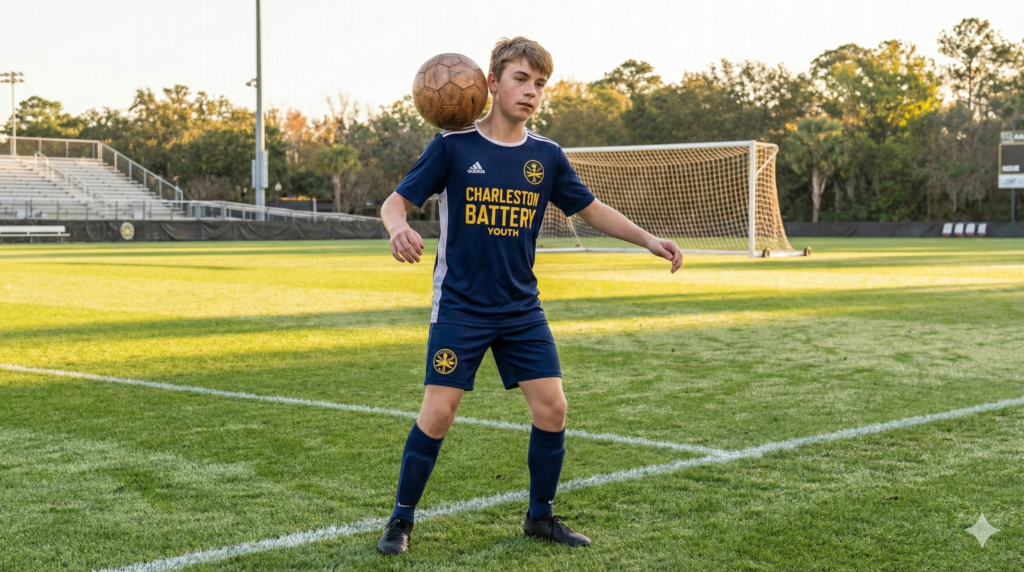
A neck stall is when you pop the ball into the air and gently catch it on the back of your neck.
It looks hard — but if you break it down step by step, most kids ages 6–12 can learn it with practice.
Why Charleston Players Should Learn How to do a Neck Stall
In Mount Pleasant and Charleston, many players get great coaching. But the players who stand out are the ones who train their touch outside of practice.
A neck stall improves:
- Fine motor control
- Balance and posture
- First touch
- Body awareness
These are the small skills that make a big difference in competitive Lowcountry matches.
Step-by-Step: How to Do a Neck Stall
Step 1: Start With a Simple Pop
Kick the ball gently up from your foot or thigh.
Don’t kick it high — just high enough to control.
Step 2: Lean Forward
As the ball goes up, bend slightly at your waist.
Keep your back flat.
Step 3: Create a “Shelf”
Tuck your chin down.
Lift your shoulders slightly.
Spread your elbows out a little.
This creates a small platform for the ball to rest on.
Step 4: Let the Ball Land Softly
Don’t chase the ball.
Let it fall gently onto your upper back.
If it rolls off — that’s normal. Try again.
Practice Plan (10 Minutes at Home)
This works in a backyard, park, or open space anywhere in Charleston or Mount Pleasant.
3 minutes – light juggling
3 minutes – practicing the lean-and-catch motion
4 minutes – full neck stall attempts
Try to hold it for 2 seconds at first. Then work up to 5 seconds.
Common Mistakes
- Kicking the ball too high
- Standing too straight
- Not tucking the chin
- Getting frustrated too quickly
Neck stalls take patience. That’s part of the training.
Why This Matters in Real Games
You may not use a neck stall in a match. But the balance and soft touch you build will show up when:
- Receiving a high pass
- Controlling a bouncing ball
- Staying calm under pressure
Youth soccer in Charleston continues to grow more competitive. Players who develop comfort with the ball early build long-term confidence.
And confidence changes everything.
Thoughts
Neck stall isn’t about showing off.
It’s about control.
If you’re serious about improving as a player in Charleston or Mount Pleasant, spend 10 minutes a day building touch. Small improvements turn into big advantages over time.