
Charleston soccer tryouts season runs late July through mid-August for most local clubs, and the gap between players who make their target team and players who don’t is usually smaller than parents think — and almost never about the things parents worry about. Coaches at Charleston-area clubs aren’t picking the kid with the flashiest move or the strongest right foot. They’re picking the kid who shows them a specific set of things in the 90 minutes they have to evaluate. This guide breaks down what local club coaches actually evaluate at youth tryouts, what gets a player remembered after the session, and what the smartest summer training looks like for a player getting ready for August.
This is written from the player and trainer side of the table — what works at Charleston Soccer Club tryouts, at Battery Academy showcases, and at the broader cluster of Mount Pleasant and Charleston-area club tryouts. The signals coaches are watching for are remarkably consistent across clubs. Train for the signals, not the rumors.
What coaches actually evaluate (in roughly this order)
1. First touch under pressure
The very first ball every player receives at tryouts gets watched. Not “did they trap it cleanly,” but: did they take a touch into space? Did they set themselves up for the next action? Could they handle the ball at the speed it was played to them? Coaches make snap impressions in the first 15 minutes, and first touch is the loudest signal of where a player is technically. The single highest-ROI summer training focus for tryout prep is first touch — sharper, more directional, more confident.
2. Body language and effort between reps
Watch any club coach at tryouts and they’re watching the players when they don’t have the ball as much as when they do. Are they jogging to the next station or sprinting? Are they making eye contact and listening when the coach talks? Are they helping a teammate up after a hard tackle? Coaches are recruiting character along with skill, and the off-ball minutes leak character information loudly.
3. Decision-making in small-sided games
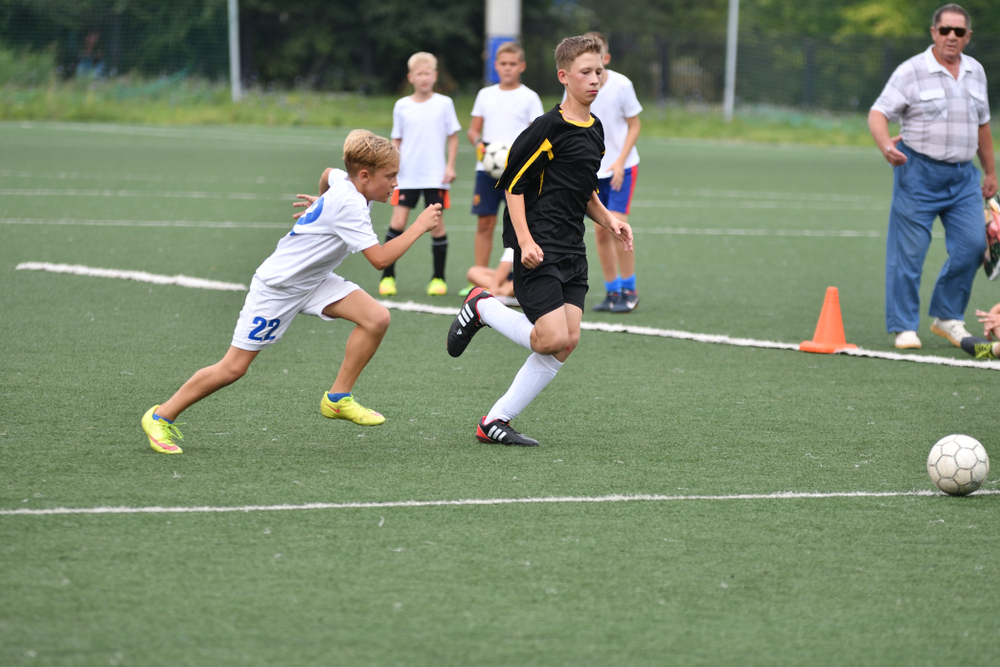
Most tryouts include 3v3, 4v4, or 7v7 segments. This is where decision-making gets evaluated. Does the player pick the right pass? Do they take 1v1s when there’s space? Do they support teammates off the ball instead of standing flat-footed? A player who makes 5 good decisions in 7v7 will get remembered. A player who scores once but disappears for the rest of the rep won’t.
4. Defending engagement
Most young players spend their tryout focus on attacking moments and ignore defending. Coaches notice. A player who closes down a passing lane fast, who tracks a runner across the field, or who actually challenges a 1v1 when they’re the last defender stands out. Defending effort is one of the most undervalued signals at tryouts.
5. Specific technical floor
Coaches are looking for: clean passing on both feet over 10-15 yards, ability to receive and turn with a defender behind, basic 1v1 capability (one go-to move executed under pressure), and shooting form that doesn’t fall apart in the box. Notice what’s not on this list: tricks, juggling counts, fancy finishes. Those don’t get anyone selected. The basics, executed cleanly under pressure, do.
What kills a player’s tryout (avoid these)
- Trying to do too much on the ball. Players who try a flashy move every time they touch the ball signal “low IQ, high ego” to most coaches. Pick the simple option when it’s right; pick the brave option when it’s right. Show both.
- Disappearing in 7v7. Some players go hard in technical stations and then fade in the small-sided games because game-shape is uncomfortable. This is exactly backward — coaches care about the games more.
- Body language after a mistake. Players who slump, throw their head back, or visibly get frustrated after a missed pass tell every coach watching: “this kid will fall apart under real game pressure.” The fastest way to fix this: rep responding to mistakes in training. Mistake happens, head stays up, next play.
- Not communicating. Players who never call for the ball or talk to teammates look passive. A simple “yes!” or “switch!” gets noticed positively in 7v7. Quiet is fine off the field. On the field at tryouts, find a voice.
- Wearing the club’s jersey to tryouts. Minor but real — many local coaches read it as either presumptuous or as a kid trying to look like they belong before they’ve earned it. Plain training kit is safer.
The smart summer training plan for August tryouts
A focused 6-8 week prep block produces the most visible change. Built backwards from a typical mid-August tryout:
- Weeks 1-2 (early June): rebuild the technical floor. First touch, passing both feet, simple 1v1 move work. Daily 15-20 minute backyard sessions plus 1 structured training session per week.
- Weeks 3-4 (mid-late June): add pressure. Small-sided games at full speed. Reactive defending work. Start building the “play under pressure” muscles.
- Weeks 5-6 (early July): game-shape and decision-making. Real 3v3, 4v4, 7v7 reps with constraints. This is where private training or small-group sessions deliver the highest ROI because game-shape work without a real environment is hard to replicate alone.
- Weeks 7-8 (mid-late July): sharpen, don’t rebuild. Cut technical volume. Keep intensity. Keep enough rest in the schedule that the player arrives at tryouts fresh, not fried. The week before tryouts should be lighter than the week before that — taper to peak.
The single biggest mistake in tryout prep: cramming too much in the final two weeks. Players who train hard right up until tryout day usually arrive tired, lose first-step explosiveness, and look slower than they actually are. Taper is real.
Mental prep — the 48 hours before tryouts
The technical work is the technical work. By tryout day, what matters is showing up composed:
- Sleep 9-10 hours the two nights before. CNS recovery and reaction speed depend on sleep more than on the warm-up.
- Eat normally. Tryout day is not the day to try a new pre-game meal. Whatever the player eats before a normal good game — eat that.
- Get a light touch the day before. 20 minutes of relaxed ball work. Not a session. Just keep the touch alive.
- Don’t watch other players warm up. Easy way to spiral into comparison anxiety. Warm up with eyes on your own ball, your own breath.
- Have one cue for the first 15 minutes. Not a list. One thing. Like: “first touch into space.” If the player can execute that one cue cleanly for the first 15 minutes, the rest of the tryout usually takes care of itself.
What if my player doesn’t make their target team?
It happens, and how the family handles it matters more than most parents realize. The healthy response: get specific feedback from the club (most will offer it if asked respectfully), pick the most important one-or-two things to work on, find a strong second-tier team where the player will start and grow, and reset for next year’s tryout with a longer runway. Players who get cut, take it in stride, and come back sharper a year later often become the most coachable players a club has — coaches love that arc. Players who interpret a cut as a verdict and quit miss the actual lesson.
FAQ — Charleston soccer tryouts
When are Charleston-area youth soccer club tryouts in 2026?
Most Charleston-area clubs (Charleston Soccer Club, Battery Academy, MPSC and others) hold tryouts late July through mid-August for the fall-spring competitive season. Check each club’s website in early July for exact dates — they shift slightly year to year. Some clubs run preview sessions in late June.
What should my player wear to youth soccer tryouts?
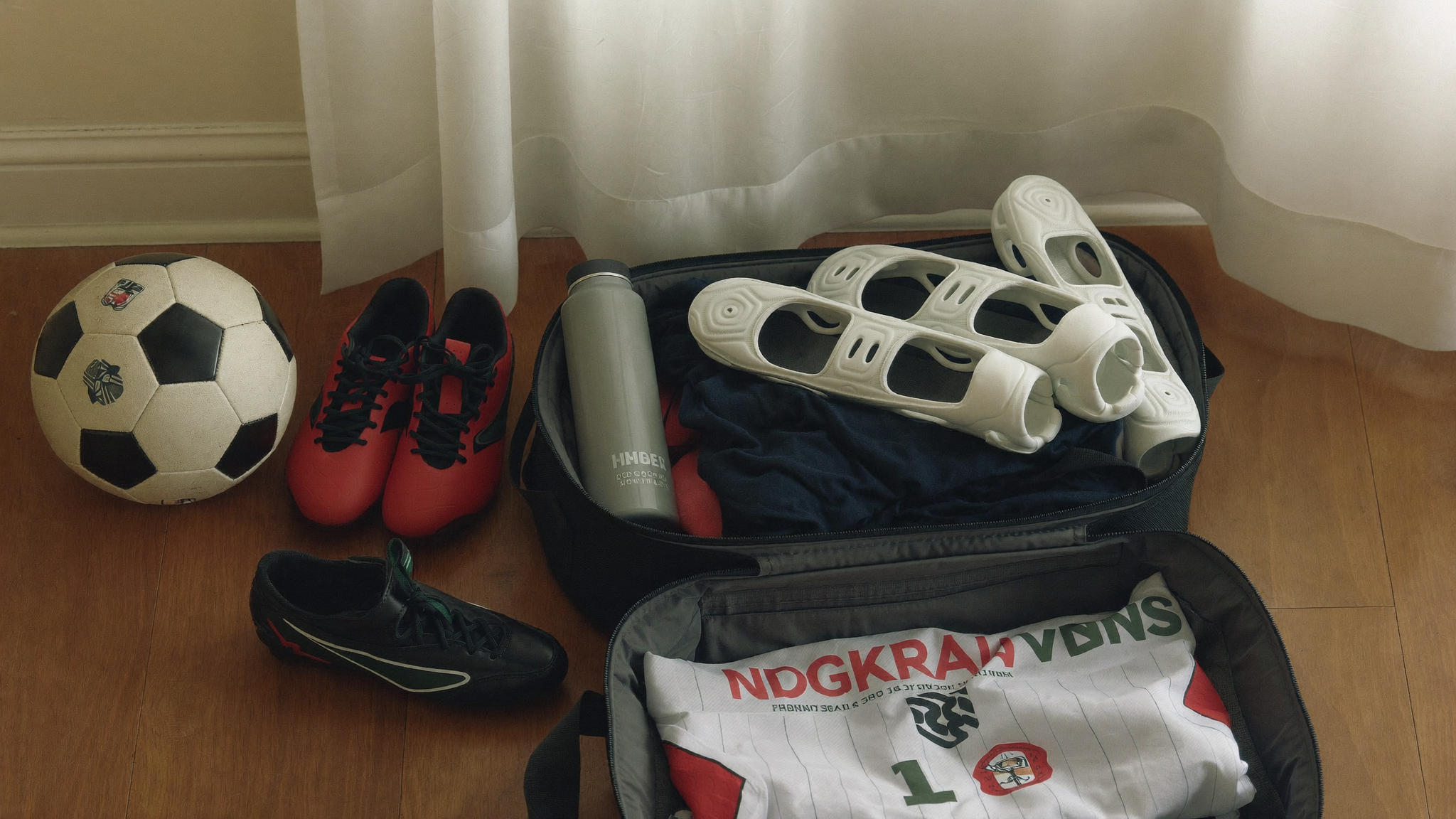
Plain training kit (neutral shirt, soccer shorts, soccer socks pulled up), shin guards, the cleats they’re most comfortable in. Avoid wearing the target club’s jersey or kit. Bring a water bottle and a ball labeled with the player’s name.
How early should my player arrive at Charleston soccer tryouts?
20-25 minutes early. Time to check in, do a real warm-up (not a static stretch — a dynamic, gets-the-heart-rate-up warm-up), and get a few touches on the ball before the session starts. Showing up barely on time signals unpreparedness; showing up 60 minutes early signals anxiety.
Do coaches really evaluate body language as much as skill at tryouts?
Yes — and often more than parents expect, especially for borderline players. Two players with similar technical levels will often be split by which one looked more coachable, more engaged, and more positive between reps. Body language is essentially free to fix and disproportionately high-leverage.
Is it worth doing private soccer sessions specifically for tryout prep?
For players who are right on the borderline of making their target team, yes — focused private work in the 4-6 weeks before tryouts often closes the gap. For players who are clearly above or clearly below the target team’s level, the marginal return is lower (the player is going to land where they were going to land regardless). Pick the investment to match the gap.
Show up sharp. Train with purpose.
Charleston soccer tryouts reward players who arrive prepared, composed, and able to show coaches the specific signals coaches are watching for — clean first touches, smart decisions, real defending effort, good body language between reps. The technical floor matters, but so does the way the player carries themselves in the 90 minutes coaches have to make their call. The summer training that pays off most is targeted, intentional, and tapered for peak — not crammed in the last week.
If you’re in Mount Pleasant or the Charleston metro and want to talk through a focused tryout-prep plan for your player, head to the contact page. For more on tryouts specifically, see soccer tryout prep tips, how to find and ace youth soccer club tryouts, and how to score a spot on Charleston’s best youth soccer teams. For the summer training that pairs best with tryout prep, see our parent’s guide to summer soccer camps in Charleston SC and our guide to picking a private soccer coach.